
Christopher Hailstone is a seasoned veteran in the energy sector, bringing years of hands-on experience in renewable integration and the intricate mechanics of electricity delivery. As a recognized expert in utilities and grid security, he has become a pivotal voice for organizations navigating the increasingly volatile landscape of climate-driven risks. Today, we sit down with Christopher to discuss the urgent shift in how North American utilities must approach asset investment to combat the growing threat of wildfires. With billions of dollars in infrastructure and countless lives at stake, his insights into risk-based decision-making offer a blueprint for building a more resilient future.
In our conversation, we explore the transition from traditional, static maintenance schedules to dynamic, portfolio-wide investment strategies that prioritize risk reduction. We delve into the complexities of capital allocation, examining how utilities balance physical upgrades like undergrounding with operational shifts like Public Safety Power Shutoffs. Christopher also breaks down the role of digital tools in quantifying the cost of inaction and explains how spatial data helps utilities justify massive expenditures to both regulators and the public.
Traditional inspection cycles and static maintenance schedules often fall short of modern wildfire threats. How can utilities transition to a more resilient, risk-based approach?
Modern wildfire threats have rendered the old ways of doing things—relying on a clipboard and a calendar—largely obsolete. When you see the sheer speed and devastation of a modern fire event, it becomes clear that static maintenance schedules simply cannot keep pace with shifting climate patterns. Utilities are now forced to move toward a portfolio-based planning approach that uses asset investment tools to move away from looking at projects in isolation. By assessing all assets together, the investments that deliver the most tangible risk reduction become mathematically clear, allowing leaders to move with a level of speed and accuracy that was previously impossible. It is no longer about which line is oldest; it is about which investment saves the most lives and protects the most infrastructure across the entire grid.
You mentioned the profound capital allocation challenge utilities face today. With billions of dollars on the line, how do leaders decide between heavy physical upgrades and disruptive operational interventions?
This is the central dilemma for utility leaders who must navigate an overwhelming number of variables while facing strict financial and regulatory constraints. They are often forced to choose between heavy capital physical upgrades, such as system-wide undergrounding and installing covered conductors, and disruptive operational interventions like Public Safety Power Shutoffs. These shutoffs carry heavy financial, reputational, and community impacts that must be weighed directly alongside infrastructure investments. Asset investment planning software allows organizations to mathematically quantify both the true cost of taking action and the cost of doing nothing. It provides a framework to evaluate thousands of potential intervention combinations across different assets, budget scenarios, and time horizons to ensure the highest return on investment.
Could you elaborate on the scale of these initiatives and the specific costs involved, using some of the current industry examples we are seeing in North America?
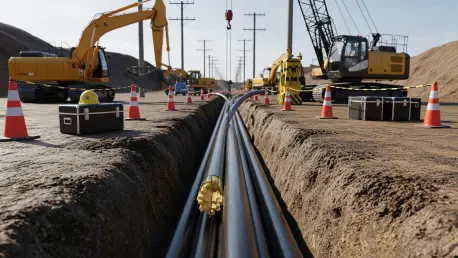
The scale of these investments is truly staggering and reflects the urgency of the crisis. For instance, Pacific Gas and Electric is planning to underground 1,900 miles of lines by 2027, with thousands more miles scheduled for the following decade between 2028 and 2037. They are also clearing a massive 4.4 million trees and installing 1,600 weather stations and over 700 high-definition cameras equipped with AI capability. Similarly, Hawaiian Electric is projecting nearly $500 million in wildfire mitigation spending over the next three years. They have allocated about $60 million to install covered conductors on roughly 56 miles of overhead lines on Oʻahu, Maui, and Hawaiʻi Island by the end of 2027. When you break it down, those specific overhead lines cost an average of about $1.07 million per mile, illustrating the heavy financial burden of hardening the grid.
Many utilities struggle with fragmented data across different departments. How do modern asset investment planning tools bridge the gap between raw risk data and boardroom-ready investment plans?
Fragmented data is a major hurdle because it limits a utility’s visibility into where a specific investment will actually reduce the most risk. Asset investment planning tools resolve this by transforming vendor-agnostic risk data into a financially quantified expected loss that executives can understand. By integrating this intelligence with asset attributes, intervention costs, and capital constraints, the platform optimizes decisions to deliver the greatest risk reduction per dollar spent. This creates a transparent, regulator-ready mitigation program that moves beyond subjective opinions. Instead of guessing, utilities can use an advanced optimization engine to generate a portfolio-level plan that is rigorously defensible to regulatory commissions and stakeholders.
Beyond the technical and financial aspects, how do these digital tools help communicate the necessity of these high-stakes projects to the public and regulatory bodies?
Utilities need an effective way to convey complex asset-level risks to a diverse group of stakeholders who require clear geographic context. With two-way mapping and spatial data analytics technology, stakeholders are able to visually explore asset-level risks and the impacts of specific investments directly within their own backyard. This spatial visualization drastically strengthens communication and alignment across technical teams, executives, regulatory bodies, and local communities. It turns abstract numbers into a visual story that shows why a specific project is necessary for safety. When people can see the risk reduction on a map, it builds the trust and confidence needed to move forward with massive capital expenditures.
What is your forecast for the future of wildfire mitigation and grid resilience?
The future of grid resilience depends entirely on our ability to embrace data-driven transparency and long-term portfolio optimization. We are moving toward a reality where every single dollar spent on the grid must be tied to a specific, measurable reduction in risk that can be defended in front of a regulatory commission. As climate patterns continue to shift, the pressure on utilities to act with unprecedented accuracy will only grow, making these digital planning tools as essential as the physical wires themselves. My forecast is that we will see a standardizing of risk-based frameworks across North America, where the “cost of inaction” becomes a primary metric in every capital budget. Ultimately, those who leverage these tools to balance financial limits with safety requirements will be the ones who successfully protect their communities from the next decade of wildfire threats.