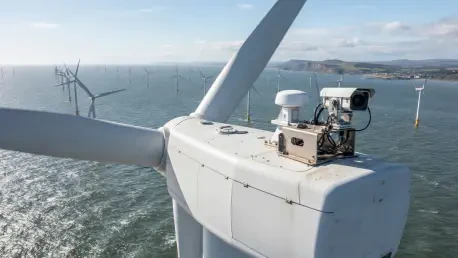

The intersection of massive renewable energy goals and the urgent need for biodiversity preservation has reached a critical turning point as the Ecowende offshore wind farm begins operations off the Dutch coast. This facility is not merely a generator of clean electricity but serves as a primary testbed for nature-inclusive engineering aimed at resolving the long-standing conflict between wind power and avian safety. With 52 turbines producing an installed capacity of 760 MW, the project is already supplying approximately 3% of the total electricity consumption for the nation. However, the true measure of its success lies in its sophisticated structural modifications and high-tech surveillance systems designed to mitigate the risks that offshore structures pose to migratory birds and bats. By prioritizing ecological health from the initial planning stages, the project demonstrates that industrial expansion and wildlife protection can coexist through intentional design. This approach marks a departure from traditional models that treated environmental impacts as a secondary concern.
Engineering for Avian Safety and Habitat Integrity
The physical architecture of the Ecowende facility represents a fundamental shift in how offshore energy landscapes are constructed. Rather than maximizing turbine density to capture every possible gust of wind, the developers implemented a layout that prioritizes safe passage for local and migratory species. By increasing the spacing between individual turbines, the design creates wide flight corridors that allow birds to navigate through the site without the constant threat of collision or the stress of habitat displacement. This deliberate spatial configuration acknowledges that the sheer presence of large rotating structures can act as a barrier to natural movement patterns. Engineers also adjusted the positioning of the nacelles, raising them higher above the water line to account for the typical flight altitudes of various bird species. This modification ensures that the most dangerous zones of the rotating blades are situated outside the primary flight paths of the animals most likely to frequent the area.
In addition to these spatial adjustments, the project is testing visual interventions that could redefine industry standards for bird-safe infrastructure. One of the more experimental features involves seven specific turbines where a single blade has been painted a striking red color. This method is based on the theory that increased visual contrast helps birds perceive the rotating motion of the blades more clearly, particularly during periods of low visibility or high speed. While researchers have explored this concept in smaller onshore settings, its implementation at such a large offshore scale provides a unique opportunity to gather empirical evidence on its effectiveness. These structural adaptations are complemented by the creation of designated reef-like structures on the seabed, which foster local marine life while keeping the aerial environment safe. By combining high-visibility indicators with intentional vertical and horizontal spacing, the facility aims to provide a comprehensive safety net for the diverse species that share the coastal environment.
Real-Time Monitoring and Intelligent Mitigation Systems
The technological core of this nature-inclusive strategy is an integrated monitoring network developed in collaboration with DHI. This system utilizes a sophisticated array of 3D radar systems, thermal cameras, and acoustic microphones to create a persistent digital canopy over the entire wind farm. These sensors work in tandem to detect and identify approaching animals with incredible precision, distinguishing between different species based on flight patterns and acoustic signatures. Unlike traditional methods that rely on periodic manual surveys, this high-tech approach provides continuous, real-time data on how wildlife interacts with the turbines. The thermal imaging cameras are particularly critical during nighttime hours or during dense coastal fog when visual deterrents are least effective. By feeding this constant stream of information into centralized processing units, the facility can maintain an unprecedented level of situational awareness, ensuring that no significant migration event or individual approach goes unnoticed by the operational staff.
Building on this foundation of surveillance, the facility employs artificial intelligence to manage mitigation efforts autonomously. When the system identifies a high risk of collision, it first attempts to divert the animals using specialized acoustic deterrents and speakers designed to emit frequencies that discourage approach. If these initial methods fail to change the animal’s trajectory, the AI can signal specific turbines to slow down or come to a complete halt until the threat has passed. This granular control allows the wind farm to minimize energy loss by only stopping the turbines directly in the path of the wildlife rather than shutting down the entire site. This responsive management model represents a significant evolution from static conservation measures, as it allows for a dynamic interplay between power generation and environmental safety. The data gathered from these interactions proved that industrial progress did not have to sacrifice ecological integrity, providing a clear path forward for the global transition to renewable power.