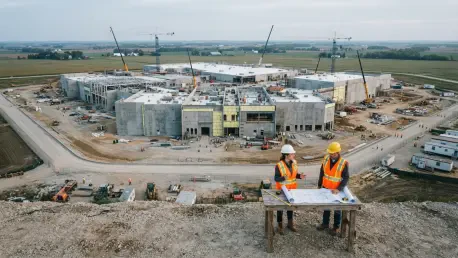

The sudden arrival of massive data centers is forcing the Wisconsin Public Service Commission to review multibillion-dollar projects on a fragmented, case-by-case basis. This reactive posture is the direct result of a regulatory framework that emphasizes individual project approval over comprehensive, long-term state planning. As the energy landscape undergoes its most significant transformation in decades, the three-member commission finds itself navigating a surge in electricity demand without the strategic tools that were once the cornerstone of Wisconsin’s utility oversight. The scale of the challenge is immense, with industrial growth requiring a fundamental rethink of how the state balances utility profitability with the financial stability of residential and commercial ratepayers. While the current model was designed to streamline construction, the rapid pace of technological expansion is highlighting systemic vulnerabilities that could lead to decades of inflated costs for the public.
Historical Shifts: The Evolution of Utility Oversight
The trajectory of utility regulation in Wisconsin reflects a broader national tension between government intervention and market-driven infrastructure development. For nearly a century, the state maintained a reputation as a pioneer in consumer protection, rooted in the understanding that utilities operate as protected monopolies. Because these companies are granted exclusive territories, the state has a moral and economic obligation to ensure that their investments are prudent and necessary. This philosophy led to the creation of one of the first regulatory bodies in the country, designed to prevent the unchecked expansion of utility assets at the expense of captive customers. However, the regulatory environment is not static, and the mechanisms of oversight have evolved significantly in response to shifting economic priorities and perceived threats to grid reliability.
From Leadership to Deregulation: The Advanced Plan Era
During the middle of the twentieth century, the state adopted a proactive stance by empowering the Public Service Commission with what became known as “Advanced Plan” authority. Established in the 1970s, this mandate required utilities to submit 20-year energy roadmaps every two years, providing a clear window into future generation needs and transmission upgrades. This system was remarkably effective because it allowed regulators to compare different strategies for meeting demand before any concrete was poured or steel was raised. By prioritizing demand-side solutions, such as energy efficiency programs and industrial load management, the commission could often delay or eliminate the need for expensive new power plants. This holistic approach ensured that the most economical options were pursued first, shielding ratepayers from the financial burden of redundant or poorly timed infrastructure projects.
The Legacy of the 1998 Policy Shift: Moving to Regulation-Lite
The dismantling of the Advanced Plan in 1998 marked a definitive turning point for Wisconsin’s energy future. Following a summer of high demand and localized reliability concerns, utility lobbyists successfully argued that the state’s comprehensive planning process was a source of bureaucratic gridlock that hindered necessary growth. Lawmakers responded by passing legislation that shifted the responsibility for long-term planning from the state back to the individual utilities. This “regulation-lite” model was intended to accelerate construction and ensure that the state would never face an energy shortage. However, by removing the commission’s ability to view the energy landscape as a single, integrated system, the state effectively traded long-term strategic oversight for short-term administrative speed. This change fundamentally altered the power dynamic between regulators and the companies they oversee, creating a fragmented approval process that persists today.
Economic Consequences: The Impact of Reduced Oversight
The transition away from state-led planning has coincided with a dramatic shift in Wisconsin’s energy affordability relative to the rest of the Midwest. When the Advanced Plan was still in place, the state enjoyed some of the most competitive electricity rates in the region, providing a significant advantage for local manufacturers and households alike. In the decades following the 1998 reforms, however, this advantage has steadily eroded. The lack of a centralized blueprint has allowed utilities to pursue a capital-intensive “build-build-build” strategy that prioritizes shareholder returns over the minimization of ratepayer costs. Because utilities are essentially guaranteed a profit on every dollar they spend on infrastructure, the current regulatory vacuum provides little incentive for them to explore cheaper, non-traditional alternatives to major construction projects.
Rising Costs: The Reality of Misaligned Incentives
The financial data from the last quarter-century illustrates a troubling trend for Wisconsin’s energy consumers. In 1998, the state held the second-lowest electricity rates in the Midwest, a position that supported a robust middle class and a thriving industrial base. By the midpoint of the current decade, Wisconsin has climbed to the second-highest rates in the same region, a reversal that has sparked intense criticism from consumer advocacy groups. Critics argue that the existing “rate of return” model is fundamentally flawed when paired with a reactive regulatory commission. Since utilities earn a commission-approved profit on infrastructure spending, their business model naturally favors the construction of new natural gas plants and transmission lines over more affordable energy-saving initiatives. This alignment of interests often leaves the Public Service Commission in a position where it is reviewing projects that have already been set in motion, making it difficult to reject them even if better alternatives exist.
Short-Sightedness: The Financial Burden of Missed Opportunities
The absence of a cohesive energy map has led to several instances of strategic short-sightedness that have left ratepayers on the hook for billions of dollars. One prominent example is the continued investment in coal-fired generation long after technological shifts in the industry made natural gas and renewables more cost-effective. Without the authority to force a regional comparison of energy sources, the commission was unable to steer utilities away from these aging assets before market prices shifted. Today, many of these coal plants are being retired early, yet customers are still paying off the debt incurred for their construction and maintenance. This “piecemeal” review process prevents the state from conducting a true side-by-side analysis of a proposed fossil fuel plant versus a diversified portfolio of solar, wind, and battery storage. Consequently, the state often defaults to the most familiar and expensive options rather than the most innovative ones.
The Data Center Boom: Managing Unprecedented Growth
Wisconsin is currently facing a surge in electricity demand that was virtually unimaginable just a few years ago. The rapid expansion of the data center industry, fueled by the global demand for cloud computing and artificial intelligence, has placed an immense strain on the existing grid. These facilities operate around the clock and require massive amounts of reliable power, forcing utilities to reconsider their generation capacity. As massive projects, such as those initiated by global technology leaders in the southeastern portion of the state, move forward, the need for a more sophisticated regulatory approach has become undeniable. The projected growth is so significant that it could redefine the state’s economic landscape, yet the tools available to manage this transition remain anchored in an era of far more modest energy requirements.
Infrastructure Growth: The Five-Year Expansion Plan
Recent assessments from the Public Service Commission indicate that energy use across the state is projected to increase by approximately 40% over the next five years. This unprecedented spike is almost entirely attributable to the arrival of massive data center campuses. In response to this demand, major utility groups have announced plans to spend nearly $50 billion on new infrastructure projects to keep pace with the needs of these industrial giants. While these investments are necessary to ensure the reliability of the grid, the sheer scale of the spending is raising alarms among consumer advocates. Under the current regulatory system, the commission reviews these massive expenditures as isolated applications rather than as part of a coordinated statewide effort. This lack of transparency makes it nearly impossible for the public to determine if these projects represent the best long-term value or if they are simply the most profitable path for utility shareholders.
The Loophole: Exploiting the Merchant Plant Strategy
A particularly controversial tactic in the current regulatory environment involves the use of “merchant plant” status to bypass rigorous state oversight. Under current law, independent energy developers can build power plants with a simplified permitting process, provided they intend to sell the power on the wholesale market. However, utilities have begun utilizing a strategy where they partner with these developers to build a plant, only to apply to purchase the completed facility for their own customers shortly after. This maneuver allows the project to avoid the competitive bidding and cost scrutiny that would normally apply if the utility had built the plant itself. Commission members have noted that this approach creates a “whack-a-mole” regulatory environment, where they are presented with finished deals that offer little room for negotiation or price comparison. This lack of oversight has effectively removed one of the last remaining checks on utility spending, leaving the public to fund multibillion-dollar acquisitions without knowing if a better deal was possible.
Regional Comparisons: The Path Toward Meaningful Reform
Wisconsin’s current hands-off regulatory approach has made it a notable outlier in the Midwest, as neighboring states have moved toward more integrated and transparent planning models. As the transition to a modern grid accelerates, many states are recognizing that the complexities of the 21st-century energy market require a more hands-on role for government regulators. By examining the successes and failures of these neighboring jurisdictions, Wisconsin has a unique opportunity to identify the most effective paths for reform. Whether through legislative changes or a revitalized administrative focus, the goal of these reforms is consistent: to ensure that the transition to a cleaner, more digital-ready grid does not come at the expense of the residents and small businesses who must pay the bills.
Lessons From Neighbors: The Success of Integrated Planning
Neighboring states like Minnesota and Michigan have successfully implemented integrated resource planning models that offer a stark contrast to Wisconsin’s current system. In Minnesota, utilities are required to justify their long-term investment strategies before a commission, allowing for a public debate on the most cost-effective ways to meet future demand. This process has not only kept generation costs more stable but has also allowed the state to transition toward renewable energy in a more controlled and predictable manner. Similarly, Michigan reintroduced comprehensive planning several years ago to manage the retirement of its aging coal fleet, ensuring that new investments were scrutinized for their long-term value. Even in states like Iowa, where a formal planning process is less structured, early and aggressive investments in low-cost wind energy have shielded ratepayers from the price volatility that has plagued more fossil-fuel-dependent states like Wisconsin.
The Way Forward: Pathways Toward Modern Regulatory Reform
The final consensus among regulatory experts and consumer advocates was that the “regulation-lite” experiment of the late 1990s had reached its logical conclusion. As the state moved through the mid-2020s, it became clear that a fragmented review process could no longer handle the massive capital requirements of the data center era. Legislative efforts sought to restore the commission’s authority to conduct statewide planning, aiming to replace the reactive “whack-a-mole” approach with a centralized, cost-focused blueprint. These proposed reforms emphasized the importance of competitive bidding for all major generation projects and required utilities to prove that their investments were the most economical options available. Ultimately, the state recognized that maintaining the status quo would result in a grid that was reliable but prohibitively expensive. By prioritizing transparency and long-term strategic foresight, Wisconsin began the difficult work of modernizing its regulatory framework to protect the economic interests of all its citizens.