
A Strategic Pivot Toward National Security and Traditional Power
The federal government has unveiled a fiscal blueprint that fundamentally reorders the American energy hierarchy, placing military nuclear readiness at the center of its economic and security planning. With a proposed discretionary budget of $53.9 billion—a nearly 10% increase over previous levels—the administration is making a bold statement about its vision for the future of American energy. This surge in funding is not distributed evenly across the Department of Energy’s diverse portfolio. Instead, it reflects a decisive redirection of funds from climate initiatives toward nuclear defense and “firm baseload” power, signaling a broader ideological shift. By examining the move away from renewable mandates toward military modernization, market participants can better understand the administration’s “America First” energy doctrine.
The Evolution of Federal Energy Priorities
Historically, the Department of Energy has balanced a dual mandate of overseeing the nation’s nuclear weapons stockpile and fostering innovation in civilian energy technology. Over the past decade, the pendulum swung heavily toward the green transition, with billions of dollars allocated to wind, solar, and electric vehicle infrastructure. These investments were framed as essential for both environmental sustainability and long-term economic competitiveness. However, the budget proposal for the fiscal year 2027 seeks to reset this trajectory. By framing previous clean energy efforts as inefficient or ideologically driven, the current administration is leaning into a legacy of industrial and military strength. This shift is significant because it suggests that the federal government now views energy policy through the lens of hard power and national security rather than environmental stewardship.
The Surge in Defense Spending and the Nuclear Arsenal
Strengthening the National Nuclear Security Administration
A critical pillar of this new budgetary landscape is a 21% surge in defense-related spending, directed almost exclusively toward the National Nuclear Security Administration. This funding is earmarked for the rapid development of new warheads and the modernization of next-generation naval reactor technology. In a global landscape defined by renewed Great Power competition, the administration argues that a modernized nuclear deterrent is the ultimate guarantor of national sovereignty. This aggressive reinvestment in the nuclear complex represents a pivot back to a “peace through strength” posture, prioritizing the reliability and lethality of the American arsenal over the decarbonization of the domestic power grid.
The Redirecting of Infrastructure Funds to Baseload Power
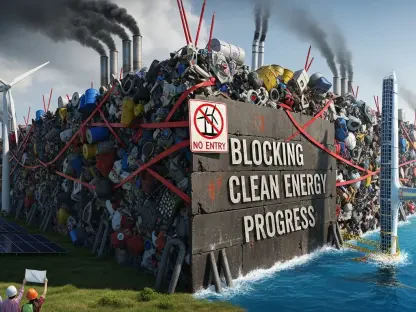
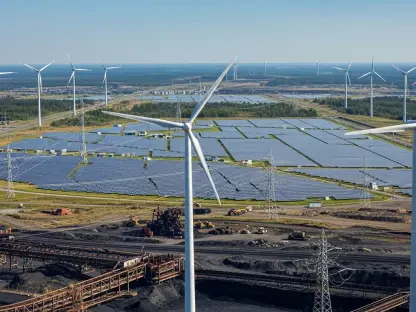
The proposal also aims to systematically dismantle renewable energy programs, which the administration has labeled as “Green New Scam” initiatives. A central component of this strategy is the “repurposing” of approximately $15 billion in funding originally authorized by previous infrastructure legislation. About $4.7 billion of these funds would be funneled into “firm baseload power,” emphasizing coal, natural gas, nuclear, and hydropower. By prioritizing these traditional sources alongside AI supercomputing investments at major national laboratories, the administration is signaling that energy reliability—defined by constant, 24/7 availability—takes precedence over the intermittent nature of wind and solar power.
Addressing the Risks to Grid Modernization and Security
Beyond the shift in generation sources, the budget introduces significant cuts to the administrative infrastructure that manages the nation’s energy flow. The Office of Electricity faces a 22% budget reduction, while programs dedicated to cybersecurity and emergency response would see a 16% decrease. Critics argue that these cuts could leave the grid vulnerable to both physical and digital threats at a time when energy demand is rising. Furthermore, the administration’s attempt to eliminate the Low Income Home Energy Assistance Program reflects a belief that deregulation and lower market prices are more effective than direct federal subsidies. This approach relies on the assumption that an “America First” economic platform will naturally reduce the cost of living for vulnerable citizens.
Emerging Trends in Energy Geopolitics and Technology
Looking ahead, several trends are likely to shape the impact of this budget shift across the private sector. The focus on AI supercomputing at national labs suggests that the administration views technological dominance in artificial intelligence as inseparable from energy security. Additionally, the move to keep fossil fuel plants operational through emergency authorities indicates a growing regulatory trend that favors existing industrial capacity over new green technologies. We are likely to see an increase in state-level friction, as regions that have heavily invested in renewable energy portfolios find themselves at odds with federal priorities. These shifts suggest a future where energy policy is increasingly militarized and centralized around large-scale, traditional infrastructure projects.
Analyzing the Impact and Practical Considerations
The major takeaway from this budget proposal is a clear intent to prioritize “energy dominance” over “energy transition.” For businesses and energy professionals, this signals a potential resurgence in the fossil fuel and nuclear sectors, alongside a cooler environment for federal renewable grants. However, it is essential to remember that Congress holds the “power of the purse.” Historically, the legislative branch has protected popular programs like home energy assistance and wind energy subsidies despite executive branch attempts to cut them. Stakeholders should monitor congressional appropriations closely, as the final budget often reflects a compromise between the administration’s ideological goals and the status quo favored by lawmakers.
Conclusion: A Fundamental Shift in the National Interest
The budget proposal for the fiscal year 2027 functioned as a manifesto for a different kind of American energy future, one rooted in nuclear strength and traditional fuel sources. While the 16% cut to non-defense spending and the 21% hike in military applications highlighted a stark change in priorities, the ultimate realization of these goals remained subject to the political realities of Congress. Regardless of the final outcome, the conversation shifted toward how energy can serve national defense. Industry leaders then faced the task of recalibrating their long-term strategies to align with a federal government that increasingly viewed the power grid as a theater of national security. As the global landscape continued to evolve, the tension between environmental goals and hard-power requirements emerged as the defining challenge of the era.