
Introduction
The energy transition is being throttled by wires, not turbines. The cost of wind and solar has fallen enough to rewrite power markets, yet clean megawatts are piling up behind a physical chokepoint: an aging grid built for one-way flow from a handful of large plants. In the United States alone, more than two thousand six hundred gigawatts of generation and storage are stuck in interconnection queues, a backlog that reflects engineering limits as much as paperwork delays. [Human Editor: Insert source to support this claim]
This is not a distant policy issue. It is a balance-sheet problem for B2B leaders, industrial operators, and institutional investors. When the grid hits thermal or stability limits, operators curtail renewable output and ramp plants closer to load. That dynamic pushes up network charges, adds volatility to energy costs, and undermines decarbonization commitments. Companies planning to electrify heat, deploy AI data centers, or add fast-charging hubs are discovering that access to capacity, not equipment cost, sets the pace of growth. Understanding the anatomy of grid congestion, the economics of redispatch, and the rise of Grid-Enhancing Technologies (GET) is now a core competency for any organization that buys, builds, or finances power.
The Success Trap: Balancing Rapid Decarbonization With Physical Grid Limits
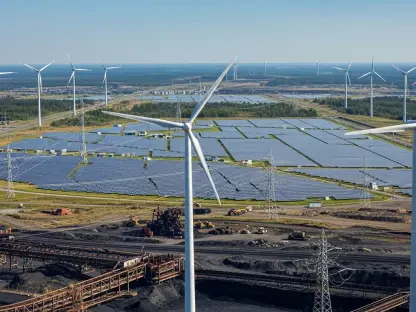
Variable renewables have scaled faster than the transmission and distribution networks that must carry them. In regions such as the Netherlands and parts of the United States, solar and wind additions have outpaced line upgrades, producing a paradox. Generation is available, but the wires to move it are not. Provinces in the southern Netherlands have imposed connection moratoriums for new commercial projects because local networks hit their thermal and voltage ceilings. [Human Editor: Insert source to support this claim]
The pinch is most visible where electrification is surging. New housing developments, logistics parks, EV charging corridors, and data centers are all chasing capacity on feeders that were never designed for bidirectional power flow. Industrial operators aiming to replace fossil-fuel heat with electric-arc furnaces or high-temperature heat pumps are told to wait several years for upgrades. The conventional security focus on fuel and generation has shifted. Flexibility and resilience of the network now define reliability. As load grows from AI compute, electrified transport, and building heat, the grid must shift from a passive delivery system to an active marketplace that coordinates supply, demand, and storage in real time. Waiting for load to appear before planning lines guarantees a permanent backlog. Anticipatory planning, backed by transparent pipeline data and faster permitting, is the only way to turn the grid from gatekeeper into growth platform. [Human Editor: Insert source to support this claim]
Economic Repercussions: The Hidden Costs of Congestion Management
Congestion has a price, and commercial users pay it. When a corridor overloads, system operators pay generators in constrained zones to curtail while procuring output from units closer to demand. This redispatch is necessary to maintain stability, but it is expensive. In Germany, annual congestion management costs exceeded four billion euros in 2022, roughly tripling in two years as more renewables met line limits. Those costs do not disappear inside utility balance sheets. They flow through to network tariffs and market prices paid by industrial and commercial customers. [Human Editor: Insert source to support this claim]
There is a second-order risk that many buyers underestimate. Curtailment erodes the environmental value and price certainty of corporate Power Purchase Agreements. When a project cannot deliver because the grid is saturated, the buyer’s expected carbon reduction and fixed-price hedge vanish, often forcing procurement on the spot market at unfavorable times. In markets without strong locational signals, developers keep building in sunny or windy regions already facing export limits, which deepens the problem. Buyers need to evaluate grid health, not just resource quality. That means underwriting projects using Locational Marginal Pricing (LMP) or equivalent locational data, assessing modeled curtailment, and accounting for basis risk between hub prices and project nodes. LMP spreads that look tolerable in normal conditions can widen sharply during congestion events, turning a prudent hedge into an earnings swing.
Technological Optimization: Using Intelligence Over Physical Expansion
New high-voltage lines are essential, but they take years. Meanwhile, GET can unlock meaningful capacity and reliability from existing assets in months, not decades. The mix is both digital and physical:
- Dynamic Line Rating (DLR). Line limits are often set conservatively using worst-case assumptions. Real-time sensors that track wind, temperature, and conductor sag allow operators to raise ratings when conditions are favorable. Studies show DLR can unlock 20 to 40 percent more transfer capacity on some corridors. [Human Editor: Insert source to support this claim]
- Advanced Reconductoring. Replacing traditional aluminum conductors with composite-core designs increases ampacity without new towers. Many utilities report 50 to 100 percent capacity gains on existing rights-of-way after reconductoring. [Human Editor: Insert source to support this claim]
- Topology Optimization and Power Flow Control. Software and modular power flow controllers can redirect current away from overloaded lines and use spare capacity elsewhere on the network. These tools reduce redispatch costs and raise transfer capability with minimal outage time. [Human Editor: Insert source to support this claim]
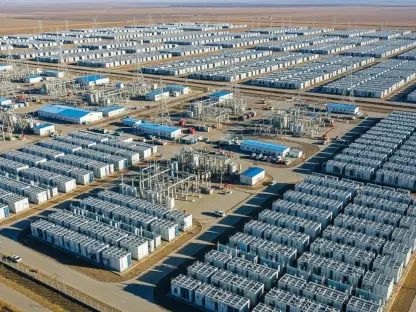
- Grid-Scale Storage as a Transmission Asset. Batteries placed at constraints can absorb surplus generation and discharge into load pockets during peaks. When procured as a network asset, storage can defer or right-size wires and transformers.
- Flexible Interconnections and DER Coordination. Conditional or non-firm connections allow faster hookups in exchange for occasional curtailment during peak stress. Combined with a Distributed Energy Resource Management System (DERMS), flexible industrial loads, on-site generation, and storage can respond to grid needs within minutes.
None of these measures eliminate the need for new lines. They buy time and reduce costs while long-lead projects advance. They also align with investor expectations. Capital markets favor strategies that improve asset utilization, reduce redispatch spending, and deliver measurable reliability gains this fiscal year, not the next decade.
Regulatory Evolution: Streamlining the Path to Interconnection
Policy fragmentation is a major source of delay. Permitting for new corridors often requires layers of approvals that stretch timelines and raise costs. Two shifts can change the trajectory. The first is anticipatory investment, which allows grid operators to build capacity ahead of firm requests based on credible load and generation pipelines. The second is transparent, time-bound interconnection reform. In the United States, federal interconnection rules now require cluster studies, more standardized timelines, and a greater focus on deliverability. These changes are intended to move viable projects through the queue faster and clear speculative ones earlier. [Human Editor: Insert source to support this claim]
Market design also matters. Clear capacity maps and location-based incentives can steer energy-intensive industries such as green hydrogen and data centers toward regions with headroom. Non-firm or conditional access models let businesses connect sooner in exchange for curtailment during a handful of high-stress hours each year. Connect-and-manage policies shorten queues where stability risks are manageable. Done well, these reforms replace a first-come, first-served approach with one that rewards system benefit and operational flexibility.
What B2B Decision-Makers Should Do Now
Grid risk is now a material business risk. Treat it like one. Five actions can improve outcomes for energy buyers, project developers, and investors.
- Interrogate Location Risk. Require project developers to provide modeled curtailment, congestion heat maps, and basis risk analysis using LMP or equivalent locational data. Compare the project node to the settlement hub across stress periods. Ask for contingency analysis that shows limits under N-1 conditions.
- Structure Contracts For Flexibility. Add availability and balancing clauses to Power Purchase Agreements that address curtailment and basis swings. Consider proxy generation or as-produced structures tied to audited meter data. Build in step-up rights to add storage or upgrade interconnection if economics deteriorate.
- Invest Behind The Meter. Pair on-site solar with storage to shave peaks, firm supply during feeder constraints, and reduce exposure to network charges. For large campuses or data centers, evaluate microgrids that can island during grid events and sell flexibility back when connected.
- Monetize Load Flexibility. Identify processes that can shift by minutes or hours without harming output. Enroll in demand response or flexibility markets through a qualified aggregator. Track and report the economic value created per flexible megawatt as a line item, not as a sustainability footnote.
- Engage In Planning, Not Just Procurement. Participate in utility integrated resource planning and transmission planning processes. Provide credible load growth forecasts and interconnection timelines to justify anticipatory upgrades. Engagement can move a project from concept to shovel-ready faster than any one-off negotiation.
Conclusion
The next decade of decarbonization will be won or lost in steel, silicon, and software that make the grid more dynamic. Cheap clean generation is not sufficient if it cannot move when and where it is needed. For B2B organizations, the practical path forward blends two tracks. The first is immediate action to extract capacity from existing assets through Dynamic Line Rating, reconductoring, power flow control, storage as a network asset, and flexible interconnections. The second is sustained advocacy for anticipatory planning, faster and fairer interconnection studies, and locational signals that direct capital to where it reduces the most congestion per dollar.
There are trade-offs. Non-firm connections expose users to occasional downtime. Advanced conductors and power electronics require planned outages and new operating practices. Storage operated as a grid asset raises questions about cost allocation and control. Yet the alternative is worse. Continued reliance on redispatch and curtailment is a recurring expense that compounds each year and distorts investment signals.
The lesson for decision-makers is simple. Treat grid access and congestion as strategic constraints that must be engineered, contracted, and governed, not as background conditions. Organizations that build this muscle will connect sooner, stabilize energy costs, and hit emissions targets with fewer surprises. Those that wait for perfect policies and perfect corridors will face the same queues in five years, only longer and more expensive.