
The persistent dilemma of managing radioactive materials has finally evolved from a political liability into a centerpiece of industrial strategy as the United States aggressively redefines the value of its nuclear inventory. After decades characterized by legislative gridlock and the accumulation of radioactive byproducts at disconnected sites, the Department of Energy (DOE) has pivoted toward a model that integrates waste management into the broader domestic energy supply chain. This transition is anchored by the Nuclear Lifecycle Innovation Campus framework, a strategy that moves away from the historically contentious, top-down mandates of the late twentieth century. By adopting a “consent-based” approach, the federal government is attempting to transform the narrative of nuclear waste from one of environmental burden to one of economic opportunity.
This strategic reorientation aims to bundle the long-term management of nuclear materials with immediate industrial benefits, such as high-tech job creation and the provision of carbon-free baseload power. By viewing the entire nuclear value chain—ranging from initial fuel fabrication to the recycling of spent fuel and the deployment of advanced reactors—as a singular ecosystem, the DOE seeks to establish regional hubs of innovation. These campuses are designed to resolve the nation’s nuclear waste dilemma while simultaneously fueling the next generation of American industry. This article examines the mechanics of this rebranding effort and evaluates its potential to modernize the American energy landscape.
The Long Road from Yucca Mountain to Consent-Based Siting
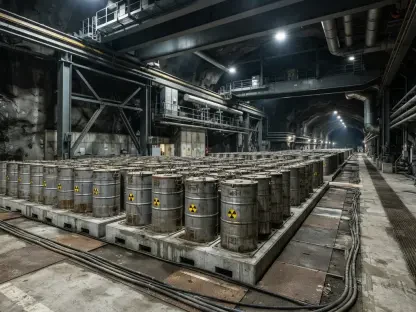
To understand the magnitude of this policy shift, one must examine the legacy of systemic failure that has defined American nuclear waste policy for over forty years. Since the mid-twentieth century, the U.S. has accumulated approximately 95,000 metric tons of spent nuclear fuel, which currently remains stranded at dozens of commercial reactor sites across the country. The 1982 Nuclear Waste Policy Act originally envisioned a centralized permanent repository, with Yucca Mountain in Nevada eventually designated as the sole solution. However, that project was ultimately derailed by a combination of intense local opposition and shifting political priorities, leaving the nation without a clear path forward for its radioactive materials.
The failure to establish a permanent repository created a massive financial and legal burden for the federal government. Because the DOE defaulted on its legal obligation to begin removing waste from utility sites by the late 1990s, it has faced continuous litigation from energy providers. Taxpayer liability for these delays has become a significant drain on the national treasury, reaching tens of billions of dollars in settlements and projected costs. The Innovation Campus model emerged as a direct response to this crisis, seeking to avoid the pitfalls of “coerced” disposal by offering host states a tangible economic stake in the nuclear lifecycle. This approach effectively turns a multi-billion dollar liability into a localized asset capable of supporting a modern industrial base.
Closing the Loop: Transforming Spent Fuel into Energy Assets
The cornerstone of the DOE’s new strategy involves a linguistic and functional transformation of how the public perceives nuclear byproducts. By shifting the discourse from “spent fuel” to “used fuel,” the government highlights a critical technical reality: approximately 90% of the potential energy remains within the fuel after its initial use in a conventional reactor. This shift is not merely semantic but represents a fundamental change in resource management. By focusing on nuclear recycling—a practice that has been successfully utilized in international markets like France but remained dormant in the U.S. for decades—the Innovation Campuses aim to extract this remaining energy, thereby reducing the volume of material that requires permanent disposal while bolstering domestic fuel security.
Rebranding Waste: The Shift Toward Resource Reclamation
The transition toward viewing used fuel as a high-value resource is essential for overcoming the stigma historically associated with nuclear waste management. In this new framework, the material is treated as a strategic reserve of carbon-free energy that can be harvested to power advanced reactor designs. This method addresses the “waste problem” by significantly lowering the amount of high-level radioactive material that must be interred, while also decreasing the necessity for new uranium mining operations. Furthermore, the development of domestic recycling capabilities helps to insulate the American energy sector from the volatility of global uranium markets and reduces reliance on foreign enrichment services.
By positioning reclamation at the heart of the Innovation Campus, the DOE provides a compelling reason for communities to engage with the nuclear sector. Instead of hosting a passive storage site, these regions become centers of active industrial production. The technical processes involved in recycling require a highly skilled workforce, fostering a long-term economic environment that supports high-paying jobs and specialized education. This focus on reclamation aligns perfectly with broader sustainability goals, demonstrating that the nuclear industry can operate within a circular economy framework that minimizes environmental impact while maximizing energy output.
Integrated Ecosystems: The Rise of Full-Cycle Nuclear Hubs
The Innovation Campuses are envisioned as comprehensive, self-sustaining ecosystems where various stages of the nuclear lifecycle are co-located to maximize efficiency. These facilities are designed to integrate fuel reprocessing centers with next-generation Small Modular Reactors (SMRs) that are specifically engineered to run on recycled fuel. By creating these closed-loop systems, the DOE aims to provide a stable and reliable domestic fuel supply that operates independently of external disruptions. This integrated architecture is particularly attractive to host communities because it establishes a permanent industrial presence that promises multi-generational economic stability and significant tax revenue.
The operational synergy of these hubs allows for the optimization of logistics and safety protocols, as the transportation of radioactive materials is minimized through co-location. Moreover, the presence of advanced reactors on-site provides the campus with the very energy it needs to run its recycling and fabrication facilities, creating a truly autonomous energy center. This model represents a departure from the fragmented nuclear infrastructure of the past, moving toward a more streamlined and resilient approach that can serve as a blueprint for the global energy transition. As these hubs mature, they are expected to become the primary drivers of nuclear innovation, attracting investment from both the public and private sectors.
Powering the Future: Synergy with the Digital Economy
Beyond the immediate goals of energy production and waste management, the Innovation Campuses are being positioned to meet the escalating power demands of the modern digital economy. The rapid expansion of Artificial Intelligence (AI) and the proliferation of hyperscale data centers require “clean firm” power—electricity that is entirely carbon-free and available twenty-four hours a day, regardless of weather conditions. By siting these energy-intensive industries directly adjacent to nuclear innovation hubs, the DOE offers a unique value proposition: the ability to lead in the AI revolution by leveraging a secure and uninterrupted supply of clean energy.
This synergy transforms the localized conversation from one of “nuclear storage” to one of “industrial dominance.” States and municipalities that host these campuses gain a competitive advantage in attracting tech giants and advanced manufacturing firms that are committed to achieving carbon-neutrality without sacrificing reliability. The presence of a nuclear-powered industrial base ensures that these regions remain at the forefront of the global economy, providing the foundational infrastructure necessary for the next wave of technological advancement. Consequently, the nuclear waste dilemma is solved not through isolation, but through integration into the very heart of the nation’s economic engine.
Anticipating the Evolution: Future Infrastructure and Regulation
As the United States progresses toward the goal of deploying hundreds of gigawatts of new nuclear capacity, the regulatory and technological landscape must undergo a significant evolution to accommodate the Innovation Campus model. Emerging trends indicate a shift toward more standardized, factory-built reactor components which can be deployed more rapidly and at lower costs than traditional large-scale plants. This modularity is a key component of the new strategy, allowing for the flexible scaling of energy production to meet the specific needs of regional industrial hubs. Furthermore, the integration of decentralized power grids will enable these campuses to provide resilient energy to surrounding areas, enhancing overall grid stability.
From a regulatory standpoint, the success of this transition will require a more streamlined and predictable licensing process for both advanced reactors and reprocessing facilities. The current regulatory framework, which was largely designed for the large-scale light-water reactors of the previous century, is being updated to reflect the enhanced safety profiles of modern designs. Expert projections suggest that if the initial pilot projects for these campuses demonstrate both safety and economic viability, we will witness a sustained nuclear renaissance. This growth will be driven by states that recognize the necessity of these campuses for competing in a global market that increasingly prioritizes both decarbonization and energy security.
Market Implementation: Strategies for Stakeholders and Communities
For the Innovation Campus model to reach its full potential, stakeholders across the public and private sectors must transition from theoretical planning to practical implementation. Utilities should embrace the consent-based framework as a primary tool for community engagement, ensuring that local populations are active participants in the development process. Transparency and early communication are vital for building the trust required to host long-term nuclear infrastructure. Furthermore, state governments interested in securing these hubs should prioritize the development of a specialized workforce through partnerships with universities and vocational schools, ensuring that the local labor pool is prepared for the high-tech demands of the nuclear lifecycle.
Businesses within the technology and manufacturing sectors should also look for opportunities to form “behind-the-meter” partnerships with nuclear developers. By securing long-term energy contracts with these innovation hubs, companies can insulate themselves from the price volatility of the broader energy market while meeting their environmental obligations. Such partnerships provide the financial certainty needed to spark large-scale infrastructure projects, creating a virtuous cycle of investment and growth. Ultimately, the successful implementation of this strategy depends on the ability of all parties to align their economic incentives with the broader goals of environmental stewardship and national energy independence.
Building a Sustainable Legacy: Reflections on the New Energy Frontier
The strategic rebranding of nuclear waste as an economic resource represented a profound shift in the American approach to energy policy and environmental responsibility. By moving away from the failed models of federal coercion and toward a system defined by community-led innovation and industrial integration, the government successfully dismantled many of the barriers that had previously stalled progress. The Innovation Campus concept provided a logical and pragmatic path forward, allowing the nation to address a long-standing environmental challenge while simultaneously reinforcing its industrial base. This transition proved that the management of radioactive materials did not have to be a zero-sum game between safety and growth.
The integration of waste management with the demands of the digital economy and advanced manufacturing served to secure the nation’s position as a leader in the global clean energy transition. Although significant technical and financial hurdles were navigated, the results validated the idea that nuclear materials could be a catalyst for regional prosperity. By treating used fuel as a strategic asset rather than a liability, the policy created a sustainable framework that balanced the needs of the present with the obligations to future generations. The successful deployment of these campuses established a new standard for how modern societies can manage complex industrial legacies while building a resilient and carbon-free future.