
The transition from traditional compliance-based security to adversarial-based models utilizes real-time AI to anticipate and neutralize threats before they impact the grid. As the global energy landscape undergoes a radical transformation, the integration of high-level intelligence is no longer a luxury but a fundamental necessity for survival. Utilities are currently managing an unprecedented surge in demand, driven by the electrification of transport and the proliferation of data centers, all while trying to maintain the stability of an increasingly decentralized infrastructure. This complexity has created a vast digital surface that state-sponsored actors and sophisticated cyber-criminal groups are eager to exploit. The current reality of 2026 demands a shift from passive defense to an active, intelligence-driven posture where algorithms can process millions of data points per second to identify the subtle precursors of a coordinated attack. Without this technological intervention, the sheer speed and scale of modern digital incursions would easily overwhelm human operators, leaving the backbone of the economy vulnerable to prolonged and devastating outages.
The Intersection of AI and Grid Defense
Redefining Security: The Shift to Proactive Modeling
In the current environment, the concept of grid security is being fundamentally rewritten to prioritize agility over static defense. Traditional security frameworks relied heavily on compliance checklists and periodic audits, which often left systems vulnerable to rapidly evolving threats that emerged between inspection cycles. Today, the focus has shifted toward adversarial-based security, a methodology that employs artificial intelligence to think like an attacker. By utilizing machine learning models that have been trained on vast libraries of historical breach data and theoretical attack vectors, utilities can now simulate thousands of intrusion scenarios every hour. These models do not just wait for a breach to happen; they actively probe the grid’s digital twin to find weak points in the communication protocols between substations and control centers. This proactive stance ensures that patches and defensive configurations are deployed based on the actual probability of an attack, rather than a generic regulatory requirement. The result is a more resilient architecture that can adapt its defensive perimeter in real-time, effectively closing doors before an adversary even attempts to turn the handle.
Operational Technology: Bridging the Gap With Intelligence
One of the most significant challenges in modern grid defense is the convergence of traditional operational technology with modern internet-connected systems. Historically, the hardware that controlled the flow of electricity was isolated from the public web, but the need for real-time data and remote management has eroded this air-gapped protection. Artificial intelligence acts as a sophisticated bridge in this hybrid environment, providing a layer of oversight that understands the unique language of industrial control systems. Unlike standard corporate networks, grid hardware operates on specialized protocols where a single misplaced command can have physical consequences, such as overheating a transformer or triggering a cascading blackout. AI systems are now being deployed to monitor these specific industrial signals, learning the baseline “rhythm” of a healthy grid. When an anomaly occurs—such as a valve opening at an unusual time or a relay being bypassed—the AI can immediately distinguish between a mechanical failure and a malicious digital intrusion. This granular level of visibility allows operators to maintain high levels of connectivity and efficiency without sacrificing the safety of the physical assets that keep the lights on for millions of people.
Core Pillars of AI-Driven Protection
Adversarial Thinking: Simulating Modern Threats
Adopting an adversarial mindset is a critical component of the current defensive strategy, moving beyond the simple installation of firewalls and antivirus software. This approach involves the deployment of “red-team” AI agents that are designed to find creative ways to bypass existing security measures. By constantly attacking their own networks in a controlled environment, utilities can uncover hidden vulnerabilities in software supply chains or third-party hardware components that would otherwise remain undetected until a real-world catastrophe. These simulations are particularly valuable for identifying “low and slow” attacks, where an adversary remains dormant within a system for months, subtly gathering data or tweaking settings to prepare for a major strike. AI excels at spotting these long-term patterns by correlating seemingly unrelated events across different geographic regions of the grid. When the system identifies a potential reconnaissance effort by an attacker, it can automatically reorganize the network topology or change encryption keys, effectively “moving the target” and frustrating the adversary’s efforts to map the system.
Digital Twins: Stress-Testing Without Real-World Risk
The use of digital twins—high-fidelity virtual replicas of the physical power grid—has revolutionized how security teams prepare for large-scale emergencies. In the current landscape, these digital models are powered by real-time sensor data, allowing operators to run “what-if” scenarios that include everything from extreme weather events to coordinated cyber-physical strikes. This allows for the testing of defensive AI algorithms in a sandbox environment where the consequences of a mistake are limited to a computer screen rather than a metropolitan blackout. By subjecting the digital twin to a battery of automated attacks, engineers can observe how a breach might propagate through the network and which specific nodes are most critical to defend. This level of simulation also helps in training human operators, providing them with a realistic platform to practice coordinated responses alongside their AI counterparts. The integration of these virtual models ensures that when a real threat emerges, the defensive playbook has already been tested and refined thousands of times, significantly reducing the “time to respond” and ensuring that recovery efforts are prioritized based on accurate, data-driven insights.
Advanced Technical Frameworks
Security Operations: Combating Alert Fatigue With Triage
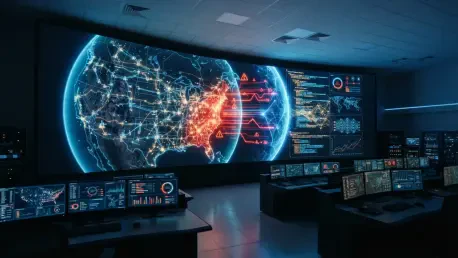
Modern Security Operations Centers are currently facing a crisis of information overload, with thousands of automated alerts being generated every hour. This “alert fatigue” often leads to human analysts missing critical warnings because they are buried under a mountain of false positives. AI-enabled centers have solved this problem by introducing an intelligent triage layer that can automatically categorize and prioritize incoming data based on the severity of the threat and the sensitivity of the targeted asset. These systems use natural language processing and advanced pattern recognition to correlate data from diverse sources, such as corporate emails, network logs, and physical security cameras. If the AI detects a suspicious login attempt on a corporate laptop followed by an unusual command sent to a power substation, it can immediately escalate the event as a high-priority cross-network intrusion. This allows human experts to focus their cognitive energy on complex problem-solving and strategic decision-making, while the AI handles the repetitive task of filtering out the noise. This synergy between human intuition and machine processing speed has drastically improved the overall efficiency of the defensive perimeter.
Zero Trust Architecture: Securing Every Connection Point
The implementation of Zero Trust architecture has become a standard requirement for the decentralized grid of today, which now includes millions of edge devices such as smart meters and electric vehicle chargers. Under this framework, the system assumes that no device or user is inherently safe, regardless of whether they are inside or outside the network perimeter. AI is the engine that makes this continuous verification possible, as it can monitor the behavior of every individual connection in real-time. For instance, if a residential solar inverter that typically only sends data once an hour suddenly begins attempting to communicate with a high-voltage transformer, the AI-driven Zero Trust system will instantly revoke its access. This level of granular control is essential because modern grids are no longer centralized; they are ecosystems of thousands of different vendors and technologies. By enforcing a “least privilege” model where every device only has access to the specific resources it needs to function, AI significantly limits the ability of an attacker to move laterally through the network if they manage to compromise a single endpoint.
Navigating Specific Vulnerabilities
Zero-Day Exploits: Moving Beyond Signature-Based Defense
The threat of zero-day exploits—vulnerabilities that are unknown to the software developer and have no existing patch—remains one of the most daunting challenges for grid operators. Traditional security software is often powerless against these threats because it relies on a library of known “signatures” to identify a virus. AI provides a critical alternative through behavioral analysis, which focuses on how a program acts rather than what it looks like. By establishing a deep understanding of what constitutes “normal” behavior for various grid applications, machine learning models can flag anything that deviates from that baseline as a potential zero-day attack. For example, if a standard communication protocol starts using an unusual amount of memory or begins encrypted communication with an unauthorized external server, the AI can isolate the process before it can execute its payload. This ability to detect “unknown unknowns” gives defenders a fighting chance against state-sponsored actors who spend years developing specialized malware for the sole purpose of taking down critical infrastructure. This behavioral-centric approach is now the primary defense against the most sophisticated digital weapons in existence.
Distributed Resources: Securing the Green Energy Frontier
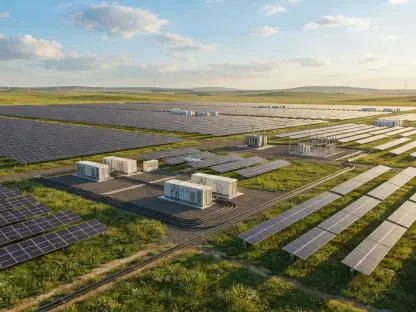
As the transition to renewable energy accelerates, the fragmented nature of distributed energy resources has introduced a new set of security “soft spots” that require specialized attention. Large-scale wind and solar farms often rely on a patchwork of different software versions and communication protocols, making it difficult to maintain a uniform security standard across the entire fleet. AI serves as a unifying layer in this environment, capable of ingesting data from thousands of disparate sources and translating it into a single, coherent security posture. This is particularly important for managing the “vulnerability gap” that occurs when older renewable assets are integrated with brand-new smart grid technology. AI models can specifically monitor these legacy components for signs of tampering, providing a protective “wrapper” that compensates for their lack of modern security features. Furthermore, as more homeowners install battery storage systems and heat pumps, the grid’s edge is becoming more active and complex. AI is now being used to ensure that these consumer-grade devices do not become a “backdoor” for attackers to gain entry into the wider distribution network, maintaining the integrity of the overall system even as it becomes more open and interactive.
Economic and Regulatory Considerations
Market Impacts: Balancing Security Costs and Ratepayer Interests
The financial implications of implementing AI-driven grid security are substantial, creating a complex tension between the need for robust protection and the goal of keeping energy prices affordable. Upgrading a legacy power plant with the latest sensor arrays and high-speed processing units can cost millions of dollars, and these expenses must eventually be recovered through the rates charged to consumers. In 2026, utilities are working closely with state regulators to develop new frameworks for “cyber-prudence,” which allow for the recovery of security investments that can be proven to significantly reduce risk. This has led to a major shift in the insurance market as well; premiums for grid operators are now often tied to the sophistication of their AI defensive systems. Companies that can demonstrate a high level of automated threat detection and rapid recovery capability are seeing lower insurance costs, which helps offset the initial capital expenditure of the technology. This economic feedback loop is encouraging more utilities to move away from the minimum requirements of compliance and toward a more comprehensive, intelligence-based security model that protects both their assets and their bottom line.
Model Transparency: The Rise of Explainable AI in Infrastructure
As artificial intelligence takes on a more central role in managing critical infrastructure, there is a growing demand for transparency in how these models make decisions. For years, many AI systems operated as “black boxes,” where even the developers could not fully explain why a specific action was taken. In the context of the power grid, where an incorrect decision could lead to a regional blackout, this lack of transparency is no longer acceptable to regulators or the public. This has driven the adoption of “Explainable AI” (XAI), which provides a clear audit trail for every automated response. When an AI system isolates a substation or blocks a suspicious command, it must now be able to provide a human-readable justification for that action, citing the specific data points and logic it used. This transparency is crucial for building trust between the human operators and their machine counterparts, and it is also a vital tool for post-incident forensics. By understanding the “why” behind an AI’s decision, engineers can better refine the models and ensure that the system remains reliable under the most intense adversarial pressure, ultimately leading to a more stable and predictable energy environment.
Strategic Evolution of Grid Defense
Agentic AI: The Standard for Autonomous Response
The current trajectory of technological development has led to the standardization of “agentic” AI, which consists of autonomous models capable of taking independent action to resolve low-level security threats. These agents can handle tasks like reconfiguring firewalls, rotating passwords, and isolating compromised devices in milliseconds—far faster than any human could react. This level of automation is necessary because modern cyberattacks often happen at “machine speed,” where a delay of even a few seconds can be the difference between a minor glitch and a total system collapse. However, to maintain safety and accountability, these autonomous agents operate within a strict “human-in-the-loop” framework for any decision that could physically impact the flow of electricity to customers. For example, while the AI might be allowed to block a specific IP address on its own, it would require human authorization before tripping a major circuit breaker. This balanced approach ensures that the grid benefits from the speed of automation while maintaining the ultimate oversight of experienced human engineers, creating a hybrid defense system that is both incredibly fast and inherently safe.
Collaborative Security: Building a Unified Defense Roadmap
Success in securing the modern grid now depends on a unified approach that brings together utilities, government agencies, and technology vendors into a single, collaborative ecosystem. The historical silos that separated corporate IT from the engineering teams managing the physical grid have been dismantled in favor of a “unified visibility” model. In this setup, data flows freely between the business side and the operational side of the utility, allowed by AI that can process and protect information across different domains simultaneously. For stakeholders, the immediate roadmap involves the large-scale mapping of every digital connection in their network and the launch of pilot programs for AI-assisted threat hunting. Governments are also playing a more active role, introducing stricter security mandates for third-party renewable energy providers to ensure that no single link in the chain remains weak. This collective effort is not just about defending against today’s threats; it is about building a foundation of intelligence that can adapt to whatever challenges the next decade may bring. By prioritizing the seamless integration of AI as a force-multiplier for human expertise, the energy sector has positioned itself to keep the lights on in an increasingly hostile and complex digital world.
Future Considerations for National Energy Resilience
The energy sector successfully integrated advanced behavioral analytics into every facet of its defensive architecture, ensuring that the critical infrastructure remained operational despite a surge in sophisticated cyber-adversaries. Researchers from leading institutions and federal agencies collaborated to develop the first generation of truly explainable AI, which allowed operators to verify automated decisions in real-time. This transition from static defense to an active, intelligence-driven posture effectively neutralized dozens of potential cascading failures before they reached the physical layer of the grid. Utilities across the nation prioritized the creation of high-fidelity digital twins, which provided a safe environment for stress-testing new security protocols against simulated state-sponsored attacks. As a result, the time required to detect and isolate a network intrusion was reduced from weeks to seconds, significantly lowering the overall risk to the public. These efforts demonstrated that the survival of the modern power grid depended on the ability of human experts to leverage AI as a force-multiplier, rather than a replacement for professional oversight. The industry moved forward with a clear mandate to maintain this technological edge, ensuring that the foundation of the national economy remained resilient against the evolving digital threats of the era.