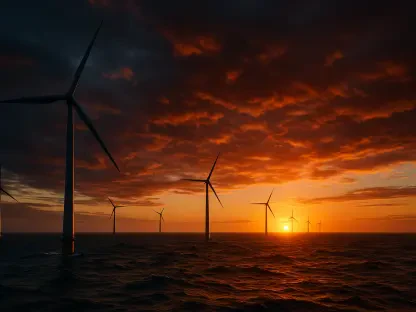

ScottishPower Renewables aims to push the Whitelee facility past the one-gigawatt threshold by installing 124 turbines that are nearly three times the height of the original 2008 models. This overhaul represents the most ambitious example of “repowering” seen to date, a process where aging assets in the renewable fleet are swapped for cutting-edge alternatives. By 2026, the industry has realized that the first wave of wind infrastructure, while revolutionary at the time, is now woefully inefficient compared to modern standards. The move toward larger, more capable structures is not just about raw power; it focuses on reclaiming the potential of existing sites. At Whitelee, the transition signifies a shift from a sprawling collection of smaller units to a concentrated energy hub. This approach allows for a massive increase in total output without needing new land permits or impacting untouched ecosystems, proving that density is the new frontier for onshore wind developments across the globe. By leveraging established locations, energy providers can meet surging demand while maintaining environmental commitments.
The Evolution of Wind Energy Infrastructure
Moving Beyond First-Generation Designs
When Whitelee first opened its gates in 2008, the facility was hailed as a landmark of sustainable engineering, but the rapid acceleration of rotor technology soon made these early machines look like relics. These first-generation turbines were limited by the materials and aerodynamic modeling available at the start of the century. As these machines reach the end of their design lives between 2026 and 2028, the site management team is opting for a total replacement rather than simple repairs. The original units had shorter blades and lower hub heights, which meant they could only capture a fraction of the wind energy flowing over the Scottish moorlands. Modern engineering has since unlocked ways to reach higher altitudes where wind speeds are more consistent and powerful. This evolution is transforming the farm from a high-maintenance network of smaller devices into a streamlined operation. Replacing these aging assets ensures the site remains a central pillar of the grid for decades, providing a template for others.
Maximizing Output With Strategic Downsizing
The core of the modernization plan involves a “less is more” philosophy that swaps 215 older turbines for just 124 massive new units. Despite this 42 percent reduction in the total number of structures, the new turbines will stand nearly 800 feet tall—roughly three times the height of the originals. This scale allows the site to push past the 1-gigawatt threshold, effectively doubling the current power output while making the farm easier to manage and maintain over the long term. This strategic downsizing creates a more efficient layout that maximizes the use of every acre of the wind farm’s footprint. By focusing on quality over quantity, the facility is set to push past its previous limits and redefine the capacity of onshore wind farms. The reduction in total units actually lessens the visual clutter on the horizon from certain vantage points. This approach demonstrates how technological density can solve the challenge of increasing capacity without expanding land use, making energy centers more productive.
Technological Leap and Operational Intelligence
Environmental Protection Through Precision Sensors
Modern turbines are no longer just simple mechanical spinning blades; they are high-tech, data-driven machines equipped with sophisticated sensors. One of the most significant upgrades in this new generation is the use of advanced optical and acoustic systems designed to protect local wildlife. These sensors identify specific species of birds and bats as they enter the vicinity of the blades. When a potential collision risk is detected, the control system automatically adjusts the blade pitch or slows the rotation speed in real time, providing a layer of safety that was mechanically impossible for the older hardware. This shift toward “smart” infrastructure allows wind farms to coexist more harmoniously with local wildlife populations. Furthermore, the integration of these sensors helps operators comply with increasingly strict environmental regulations without having to shut down operations manually, which preserves the overall energy yield and maintains a high level of operational efficiency.
Enhancing Performance With Predictive Maintenance
Beyond environmental protection, smart systems offer predictive maintenance and enhanced grid stability. Real-time monitoring allows operators to catch mechanical issues like friction or wear before they cause a breakdown, significantly reducing downtime. Sensors can detect minute vibrations in the gearbox or thermal changes in the generator, allowing maintenance crews to schedule repairs during low-wind periods. Furthermore, modern control systems are better at handling electrical fluctuations, ensuring that the wind farm provides a steady and reliable flow of power to the national grid even during minor technical glitches. By providing a more consistent and reliable output, these high-tech machines behave more like traditional power plants. This reliability is vital for the grid as it integrates higher percentages of renewable energy, ensuring that consumers receive steady power regardless of short-term weather changes. The integration of such intelligence represents a massive leap over original designs, providing security.
Logistical Challenges and Global Impact
Navigating Engineering Hurdles for Massive Units
Upgrading a wind farm of this magnitude presents unique engineering hurdles, particularly regarding the size of the components. Transporting 787-foot parts through rural roads and over narrow bridges requires intense logistical planning and the use of specialized modular transport systems. These transporters are designed to navigate tight turns and distribute the massive weight of the turbine blades and nacelles. Additionally, because the new turbines are much heavier and catch more wind, the old concrete foundations cannot simply be reused; they must be reinforced or entirely rebuilt to support the massive new loads. Engineers are tasked with excavating existing sites and pouring thousands of tons of high-strength concrete to ensure these towers remain stable for the next twenty years. This infrastructure work is a significant part of the repowering cost, but it is necessary to support the immense physical scale of the modern units. Balancing these logistical constraints is essential for the project’s long-term success.
Establishing Blueprints for Future Energy Hubs
The modernization of the Whitelee facility demonstrated that the path to a high-capacity renewable future required a complete rethink of existing infrastructure. By prioritizing vertical growth and digital intelligence over simple expansion, engineers successfully proved that less hardware could indeed produce more energy. Stakeholders in the energy sector identified the need for comprehensive site assessments to determine which older installations were the best candidates for similar repowering efforts. Future developments focused on the integration of smarter sensors and more robust foundations to accommodate the next generation of massive turbines. This shift stabilized grid connections and reduced the physical footprint of the green energy transition. Decision-makers prioritized the streamlining of logistics and permitting for these upgrades to accelerate the replacement of inefficient assets. The evolution of this site served as a vital example of how existing resources were maximized to meet the rising global demand for clean, reliable power.