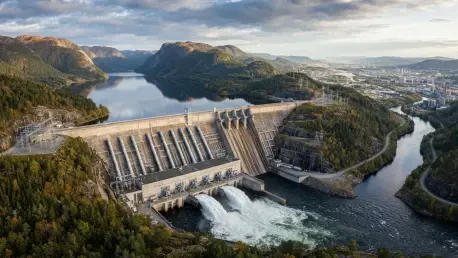

Global pumped storage capacity has officially surpassed the 200 GW milestone, with over 11 GW of new projects commissioned in 2025 alone to support variable energy. This massive expansion signals a fundamental shift in the role of hydropower, which is no longer viewed merely as a static provider of electricity but as a dynamic, high-tech backbone of the renewable energy movement. At the HYDRO 2026 conference in Bologna, industry leaders highlighted that the sector has reached a critical juncture, transitioning from traditional “legacy” infrastructure into a multi-functional cornerstone of the modern green economy. This evolution is being fueled by the necessity to balance the volatility of solar and wind generation while simultaneously addressing the urgent demands of climate resilience. By integrating sophisticated data analytics and innovative engineering, hydropower is being repositioned to maintain grid stability and energy security in an increasingly carbon-neutral world.
The Shift Toward Grid Flexibility
Managing the Rise: Variable Renewable Energy and Grid Volatility
The rapid deployment of variable renewable energy sources, particularly wind and solar, has fundamentally altered the operational requirements of global electricity grids. While the expansion of these technologies is a primary driver of decarbonization, their inherent intermittency creates significant challenges for maintaining a steady supply of power. Solar generation peaks during the day but drops sharply at sunset, while wind speeds can vary unpredictably, leading to a “flexibility gap” where demand and supply are often out of sync. This volatility places immense strain on traditional transmission infrastructure, requiring a balancing mechanism that can respond in seconds rather than hours. Hydropower has emerged as the most viable solution to this problem, offering the unique ability to store energy on a massive scale and release it instantaneously to stabilize fluctuations in frequency and voltage.
Modern electricity systems now rely on hydropower as the “glue” that holds the grid together, providing essential inertia that helps prevent catastrophic failures during sudden shifts in renewable output. Unlike coal or gas-fired plants that take hours to ramp up, hydroelectric turbines can transition from zero to full capacity in a matter of minutes. This rapid-response capability is critical for integrating higher percentages of wind and solar power into national energy mixes. As nations strive to meet ambitious net-zero targets, the demand for this specialized flexibility has surpassed the demand for simple energy generation. Consequently, the industry is shifting its focus toward providing ancillary services, such as black-start capabilities and spinning reserves, which are essential for ensuring that the transition to green energy does not compromise the reliability of modern civilization.
Long-Duration Storage: The Missing Link in the Energy Transition
While batteries are increasingly used for short-term energy storage, long-duration electricity storage remains a significant hurdle for a fully renewable grid. This is where hydropower, specifically in the form of large reservoirs and storage-capable plants, provides an unmatched advantage. These facilities act as massive natural batteries, capable of storing energy for weeks or even months at a time. This seasonal storage is vital for managing extended periods of low renewable generation, such as winter weeks with little sunlight or prolonged “wind droughts.” By absorbing excess energy during periods of high production and discharging it when scarcity occurs, hydropower ensures a continuous supply of clean energy, effectively mitigating the risks associated with a weather-dependent power system.
The strategic importance of long-duration storage has led to a re-evaluation of how hydropower assets are valued within the market. Traditional energy pricing models, which focus almost exclusively on the cost per kilowatt-hour of generation, are being replaced by more sophisticated frameworks that reward duration and flexibility. This economic shift is encouraging developers to optimize existing reservoirs for storage rather than just run-of-river generation. Furthermore, the integration of advanced sensors and real-time monitoring allows for more precise management of stored water, maximizing the efficiency of every cubic meter. As the energy transition progresses, the ability to provide reliable, long-duration storage will be the defining characteristic of a successful national energy strategy, positioning hydropower as the primary insurer of energy security in the 21st century.
The Global Renaissance of Pumped Storage
New Financial Frameworks: Unlocking Investment and Capacity Growth
Pumped Storage Hydropower is currently experiencing an unprecedented global renaissance, driven by a new understanding of its economic and strategic value. After decades of relative stagnation in several Western markets, investment is surging as governments realize that large-scale storage is a prerequisite for a stable, low-carbon grid. By mid-2026, the global development pipeline has ballooned to approximately 621 GW of proposed capacity. This resurgence is not simply a matter of building more dams; it is the result of a fundamental shift in the regulatory and financial environments. Policymakers are increasingly adopting innovative support mechanisms designed to mitigate the long-term risks associated with these capital-intensive projects, providing the revenue certainty that private investors require to commit to a decade of construction and development.
In the United Kingdom, the introduction of the “cap and floor” support regime has served as a primary catalyst for this trend. This mechanism provides a guaranteed minimum revenue for developers to cover their debt obligations while simultaneously capping excessive profits to protect consumers from high energy prices. Such frameworks have successfully unlocked projects that were previously stalled, such as the major developments at Loch Kemp and Coire Glas. This model is now being studied by other nations as a blueprint for accelerating the deployment of long-duration storage. By creating a predictable financial environment, regulators are transforming pumped storage from a risky engineering endeavor into a stable, attractive asset class for global institutional investors, ensuring that the 200 GW milestone is merely the beginning of a larger expansion phase.
Strategic Pipelines: Expanding the Reach of Pumped Storage
The growth of the pumped storage pipeline reflects a global commitment to rethinking energy infrastructure. Projects are no longer viewed in isolation but as integral components of a regional energy strategy. This is particularly evident in regions with high concentrations of offshore wind or large-scale solar farms, where pumped storage facilities are being strategically located to maximize their impact on grid stability. These new projects are utilizing advanced pump-turbine technology that allows for variable speed operation, providing even greater precision in responding to grid demands. This technical evolution ensures that pumped storage can act as a fine-tuned instrument for frequency control, rather than just a blunt tool for bulk energy shifts, making it more relevant than ever in the digital age of electricity management.
Beyond the technological upgrades, the geographical expansion of pumped storage is reaching areas that were previously considered unsuitable. Innovative engineering solutions, such as closed-loop systems that do not require a connection to an existing river system, are reducing the environmental footprint and expanding the potential site locations. These systems use two separate reservoirs and recirculate the same water, minimizing the impact on local aquatic ecosystems. This approach has gained significant traction because it streamlines the environmental assessment process and allows for development in a wider variety of terrains. As these projects move from the planning stages to commissioning, they represent a significant step toward a decentralized and resilient energy architecture that can withstand the fluctuations of a modern, renewable-heavy power market.
Climate Adaptation and Water Security
Multi-Purpose Infrastructure: Hydropower as a Tool for Resilience
Hydropower infrastructure exists at the unique intersection of energy production and critical water management, making it a primary tool for climate adaptation. As global weather patterns become more volatile, the industry faces the dual challenge of managing shifting rainfall and protecting assets from extreme events. However, reservoirs are increasingly recognized as essential multi-purpose assets that provide much more than just electricity. They serve as strategic buffers against the effects of climate change, offering a way to store water during periods of excess and release it during times of scarcity. This dual capability allows hydropower to function as a stabilizer for both the energy grid and the regional water cycle, providing a comprehensive defense against the environmental instability that characterizes the modern era.
The industry is moving toward a management philosophy that prioritizes water security alongside renewable generation. Dams and reservoirs are now being designed or retrofitted to serve multiple socio-economic needs, including the provision of drinking water, the irrigation of agricultural land, and the maintenance of river health during dry spells. By utilizing sophisticated operating rules and advanced hydrological forecasting, dam operators can balance these competing demands more effectively than ever before. This integrated approach redefines the value proposition of hydro assets, transforming them into vital pieces of national security infrastructure. In a warming world where water scarcity is becoming a primary concern, the ability to store and manage vast quantities of water is becoming just as valuable as the carbon-free electricity that the turbines produce.
Mitigation and Adaptation: Protecting Communities from Extremes
Beyond water supply, hydropower reservoirs play a crucial role in protecting communities from the physical impacts of climate change, such as catastrophic flooding. By acting as flood-defense systems, these assets can absorb sudden surges of water from extreme rainfall events, preventing downstream devastation and saving lives. When combined with real-time satellite data and predictive modeling, dam operations can be adjusted in anticipation of major storms, creating extra capacity in the reservoir to catch floodwaters before they reach populated areas. This proactive management strategy demonstrates how traditional engineering can be combined with modern technology to provide high levels of public safety while still generating renewable energy to mitigate the long-term causes of climate change.
This proactive approach to climate resilience is essential for building public trust and ensuring the long-term viability of hydropower projects. Developers are now engaging more deeply with local communities to ensure that the multi-purpose benefits of new and existing dams are clearly communicated and realized. This includes investments in local infrastructure, such as water treatment plants and irrigation networks, which are powered directly by the associated hydropower facility. By positioning hydro assets as regional hubs for climate resilience, the industry is creating a more sustainable and socially acceptable pathway for expansion. The focus has shifted from merely extracting energy from water to providing a comprehensive service that protects and sustains the environments and communities where these facilities are located.
Modernizing an Ageing Global Fleet
The Optimization Strategy: Moving Beyond Simple Maintenance
A significant portion of the global hydropower fleet is reaching a milestone in its operational history, with approximately 40% of the world’s plants now being at least 40 years old. This ageing infrastructure presents a unique challenge, as older components often lack the flexibility required to interact with modern, variable energy grids. However, rather than viewing these plants as liabilities, the industry is adopting a “modernize and optimize” strategy that focuses on life extension and performance enhancement. This paradigm shift moves away from simple “repair and replace” maintenance toward comprehensive upgrades that fundamentally change a plant’s capabilities. By replacing outdated turbines with modern, high-efficiency designs, operators can increase energy output and improve ramp rates without the need for significant civil engineering changes or environmental impacts.
This modernization effort is essential for maintaining the existing capacity of the global renewable energy mix while making the fleet more responsive to market demands. Upgraded generators and control systems allow older plants to participate in the lucrative ancillary services market, providing the fast-acting frequency response that modern grids require. This approach not only preserves the value of historic investments but also offers a more cost-effective and environmentally friendly way to expand renewable capacity than building entirely new “greenfield” projects. Every modernization project represents an opportunity to rethink the facility’s role in the regional energy system, ensuring that even a plant built decades ago can function as a high-tech participant in the current energy transition, providing reliable power for decades to come.
The Rise of Digitalization: Implementing the Smart Dam Concept
The integration of digital technology is perhaps the most transformative development in the modernization of the global hydropower fleet. The concept of the “Smart Dam” involves the deployment of “Digital Twins”—sophisticated virtual replicas of physical assets that are fed by real-time sensor data. These digital models allow engineers to monitor every aspect of a plant’s operation, from the structural integrity of the dam to the temperature of the turbine bearings, all from a remote location. By analyzing trends in this data, operators can perform predictive maintenance, identifying potential issues long before they lead to equipment failure. This proactive approach significantly reduces downtime and maintenance costs, ensuring that assets are available when the grid needs them most.
Furthermore, the implementation of artificial intelligence (AI) is optimizing how water is managed and electricity is generated. AI algorithms can process vast amounts of data, including weather forecasts, hydrological patterns, and real-time electricity prices, to determine the most profitable and efficient generation schedule. This allows operators to maximize the value of every drop of water, shifting generation to periods of high demand while ensuring that environmental flow requirements are met. Digitalization also enhances the safety of hydropower infrastructure by providing continuous, automated monitoring of civil structures, allowing for the immediate detection of even the smallest changes in stability. As the energy market becomes increasingly data-driven, the move toward fully digitalized, smart operations is no longer optional for those who wish to remain competitive.
Hybridization and Integrated Energy Platforms
Strategic Co-Location: Leveraging Infrastructure for Efficiency
Hybridization is rapidly becoming a standard practice in the hydropower industry, transforming individual sites into integrated renewable energy platforms. By co-locating technologies such as solar photovoltaics, wind turbines, and Battery Energy Storage Systems at existing hydro facilities, developers can maximize the utility of their current assets. This approach allows new renewable projects to leverage established grid connections, access roads, and onsite maintenance staff, which significantly reduces the initial capital expenditure and shortens the development timeline. Floating solar panels on hydropower reservoirs, in particular, have gained immense popularity as they utilize the vast surface area of the water while simultaneously reducing evaporation and keeping the panels cool for better efficiency.
This strategic co-location creates a symbiotic relationship between different energy sources, resulting in a more reliable and consistent power output. For instance, solar energy can be generated during the day when the sun is shining, while the hydropower facility conserves water in its reservoir. When the sun sets and solar production drops, the stored water can be used to generate electricity, effectively “shifting” the solar energy to the evening peak. This combination provides a much more stable power profile than any of the technologies could achieve on their own. By turning a single site into a multi-technology hub, the industry is reducing its overall environmental footprint and simplifying the regulatory process, as most of the development occurs on land that has already been through environmental assessments and permitting.
Integrated Platforms: Maximizing Revenue and Resilience
The move toward integrated energy platforms is also a strategic response to the increasing volatility of global energy markets. By diversifying the types of power generated at a single site, operators can protect themselves against fluctuations in market prices and weather patterns. If water levels are low due to a dry season, wind or solar components can still generate revenue, ensuring the financial stability of the project. This diversification makes hybrid hydro sites much more attractive to long-term investors, as the risk is spread across multiple renewable technologies. Furthermore, the inclusion of battery storage at these sites allows for even finer control over energy delivery, enabling operators to provide high-value grid services like ultra-fast frequency response that turbines alone might struggle to match.
The success of these integrated platforms is also driving a shift in how energy policy is formulated. Regulators are beginning to recognize the benefits of “hybrid permits” that cover multiple technologies at a single location, further streamlining the expansion of the renewable sector. As these sites become more common, they are serving as the primary hubs for regional energy transitions, providing a blueprint for how different carbon-free technologies can work together in a unified system. This evolution proves that the future of hydropower lies in its ability to adapt and integrate, moving away from its role as an isolated generator and toward a future where it acts as the central coordinator for a diversified, resilient, and sustainable global energy portfolio.
Strategic Imperatives: Strengthening the Global Hydropower Portfolio
The global hydropower sector successfully navigated a period of profound transformation, solidifying its position as an indispensable partner to wind and solar energy. Through the adoption of innovative financial models like the “cap and floor” regime, regulators effectively unlocked billions in private capital, which accelerated the development of a 621 GW pipeline of storage projects. This progress was further bolstered by the widespread implementation of digital twins and artificial intelligence, which transformed ageing infrastructure into high-performance smart dams. By prioritizing modernization over simple maintenance, the industry preserved existing capacity while adding the flexibility needed to stabilize modern grids. These advancements demonstrated that the integration of digital technology and civil engineering is the most effective way to ensure long-term energy security.
Looking back, the strategic pivot toward multi-purpose infrastructure and hybridization was the key to maintaining social and environmental relevance. Developers who integrated water security and climate adaptation into their project designs successfully built stronger relationships with local communities and mitigated the physical risks of a volatile climate. Actionable next steps for the industry involved the continued standardization of hybrid permitting and the expansion of cross-border grid interconnections to maximize the use of stored energy across regional markets. By treating hydropower sites as integrated energy platforms rather than isolated assets, the sector proved that it could lead the transition to a carbon-neutral world. Moving forward, the focus remained on refining these integrated systems to provide the resilient, reliable, and sustainable power necessary for a thriving global economy.