
The silent humming of silicon processors inside massive concrete warehouses across the American heartland is now clashing directly with the aging humming of high-voltage transformers that keep the lights on for millions of families. While a new data center can be erected and operational in under two years, commissioning the high-voltage transmission lines and power plants required to fuel it can take a decade or more. This misalignment has created a precarious bottleneck where the physical limits of the electrical grid are colliding with the insatiable demand of the AI and cloud computing sectors. The era of guaranteed, “firm” power for every industrial giant is rapidly drawing to a close, replaced by a complex landscape where energy is no longer a static commodity but a dynamic resource that must be managed with surgical precision.
This transition is not merely a technical glitch but a fundamental shift in the relationship between industrial giants and the essential utilities that sustain modern life. As the demand for computation outstrips the pace of physical infrastructure development, the concept of load flexibility has moved from a niche environmental strategy to a core necessity for national economic security. Understanding this transition requires a look at the invisible vacuum currently straining the American power grid and how developers are forced to rethink their very existence as energy consumers.
The Invisible Power Vacuum Behind the Digital Gold Rush
The construction speed of a tier-four facility is breathtaking, often moving from a dirt lot to a fully operational server farm in eighteen months. However, the electrical infrastructure needed to energize these behemoths operates on a different timeline by comparison. Commissioning a major high-voltage transmission line or a utility-scale power plant frequently takes ten years or more due to regulatory hurdles, land rights disputes, and physical labor requirements. This mismatch creates a vacuum where the demand for electrons arrives long before the supply can be delivered, threatening to stall the momentum of the digital economy.
The industry has entered a phase where the luxury of “firm” power—electricity that is guaranteed to be available every second of the year—is becoming a historical artifact. Data center developers who once viewed energy as a static, reliable input now face a reality where they must engage with the grid as active partners. This means the supply chain for digital expansion is no longer limited by the availability of high-end GPUs or skilled technicians, but by the physical capacity of copper wires and the thermal limits of regional transformers.
Managing this vacuum requires a sophisticated approach to how power is allocated across a region. In many jurisdictions, the power grid is already operating at its maximum thermal capacity during heatwaves and cold snaps, leaving no room for the massive, constant loads required by large-scale language model training. As a result, the priority has shifted from simply generating more power to smarter management of the load that already exists on the system.
Why the Traditional Utility Model Is Reaching a Breaking Point
The American power grid was never designed to accommodate the sheer velocity of current industrial growth, particularly in regions like the PJM Interconnection. Serving as a bellwether for the nation, PJM is facing a projected demand surge of 30 gigawatts by 2030, yet current infrastructure projects can only realistically supply about half of that as reliable, constant power. This deficit has forced the North American Electric Reliability Corp. to label vast swaths of the Eastern United States as high-risk zones for reliability as early as 2029. Without a shift in how these massive loads connect to the grid, the digital expansion faces a hard ceiling dictated by physics rather than market demand.
In the past, utilities followed a simple “build and serve” mandate, where they constructed the necessary assets and passed the costs on to ratepayers. However, the scale of data center demand is so immense that this model would require an unprecedented amount of capital and decades of construction that the environment and the public may not tolerate. In Virginia and Ohio, the sheer concentration of data centers has turned once-stable electrical regions into areas of concern where the grid operator must monitor the balance of supply and demand minute by minute.
Furthermore, the integration of intermittent renewable energy sources adds another layer of complexity. As the grid transitions toward solar and wind, the availability of power becomes more variable, which is fundamentally at odds with the “always-on” nature of a data center. The traditional utility model, which relied on the steady baseload of coal and gas, is struggling to maintain that same level of constancy while meeting the soaring needs of the tech sector.
Load Flexibility as the Strategic Release Valve for Grid Constraints
Load flexibility serves as a critical bridge between today’s limited capacity and tomorrow’s infrastructure upgrades. By opting for “non-firm” service pathways, data center operators agree to modulate their electricity usage based on real-time grid conditions. This approach allows the grid to absorb the full 30 gigawatts of projected demand by treating data centers as active participants rather than passive consumers. However, this shift introduces the operational challenge of curtailment—intentional supply reductions during peak emergencies. While many facilities might only see 80 hours of curtailment annually, localized failures could push that number to 400 hours, forcing a fundamental redesign of how “mission-critical” and “disruption-tolerant” workloads are categorized.
To manage this risk, data center architects are beginning to differentiate between the types of work being performed within their halls. For example, the training of an artificial intelligence model is a process that can often be paused and resumed without catastrophic loss, making it a prime candidate for flexible power arrangements. In contrast, the real-time inference that powers emergency services, financial transactions, or hospital records must remain prioritized. By segregating these workloads, operators can shed the non-essential power draw during a grid crisis while maintaining the integrity of their most vital services.
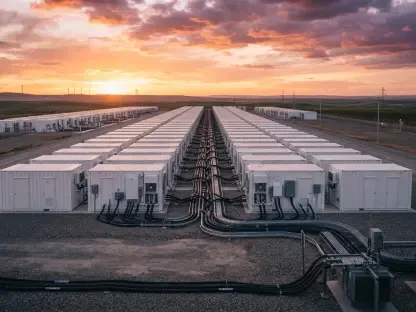
This flexibility also turns the data center into a resource for the grid rather than just a drain. Large facilities equipped with massive battery energy storage systems can discharge power back into the grid during a frequency excursion or a sudden drop in generation. This bidirectional relationship transforms the data center from a source of stress into a stabilizing force that helps the utility maintain the delicate 60-hertz balance required for a healthy electrical system.
The Economic Friction and Social Stakes of Energy Prioritization
The transition to a flexibility-reliant grid carries significant economic weight that extends beyond the tech sector. When the grid operates at its limit, utilities must rely on expensive “peaker” plants—typically older, less efficient units that only run when demand is at its highest—driving up wholesale energy prices and creating upward pressure on costs for all consumers. A fierce debate is emerging over how curtailment risks should be distributed; data center developers seek to cap their downtime to protect profits, while consumer advocates argue that such protections could force rolling blackouts onto residential neighborhoods during extreme weather.
This tension highlights the necessity of a transparent system where industrial users take direct responsibility for the reliability of the local grids they inhabit. There is a growing social concern that the digital gold rush could lead to higher electricity bills for the average homeowner who does not benefit directly from the local data center. If a multi-billion-dollar tech firm uses up the available transmission capacity, the utility may be forced to build new lines at the expense of all ratepayers, creating a situation where the public subsidizes the infrastructure of private enterprise.
Moreover, the ethical implications of power prioritization become stark during severe climate events. If a region faces a historic cold snap and the grid is failing, the choice between keeping a data center running at full capacity and keeping home heaters on is a political and social flashpoint. Ensuring that data centers have robust, flexible load agreements is the primary way to prevent these scenarios, as it provides the grid operator with the contractual authority to dial back industrial usage before residential areas are impacted.
Strategies for Integrating Flexible Demand into the National Energy Framework
The transition toward a flexible grid demanded a radical departure from the passive consumption models of the past. Stakeholders successfully implemented localized demand-response programs that utilized the massive battery arrays within data centers to stabilize the frequency of the regional grid during extreme weather events.