
Introduction
Power bills jumped faster than paychecks, and in New Jersey the surge felt sharper than almost anywhere else, forcing policymakers to move beyond stopgaps and to rewire the rules that shape how electricity is bought, built, and paid for. The state’s regulator, the Board of Public Utilities (BPU), framed a plan that pairs immediate customer relief with deeper market and utility reforms, arguing that both are necessary to blunt today’s spikes and to keep bills steady as demand grows.
This FAQ unpacks why prices climbed, how data centers and capacity markets fit in, and what the BPU is doing to stabilize costs without sacrificing reliability. It answers core questions on storage, interconnection, community solar, transmission oversight, and utility incentives, while outlining what other PJM Interconnection states can learn from New Jersey’s playbook.
Readers can expect clear explanations of the causes behind the price crunch, the tools New Jersey is deploying now, and the structural fixes designed to carry savings from the near term into the next decade. The goal is to turn a complex story into a practical guide to what works, what is changing, and what still needs attention at the regional and federal levels.
Key Questions or Key Topics Section
Why Are New Jersey Electricity Bills Rising So Fast?
Bills rose because wholesale market forces tightened, and New Jersey’s link to PJM’s capacity market made that pain show up quickly in retail rates. Over the last two years, the state posted a 16.9% jump—about $260 per household—versus roughly 6% nationally, a spread that tracks with a faster run-up in capacity prices and transmission charges in PJM.
Basic Generation Service (BGS) auctions translate those wholesale costs into customer bills. When capacity prices spike, the auction outcomes pass cost pressure forward with little delay. A surge in projected demand, led by data centers, collided with slow supply additions and long interconnection queues, creating a mismatch that pushed prices to historic highs.
What Immediate Relief and Protections Did the BPU Put in Place?
The BPU focused first on keeping households connected and bills manageable while broader fixes take root. New Jersey expanded eligibility for the Universal Service Fund and issued bill credits to about 3.9 million accounts using existing funds, providing a fast buffer against wholesale volatility that customers could feel right away.
Equity sits at the center of this relief. The BPU aligned affordability programs with clean energy deployment so that low- and moderate-income (LMI) customers receive guaranteed savings as new resources come online. That thinking shows up in community solar rules that lock in subscriber discounts and in interconnection reforms meant to cut wait times for distributed energy resources (DERs) in neighborhoods that need savings most.
Why Is Energy Storage the Near-Term Lever to Cut Costs?
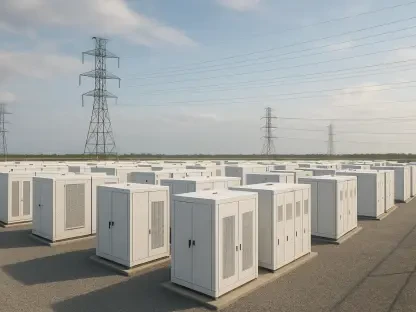
Few resources can be permitted, interconnected, and delivering capacity in the next couple of years. Storage is one of them. Batteries earn high capacity value by discharging during peaks, which is exactly when capacity prices are set, and they can be sited flexibly to relieve local constraints that otherwise drive up transmission and capacity costs.
Moreover, storage can be stacked—wholesale market revenues, peak shaving, and distribution support—so each project’s economics do not hinge on a single value stream. By speeding storage into PJM’s capacity auctions, New Jersey seeks to introduce competition that pushes clearing prices down, benefiting all customers who pay those embedded capacity charges.
What Has the Garden State Energy Storage Program Achieved So Far?
Under the Garden State Energy Storage Program, Tranche 1 awarded 355 MW across three transmission-scale projects, and Tranche 2 opened with 645 MW, hitting the 1,000 MW statutory target. Staff estimates project more than $169 million in ratepayer savings from the extra capacity competition attributable to Tranche 1 alone, a figure that does not count operational benefits like peak reduction.
Timing matters as much as size. All Tranche 1 projects are slated to be online by 2028. That contrasts with new gas plants facing five-plus years of development and interconnection, making it unlikely they would provide meaningful relief before the 2030s. By closing the timing gap between load growth and supply additions, storage offers a practical bridge that traditional generation cannot match right now.
How Will Interconnection Reforms and Community Solar Help Customers?
New Jersey overhauled interconnection rules to clear backlogs that had stalled small-scale solar and storage, especially projects that could reduce feeder peaks and lower local bills. In February, the BPU ordered utilities to report on implementation and detail additional steps to speed connections, creating accountability that had been missing in a process often slowed by opaque studies and serial upgrades.
Community solar expansion amplifies those gains. The state launched a record 3 GW program that guarantees a 20% bill credit for all subscribers, reserves more than half of capacity for LMI households, and provides 25% credits for those LMI customers. The design cushions vulnerable customers from wholesale swings while broadening access to savings and enabling developers to build projects where they are most impactful.
What Market and Utility Business Model Reforms Are Underway?
The BPU is pressing PJM for capacity and transmission planning changes to protect ratepayers as large loads reshape the grid. At the same time, it is evaluating potential BGS procurement reforms that could diversify products, reduce exposure to single-year capacity spikes, and better align purchases with state policies like storage and DER growth.
Inside the fence line, the board is shifting utility incentives. New Jersey has begun tying portions of return on equity to performance metrics and is studying performance-based ratemaking, multi-year rate plans, and securitization. This evolution, initiated by executive direction, aims to reward outcomes—affordability, reliability, interconnection speed—rather than purely capital deployment, which historically pushed costs upward even when cheaper non-wires alternatives existed.
How Is the State Managing the Surge in Data Center Load?
Data centers dominate new load forecasts and, without careful policy, can shift costs onto households. New Jersey is exploring “bring-your-own-generation” concepts and dedicated procurement requirements so that large users contribute capacity and energy commensurate with what they consume, easing stress on shared infrastructure.
The BPU is also advocating within PJM to better integrate these large loads by aligning their interconnection timelines with resource additions. Revised retail cost allocation is on the table so that those who drive new upgrades bear appropriate costs, anchoring the “beneficiary pays” principle that prevents socializing private development risks across residential customers.
What Is New Jersey Doing About Transmission Costs and Federal Oversight?
Transmission spending has increasingly flowed into rates with limited scrutiny through formula mechanisms and noncompetitive processes. New Jersey, joined by the Division of Rate Counsel and PSE&G, successfully challenged PJM’s “de minimis” rule at FERC, which had caused consumers to subsidize beneficiaries elsewhere since 2015. FERC eliminated the rule and ordered refunds, with staff estimating hundreds of millions in repayments and tens of millions in ongoing annual savings.
The BPU continues to push FERC to end the presumption of prudence for projects lacking competition or robust needs assessments. The objective is straightforward: more transparency, more competition, and tighter consumer protections. By resetting the default toward oversight, the state aims to stop cost creep at its source, not just argue about it after the bills arrive.
Can Other PJM States Replicate This Approach?
Yes, and many pieces translate cleanly. Storage can be fast-tracked to introduce capacity competition. Interconnection can be streamlined to unlock DERs that cut peaks locally. Community solar can deliver guaranteed discounts, with LMI carve-outs that spread savings fairly. Each step complements the others, turning disparate programs into a coherent affordability strategy.
Beyond programs, governance choices matter. Challenging unfair transmission allocations, refining procurement to hedge capacity risk, and tying utility earnings to performance are portable moves. The common thread is speed in deploying near-term tools while reworking the rules that pour wholesale dynamics into retail bills.
What Are the Limits of State Action, and What Still Needs to Change Regionally?
State commissions can deliver tangible relief and accelerate fast-to-build resources, but durable affordability also depends on PJM and FERC. Capacity market design must keep up with rapid load growth and flexible resources like storage, while transmission planning needs transparent cost controls and competitive pressure.
That is why New Jersey pairs state implementation with regional advocacy. By engaging PJM stakeholder processes and litigating at FERC when necessary, the BPU seeks to align regional rules with ratepayer protection. The lesson is clear: act locally to lower bills now, and push regionally to keep them low later.
Summary or Recap
New Jersey confronted sharp retail price increases tied to PJM’s capacity and transmission dynamics, with data centers amplifying demand. The BPU answered with a three-pillar strategy: immediate bill assistance and protections; accelerated supply through storage and solar; and market, transmission, and utility business model reforms that target recurring cost drivers.
Early milestones included 355 MW of Tranche 1 storage awards, a 645 MW Tranche 2 that meets the 1,000 MW target, and staff estimates of more than $169 million in savings from added capacity competition. Interconnection overhauls and a 3 GW community solar program with guaranteed credits broaden access to savings, while FERC action on the “de minimis” rule unlocked refunds and ongoing reductions in transmission charges.
For deeper exploration, readers can review BPU dockets on storage and interconnection, PJM capacity market filings, and FERC orders related to transmission cost allocation and formula rates. Together, these sources map the policy pathway that connects immediate relief to long-term bill stability.
Conclusion or Final Thoughts
The strategy laid out a credible route from crisis response to structural change, using storage as the bridge, interconnection as the unlock, and governance reforms as the guardrails. It prioritized speed where fast action paid dividends and patience where market rules and utility incentives required careful redesign.
Looking ahead, the most actionable next steps centered on executing Tranche 1 and Tranche 2 storage on schedule, enforcing interconnection timelines, refining BGS procurement to temper capacity shocks, and pressing PJM and FERC for transparent planning and fair cost allocation. If those pieces stayed on track, households would have faced a steadier bill path, while the grid gained resilience tailored to a future shaped by large loads and distributed resources.