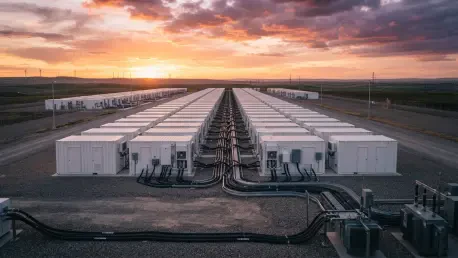

String power conversion systems distribute the workload across hundreds of smaller independent units to ensure that a single component failure does not disable a large portion of the site. As the global energy transition accelerates throughout 2026, developers and owners of Battery Energy Storage Systems (BESS) face a critical hardware decision that dictates long-term financial viability. The central metric in this debate is “availability”—the proportion of time a plant can deliver its rated power to the grid. This metric has become the primary driver for investment returns as grid operators demand stricter performance guarantees and higher reliability. The choice between string and central Power Conversion System (PCS) architectures influences maintenance cycles, failure rates, and the overall reliability of a storage facility. While hardware selection is foundational, the ultimate success of any project depends on how well these components integrate with a robust operations and maintenance strategy. Modern grid services require nearly instantaneous response times, making architecture a defining factor.
The Reliability Paradox: Mean Time Between Failures
Reliability in power electronics is often dictated by a parts-count model, which fundamentally impacts the Mean Time Between Failures (MTBF). Because a central converter is a large, complex assembly containing many essential components, cooling systems, and power modules, the statistical probability of a component failure that trips the entire unit is naturally higher. Each individual component, from capacitors to high-power fans, acts as a potential point of failure that can compromise megawatts of capacity at once. Conversely, a string converter is a smaller, simpler assembly with far fewer internal parts, typically leading to a higher unit MTBF. Current industry data from projects launched between 2026 and 2028 suggests that individual string inverters can exhibit an MTBF nearly double that of their central counterparts. This design simplicity is not just about having fewer parts but also about lower thermal stresses and standardized manufacturing processes that improve the consistency of every unit shipped.
However, a higher unit MTBF does not mean a string-based plant requires less attention; in fact, the opposite is often true for site managers. In a large-scale project, a fleet of hundreds of string units will experience a higher total frequency of individual faults compared to a fleet of only a dozen central units. This is a statistical certainty: with more devices in the field, the frequency of a maintenance technician being called to the site happens more often. The trade-off is one of impact rather than frequency. While a string system requires more frequent maintenance visits, each specific fault is significantly less disruptive to the plant’s total output and revenue stream. The reliability of the system is therefore a delicate balance between the frequency of repairs and the amount of capacity lost during each event. For developers, this necessitates a shift in perspective where the goal is not to eliminate all failures but to manage their impact on the total power envelope through decentralized hardware.
Performance Metrics: Comparing Capacity Loss Benchmarks
To quantify the operational differences between these designs, consider a 50 MW project modeled using both architectures under current market conditions. A central layout might utilize 13 large converters, while a string layout could involve 218 smaller units to achieve the same nameplate capacity. Modeling demonstrates that while the string fleet encounters over eight times as many individual faults as the central fleet, the total annual capacity loss is drastically lower. This is because each string failure only removes a tiny fraction of the plant’s total capacity, whereas a central unit failure removes one-thirteenth of the entire facility’s power in a single stroke. This granularity provides a safety net for the owner, ensuring that the facility never goes completely dark due to an inverter fault. The statistical predictability of the string model allows for more aggressive bidding in energy markets, as the risk of a massive, sudden capacity drop is effectively engineered out of the primary conversion stage.
The modeling reveals that a string architecture can reduce annual capacity loss by over 50% when compared to a central system with a standard 24-hour repair window. This advantage grows even more lopsided if the repair window for the central system extends to 72 hours, as is common in remote regions with limited technician availability. These findings highlight that availability is not just a hardware specification found on a datasheet but a function of both the equipment size and the speed of the service response. Efficient service can sometimes outweigh architectural differences, as reducing restoration time for central units can cut modeled losses by two-thirds. However, achieving such rapid response for complex central systems often requires expensive on-site technician contracts. In contrast, the modular nature of string units allows for a swap-and-go approach that can be handled by less specialized staff, provided the logistical chain for spare parts is maintained with high efficiency throughout the year.
Operational Excellence: Maintenance and Logistical Synergy
The theoretical benefits of a string PCS are only realized through a proactive and highly organized service plan. Because this approach relies on a high-frequency, low-impact failure model, success requires immediate access to on-site spares and a logistics chain that allows for rapid swaps. If an O&M contract only mandates monthly maintenance visits, the advantage of a string system disappears as small faults accumulate and remain unresolved for weeks, eventually leading to a massive aggregate capacity loss. Contractual alignment must ensure that spare-part delivery and technician response times are synchronized with the specific needs of the distributed hardware. For projects starting in 2026, owners are increasingly insisting on service level agreements that penalize cumulative downtime rather than just total system failure. This shift favors the string approach, but only when the owner has verified that the manufacturer has the local warehouse capacity to support hundreds of active units without delays in shipping or dispatch.
Despite the focus on inverter granularity, both architectures remain susceptible to single points of failure within the shared infrastructure of the BESS plant. Components such as medium-voltage transformers, common control systems, and shared protection trips can cause total plant shutdowns regardless of whether the inverters are string or central. Therefore, a narrow focus on PCS granularity should not lead developers to neglect these critical shared components during the design and procurement phases. The trend in the BESS market is moving toward more sophisticated availability claims where the business case is built on the total predictability of power delivery. This requires a holistic view of the balance of plant, where redundant controllers and high-quality switchgear complement the chosen inverter architecture. Focusing solely on the conversion units while ignoring the common AC bus or the site-wide SCADA system can lead to unexpected outages that render the benefits of a decentralized string architecture entirely moot.
Strategic Selection: Risk Management for Asset Owners
The choice between string and central PCS is ultimately a lesson in risk management rather than a simple search for a superior technology. String systems offer a defense in depth against large-scale capacity loss but demand a high-touch maintenance model with frequent interventions. Central systems offer structural simplicity and fewer moving parts to track, but they require rapid, high-skill intervention from specialized technicians to prevent significant downtime. There is no one-size-fits-all winner; instead, there is a choice of which maintenance profile a developer is better equipped to handle over the project’s twenty-year lifespan. Some owners prefer the set-it-and-forget-it nature of a few large units, accepting the risk of larger outages for the sake of lower administrative overhead. Others prioritize the certainty of energy delivery and are willing to manage the logistical complexity of a string-based fleet. This decision often hinges on the geographic location of the site and the proximity to the service centers.
In the final analysis, the availability of a battery plant reflected how well the hardware architecture was supported by human and logistical infrastructure. Smaller, more frequent outages in string systems made the available capacity of a BESS plant more predictable, which was vital for meeting grid commitments. However, the duration of an outage—the Time to Repair—had a more significant impact on total capacity loss than the frequency of failures. Owners who achieved the highest returns prioritized evidence-based restoration times and the guaranteed availability of on-site spares just as much as the technical specifications of the converters themselves. Moving forward, developers were encouraged to audit the manufacturer’s local support network before signing contracts. Selecting an architecture became a commitment to a specific logistical lifestyle. Success was found when the operational strategy mirrored the hardware’s unique failure profile, ensuring that the promise of renewable energy storage was met with consistent, reliable performance.