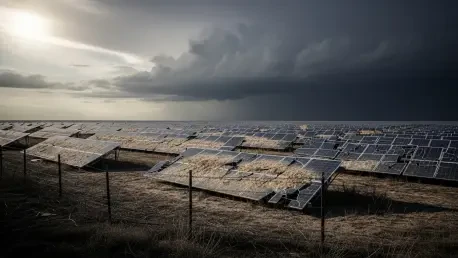

In the sprawling, sun-scorched plains of West Texas, where oil derricks once stood as the solitary icons of economic might, a silent revolution of silicon and glass has propelled the state to a position of global renewable leadership that few could have predicted just a decade ago. While the oil and gas industry remains the cultural and economic backbone of the region, the rapid proliferation of utility-scale solar arrays has transformed the horizon, making Texas the undisputed heavyweight champion of the American energy transition. However, this success has not been met with universal acclaim in the halls of power in Austin. Instead, a complex and aggressive political counter-offensive is unfolding, as state leaders seek to recalibrate a market that has become, in their view, dangerously tilted toward intermittent resources. The resulting friction between market-driven efficiency and state-level protectionism has turned the Lone Star State into a high-stakes battlefield for the future of the global power grid.
The Solar Paradox in the Energy Capital of the World
The current year has witnessed a milestone that would have seemed like science fiction at the start of the century: solar energy consistently generated more electricity for the Texas grid than coal-fired power plants. This achievement is a testament to the brutal efficiency of the Texas market, where the plummeting costs of photovoltaic technology combined with the state’s legendary solar radiance have created an environment where renewables are simply the most profitable choice for investors. As of the current trajectory from 2026 to 2028, the Texas grid is expected to integrate record-breaking levels of new capacity, further cementing its status as the nation’s leader in solar deployment. Yet, as solar panels increasingly dominate the landscape, the political establishment has responded with a series of legislative and regulatory hurdles designed to slow this momentum. This paradox creates a bizarre reality where the “energy capital of the world” is actively fighting against its own most successful and cost-effective energy export.
The tension is rooted in a fundamental disagreement over what constitutes a healthy energy market. On one side, developers and economists argue that the Electric Reliability Council of Texas (ERCOT) is functioning exactly as intended, favoring the lowest-cost generation to keep prices down for millions of residents and businesses. On the other side, influential political figures in the state capital argue that the rapid rise of solar is an artificial “explosion” fueled by federal subsidies, which they believe distorts the market and threatens long-term stability. This philosophical divide has led to a climate of uncertainty, where multibillion-dollar projects are increasingly scrutinized not just for their technical viability, but for their political alignment. The state’s leadership is no longer content to let the invisible hand of the market dictate the energy mix, signaling a decisive move toward a more interventionist approach that prioritizes “traditional” thermal generation over the surging solar sector.
Why the Lone Star Energy Transition Matters
The outcome of this struggle carries implications that extend far beyond the borders of Texas, serving as a critical bellwether for the global energy transition. As an independent power grid that does not cross state lines, ERCOT operates as a massive laboratory for energy policy, allowing Texas to experiment with market designs that other regions can only observe from a distance. If Texas successfully implements a regulatory regime that curbs solar growth in favor of natural gas, it could provide a blueprint for other fossil-fuel-rich jurisdictions looking to protect legacy industries. Conversely, if the sheer economic force of solar energy overcomes these political obstacles, it will prove that the transition to renewables is a market inevitability that even the most powerful political actors cannot fully arrest. This makes the Texas experience a vital case study for international investors who are closely watching how a major economy manages the transition from carbon-intensive fuels to a diversified, low-carbon future.
Furthermore, the conflict touches on the sacred Texan tenets of property rights and local autonomy. For decades, rural landowners have exercised their right to lease their property for oil and gas extraction or wind turbines, but the recent push for solar has tested the limits of this “pro-business” philosophy. Many rural communities now find themselves at the center of a debate over land use, as state leaders propose measures that would give local municipalities or state agencies unprecedented power to veto solar projects. This shift represents a significant departure from the state’s traditional hands-off approach to land management, highlighting a willingness to sacrifice individual property rights in order to achieve broader political objectives. The resulting tension between the needs of the modern energy grid and the desires of local stakeholders is a microcosm of the challenges facing energy developers across the globe.
The Multi-Pronged Offensive Against Solar Infrastructure
The current offensive against solar power is a sophisticated, multi-pronged campaign that utilizes every lever of state government, from legislative committees to executive agencies. One of the most prominent narratives emerging from Austin involves national security and the origins of solar hardware. Lawmakers have increasingly characterized the solar industry’s reliance on international supply chains as a strategic vulnerability, questioning whether hardware manufactured in certain foreign nations could serve as a gateway for sabotage. This framing has led to a resurgence of interest in the Lone Star Infrastructure Protection Act, with state senators demanding rigorous vetting of any company looking to connect to the Texas grid. While proponents argue this is a necessary defense against cyber-warfare, critics see it as a convenient way to add layers of bureaucracy and cost to renewable projects that are already facing stiff competition from subsidized gas plants.
Beyond the legislative chambers, the Public Utility Commission (PUC) has become a primary site of regulatory resistance. In recent administrative rulings, the commission has signaled a clear preference for “dispatchable” energy—a term that has become political shorthand for natural gas and coal. By stalling interconnection requests for solar and battery storage projects or requiring them to undergo more rigorous “reliability” testing, regulators are effectively slowing the pace of deployment. These decisions are often justified under the guise of grid stability, with officials arguing that the variable nature of solar power creates operational challenges that must be mitigated by traditional thermal plants. This regulatory tightening is paired with a high-profile legal offensive from the Attorney General’s office, which has initiated “widespread” investigations into the rooftop solar sector. By framing a booming industry as one rife with deceptive practices, the state is effectively tarnishing the reputation of solar power in the eyes of the general public.
The Shadow of Winter Storm Uri and the Reliability Debate
Much of the political hostility toward the solar sector is a lingering byproduct of the trauma caused by the 2021 grid collapse during Winter Storm Uri. Although multiple independent post-mortem analyses confirmed that the vast majority of the generation failures were due to frozen equipment at natural gas plants and issues in the fuel supply chain, the political narrative in the state capital has consistently shifted the blame toward wind and solar. This repurposing of the disaster has allowed state leaders to frame the expansion of renewables as an inherent risk to public safety. This narrative serves as the foundational justification for the Texas Energy Fund, a $5 billion taxpayer-supported initiative specifically designed to provide low-interest loans for the construction of new natural gas plants. This fund represents a massive state intervention into the market, aimed at forcing a “balance” that the market itself was not producing.
The technical debate often centers on the difference between “dispatchable” and “variable” power. State officials argue that solar energy’s greatest flaw is its inability to produce power during the late summer evenings when temperatures remain high but the sun has set, or during the early morning hours of a winter freeze. They contend that as solar takes up a larger share of the energy mix, the grid becomes more fragile, requiring a massive, redundant fleet of gas plants to stand by for when the sun goes down. This “forced balance” policy has become a central tenet of Texas energy planning, where renewable growth is viewed not as a benefit but as a liability that must be offset by subsidized thermal generation. This perspective ignores the rapid advancements in battery storage technology, which are already proving their ability to bridge these gaps, but the political momentum remains focused on traditional combustion-based solutions.
Strategies for Navigating the Shifting Texas Energy Landscape
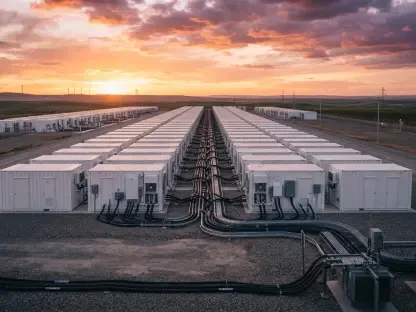
For stakeholders operating within the Texas energy market, the path forward requires a sophisticated understanding of this evolving political and regulatory landscape. Economic efficiency and low operational costs are no longer the only metrics for success; developers must now account for a “political risk premium” that involves navigating complex security audits and shifting regulatory requirements. One of the most effective strategies for solar developers in this environment is the aggressive integration of long-term battery storage. By pairing solar arrays with large-scale storage capacity, the industry can directly address the “dispatchability” concerns raised by the Public Utility Commission. This technological synergy not only makes projects more resilient and profitable during peak demand periods but also blunts the primary political argument used against the expansion of solar infrastructure.
The industry also began to lean more heavily on the “pro-Texas” economic arguments that once made it a darling of rural development. Solar leases have provided a vital financial lifeline for thousands of ranchers and farmers, offering a stable source of income that is immune to the volatility of agricultural markets or the cyclical nature of the oil and gas sector. By emphasizing the massive contributions to local school districts and infrastructure through solar tax revenue, advocates have worked to build a defensive coalition of local stakeholders who are wary of state-level interference in their property rights. Furthermore, a growing focus on building domestic supply chains and supporting American-made components helped the industry mitigate the national security narrative. As the state moved toward the 2027 legislative cycle, the solar sector focused on demonstrating that it was not an outsider, but a core component of the Texas economy that provided the reliability and security the state leadership claimed to value.
The transition toward a more diversified energy portfolio remained a contentious journey, yet the fundamental shift in strategy proved essential for the industry’s survival. Market participants recognized that the era of unfettered solar growth was replaced by a more complex period of negotiation and adaptation. Stakeholders focused on aligning their business models with the state’s stated goals for grid hardening, which included investments in hybrid systems that merged solar generation with robust storage capabilities. This proactive approach allowed the sector to maintain its momentum even as regulatory scrutiny intensified. By late 2025, the industry had successfully pivoted to highlight how solar power actually reduced the strain on traditional thermal plants during extreme heatwaves, thereby enhancing overall system reliability. This shift in messaging, combined with the undeniable economic benefits of low-cost energy, ensured that the solar revolution in Texas continued to move forward, albeit under a more watchful and cautious regulatory eye.