
The hum of server farms has become the heartbeat of the modern economy, yet the sheer volume of electricity required to sustain these digital cathedrals is beginning to strain the physical limits of the power grid. As the artificial intelligence revolution accelerates, the massive facilities powering the digital world are moving from the shadows of industrial parks into the crosshairs of state legislatures. This surge in digital infrastructure brings an unprecedented demand for electricity, sparking a critical debate over who should foot the bill for grid upgrades: the multi-billion dollar tech companies or the average homeowner. This article explores the emerging trend of aggressive data center energy oversight, analyzing the legislative shifts, real-world financial guardrails, and the future of sustainable industrial growth.
The Shifting Landscape of Utility Oversight
Global Trends in Power Demand and Regulatory Response
Across the globe, the threshold for what constitutes a high-impact energy consumer is dropping rapidly. Regulators are no longer just looking at massive 100-megawatt (MW) facilities; new legislation is evolving to capture smaller sites by lowering eligibility to 50 MW. This shift acknowledges that even mid-sized centers contribute significantly to the cumulative strain on regional networks. By broadening the scope of oversight, authorities ensure that a wider array of digital infrastructure projects contribute their fair share to grid maintenance.
To close potential loopholes, lawmakers are introducing aggregation clauses that treat contiguous or commonly owned sites as a single entity. This prevents developers from fragmenting projects across multiple adjacent parcels to bypass energy caps or regulatory triggers. Such measures are vital as AI-driven load growth places immense pressure on regional entities like PJM Interconnection. These organizations must now navigate a landscape where industrial consumption could potentially outpace the development of new generation capacity, necessitating a more granular view of industrial demand.
Case Study: New Jersey’s Pioneering Legislative Framework
New Jersey recently positioned itself at the forefront of this movement with a landmark bill passed for Governor Mikie Sherrill’s approval. This legislation moves beyond simple monitoring by imposing strict take-or-pay arrangements on data center operators. Companies must now commit to an 85% service commitment for a full decade, providing the financial stability utilities need to invest in infrastructure without risking stranded assets. This fiscal guardrail ensures that if a tech firm scales back or leaves, the cost of the specialized infrastructure does not fall on the public.
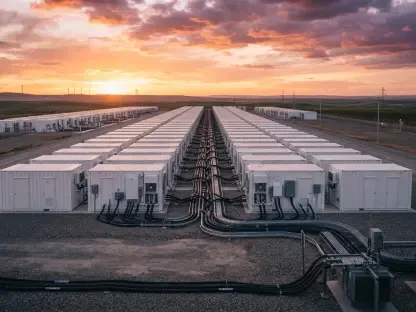
Furthermore, the state has pioneered a bring your own capacity model to encourage self-sufficiency. Under this framework, data centers that integrate on-site clean energy or storage solutions receive interconnection priority over those relying solely on the existing grid. This creates a symbiotic relationship where the industry’s hunger for power drives the expansion of local green energy rather than depleting the public’s supply. It effectively transforms large-scale consumers into active participants in grid resilience.
Perspectives from Policy Advocates and Industry Experts
Organizations like the Natural Resources Defense Council (NRDC) highlight the necessity of balancing innovation with residential protection. They argue that without these guardrails, the cost of upgrading substations and transmission lines would inevitably trickle down to household utility bills. Policy advocates believe that by standardizing tariff structures, states can foster a predictable environment for tech investment while keeping costs equitable for everyone. This perspective emphasizes that technological progress must not come at the expense of social equity.
Industry veterans are also grappling with the reality of priority curtailment. In this scenario, data centers agree to be the first to lose power during extreme grid emergencies to protect hospitals and residential areas. While this seems like a significant hurdle, it encourages operators to invest in sophisticated backup systems and demand-response programs. Utility providers favor this approach because it establishes clear transmission security agreements, ensuring that large-scale projects are not duplicative or detrimental to the existing power architecture.
Future Outlook: Scaling the Digital Economy Sustainably
The New Jersey blueprint is likely to spark a domino effect across other states facing similar digital growth. As the competition for power intensifies, states that offer clear regulatory pathways and stable cost-recovery mechanisms will likely become the preferred hubs for AI development. Mandatory efficiency standards are no longer just environmental suggestions; they are becoming essential architectural requirements for any new build. This trend suggests that the future of the digital economy will be defined by how well it integrates with local utility constraints.
Long-term success depends on aligning industrial expansion with state-level climate targets and green energy transitions. States that successfully navigate this transition will transform data centers from energy drains into partners in the green transition. However, a significant challenge remains in balancing these strict regulations against the economic competitiveness of different regions. States with more permissive laws may attract short-term investment, but those with robust frameworks like New Jersey’s are building for long-term stability and public trust.
Conclusion: Balancing Innovation with Public Interest
The transition from unregulated expansion to a model of fiscal and operational accountability signaled a turning point for the digital economy. This shift ensured that the financial risks of massive industrial infrastructure were borne by the corporations benefiting from them rather than by small-business and residential ratepayers. Legislative clarity proved that smart regulation could act as a catalyst for sustainable progress rather than a barrier. By requiring data centers to internalize their external costs, policymakers fostered a more honest and durable technological landscape.
Moving forward, the integration of on-site renewables and demand-response flexibility became the gold standard for global industrial growth. By insulating the public from the costs of the AI boom, authorities created a resilient framework that allowed technological innovation to thrive in harmony with community needs. This evolution redefined the role of data centers as responsible stakeholders. The result was a more stable grid and a digital economy that grew in step with the environmental and economic realities of the modern world.