
Introduction
When Arctic blasts swept across the nation in early 2026, the resilience of the American power grid became the ultimate test for federal regulators and regional energy operators alike. Maintaining a reliable flow of electricity during extreme temperature drops is no longer just a technical goal but a necessity for public safety and economic stability. This article examines the findings of a recent report from the Federal Energy Regulatory Commission and the North American Electric Reliability Corp., which highlights a significant shift in grid performance and readiness.
The objective is to explore how the U.S. power grid managed to withstand record-breaking demand without the catastrophic failures seen in the recent past. By analyzing specific outages, regional cooperation, and federal intervention strategies, this discussion provides a clear picture of the current state of energy resilience. Readers can expect to learn about data-driven improvements in power plant readiness and the coordination that defined the recent winter seasons. This analysis sheds light on the lessons learned from previous hardships and how those insights were translated into actionable policies.
Key Questions or Key Topics Section
How Did Winter Performance in 2026 Compare to Previous Catastrophic Weather Events?
The effectiveness of modern winterization efforts is most evident when comparing current data to the devastating impacts of major storms in 2021 and 2022. During those earlier events, the grid suffered from massive unplanned outages that left millions of people in the dark and cold for extended periods. In contrast, the most recent winter season demonstrated a remarkable ability to keep the lights on even as temperatures plummeted across the Eastern Interconnection and the Texas region.
Statistical evidence supports this improvement, showing that peak outages in the Eastern Interconnection dropped to approximately 49,700 MW in January 2026, which is nearly half of the 90,500 MW lost during Winter Storm Elliott. Similarly, the Electric Reliability Council of Texas recorded peak outages of 19,420 MW, a sharp decline from the 35,300 MW experienced during Winter Storm Uri in 2021. These figures suggest that proactive changes in cold-weather preparation and fuel readiness are finally yielding tangible results for the nation’s energy infrastructure.
What Role Did Interregional Power Transfers Play in Maintaining Grid Stability?
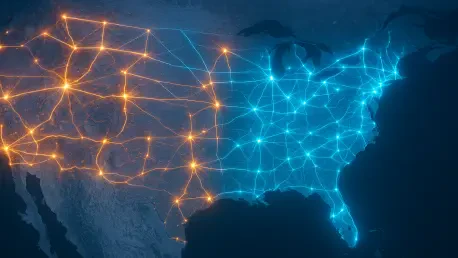
As weather patterns become more volatile, the ability to move electricity across state and regional lines has emerged as a cornerstone of modern grid reliability. This interconnectedness allows regions facing extreme demand to draw surplus power from areas where the weather is less severe or where generation capacity remains high. The recent winter storms highlighted this “two-way benefit,” where states shifted between being exporters and importers of energy based on the immediate needs of the surrounding grid.
For instance, the Midcontinent Independent System Operator successfully imported 9 GW of power from the PJM Interconnection and Canadian sources to satisfy local demand during peak periods. Florida also demonstrated this flexibility, utilizing interregional transfers to stabilize its local supply as different storm fronts moved through the Southeast. This level of cooperation between regional operators ensures that localized weather events do not escalate into widespread blackouts, providing a safety net that was less robust in previous decades.
How Have Federal Responses and Backup Strategies Shifted to Address Peak Demand?
The federal government has adopted a more proactive stance toward energy security by leveraging emergency authorities to prevent manual load sheds during extreme weather. During the early months of 2026, the U.S. Department of Energy issued 15 emergency orders under the Federal Power Act to ensure that capacity was available when it was needed most. These orders authorized large facilities, such as data centers, to use their backup generation systems as a last resort, marking a shift in how industrial loads are integrated into grid stability plans.
Furthermore, federal regulators directed several coal-fired power plants to delay their planned retirements to ensure that sufficient generation capacity remained online during the coldest months. While some of these backup measures were ultimately not required, their inclusion in the national strategy provided an essential buffer against the unpredictability of winter weather. This multifaceted approach, combining traditional generation with innovative backup solutions, reflects a more holistic view of what it takes to maintain energy security in a high-demand environment.
Summary or Recap
The overall progress in grid resilience is a result of better winterization, improved load forecasting, and enhanced regional coordination. These efforts have successfully mitigated the risk of forced blackouts, even when electricity demand reaches near-record levels of 666 GW across the nation. The reduction in unplanned outages serves as a clear indicator that the industry is moving in the right direction regarding cold-weather preparedness and fuel management.
Moreover, the “gas-electric nexus” continues to be a focal point for regulators who recognize the interdependence of fuel supply and power generation. Strengthening this relationship through better pipeline coordination and storage capacity remains vital for long-term stability. For those interested in a deeper understanding of these technical requirements, further exploration of the joint reports from federal agencies provides extensive data on infrastructure needs and the evolution of regulatory standards.
Conclusion or Final Thoughts
The successful navigation of the 2026 winter storms proved that the U.S. power grid was capable of evolving to meet the challenges of extreme weather. While the immediate results were positive, the focus shifted toward the ongoing need for infrastructure investment and more accurate load forecasting. It was clear that the physical systems used to transport fuel and electricity required continuous upgrades to keep pace with changing environmental demands.
Looking ahead, individual consumers and industries were encouraged to consider their own roles in energy conservation during peak events. The lessons from these successful winter operations highlighted that a resilient grid was not just a product of technology, but also of strategic planning and cross-sector cooperation. By prioritizing these investments, the nation moved closer to an energy system that remained reliable regardless of the temperature outside.