
Navigating the High-Stakes Balancing Act of Modern Energy Infrastructure
The American energy landscape is currently undergoing a seismic shift as investor-owned utilities aggressively escalate their capital expenditure plans toward a record-breaking $1.4 trillion. Driven by a sudden surge in electricity demand after decades of stagnation, utilities are committing to this staggering figure for infrastructure development through 2030. This strategic pivot aims to modernize an aging grid and accommodate the digital revolution, but it has sparked a national conversation regarding the sustainability of energy costs for the average consumer. This analysis explores the tension between necessary grid modernization and household affordability, examining whether the current spending trajectory is a blueprint for progress or a precursor to a financial crisis for ratepayers. The stakes are particularly high as the industry moves away from the predictable patterns of the early twenty-first century into an era defined by high-density power requirements.
The Evolution of Utility Investment and the End of Flat Demand
For much of the past twenty years, the utility industry operated in an environment of relatively flat electricity consumption. Efficiency gains in appliances and lighting largely offset the growth of the population, allowing for predictable, incremental infrastructure updates. However, this period of stability has ended abruptly in the face of new industrial requirements. A digital gold rush fueled by artificial intelligence, massive data centers, and cryptocurrency mining has fundamentally altered the demand curve. Consequently, utilities have boosted their five-year investment projections by approximately 21% over the last year alone, marking a historic departure from past development patterns. Understanding this shift is vital, as it explains why the modest rate increases of the past are being replaced by more aggressive financial requests that reflect the urgent need for expanded capacity.
The Triple Threat: Demand, Resilience, and Regional Disparities
The Catalysts of the Digital and Industrial Power Surge
The primary driver behind the current spending spree is the forecast of a 24% increase in summer peak demand over the next decade. To meet this need, utilities are funneling capital into high-voltage transmission lines and new gas-fired power plants to provide reliable baseload energy. While these investments are framed as essential for economic growth, they represent a massive upfront cost that must be recovered through rates. The challenge lies in ensuring that these digital hyperscalers pay a share of the infrastructure they necessitate, rather than shifting the financial burden onto residential customers. If the cost allocation remains skewed, the expansion of the digital economy could come at the direct expense of the average household budget.
Climate Adaptation and the Rising Cost of Grid Hardening
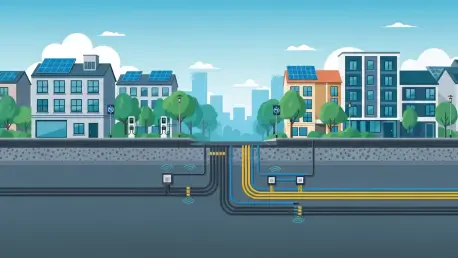
Beyond meeting new demand, utilities are under immense pressure to harden the grid against extreme weather and mitigate wildfire risks. In the Western United States and coastal regions, billions are being spent to underground power lines and install advanced monitoring systems. While these measures are intended to prevent catastrophic failures and long-term liability costs, they contribute significantly to the immediate capital requirements of utilities. This creates a paradox where the investments required to make the grid safer and more reliable are the same factors making electricity increasingly unaffordable for low- and middle-income households. The pursuit of a resilient system is thus inextricably linked to the rising baseline cost of living.
Regional Hotspots and the Burden on the American South
The geographical concentration of this spending reveals a stark economic disparity across different territories. The American South has emerged as the primary investment hotspot, with planned capital spending totaling $572 billion through 2030, which is more than double any other region. Major utility entities are spearheading hundred-billion-dollar plans to keep pace with rapid population growth and industrial relocation. However, critics argue that the sheer scale of these projects, combined with regional regulatory environments that are often friendly to utility interests, leaves consumers vulnerable. The regional nature of these hikes means that while some parts of the country may see manageable increases, others could face a true price shock that outpaces local wage growth.
Innovations and Regulatory Shifts Reshaping the Utility Sector
As the industry moves forward, several emerging trends and regulatory shifts will determine the severity of the affordability crisis. There is a move toward more sophisticated integrated resource planning and a push for performance-based regulation, where utility profits are tied to efficiency and customer satisfaction rather than just the total amount of capital spent. Additionally, technological innovations like Grid Enhancing Technologies offer the potential to increase the capacity of existing lines at a fraction of the cost of new construction. Regulators are increasingly looking at these non-wire alternatives as a way to delay or reduce the need for massive capital outlays, potentially softening the blow to consumer wallets. These shifts suggest that the traditional model of building more to earn more is finally being challenged by a focus on optimization.
Strategies for Mitigating Consumer Risk and Enhancing Oversight
To prevent a total affordability crisis, a multifaceted approach to utility oversight is required. First, state regulators must demand more rigorous data to support load growth projections, ensuring that infrastructure is built based on reality rather than speculation. Second, decoupling mechanisms and rate-design reforms should be implemented to protect vulnerable populations from extreme price volatility. For consumers and businesses, the most actionable strategy involves leaning into energy efficiency and behind-the-meter resources, such as solar and storage, to reduce reliance on the increasingly expensive centralized grid. Advocacy at the public service commission level will also be essential to ensure that the costs of the digital transition are allocated fairly among all classes of ratepayers, preventing an unfair subsidy of industrial growth by residential users.
Balancing Modernization with Economic Reality
The convergence of aging infrastructure, climate resilience, and the explosion of digital demand created a situation that necessitated massive investment. While the $1.4 trillion modernization of the grid represented a monumental undertaking that sought to ensure long-term reliability, the correlation between high capital spending and rising electricity prices remained a central concern. Regulatory bodies faced the difficult task of auditing these vast expenditures to ensure they served the public interest rather than just corporate bottom lines. The transition ultimately required a new framework for energy equity, where technological advancement did not lead to the financial exclusion of the most vulnerable citizens. Strategic oversight proved to be the only mechanism capable of aligning the goals of a high-tech economy with the fundamental need for affordable energy.