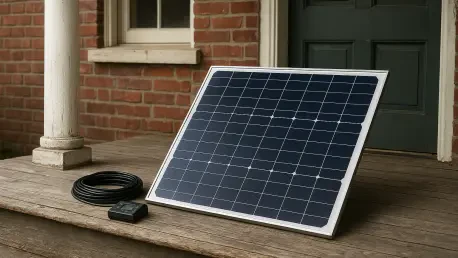

The rapid proliferation of affordable plug-in solar kits has promised a democratized energy transition for residents who previously found traditional rooftop installations prohibitively expensive or physically impossible. For roughly £460, homeowners can now purchase a modular kit that connects directly to a standard wall outlet, theoretically offsetting over £110 in annual utility costs through a simple do-it-yourself setup. However, the deceptive simplicity of this “plug-and-play” technology often masks a profound conflict between modern renewable engineering and the legacy electrical systems found in homes built during the mid-to-late 20th century. While the promise of immediate green energy is enticing, the reality for many residents involves a complex navigation of electrical safety codes and localized infrastructure limitations that can transform a budget-friendly project into a significant financial burden. This hidden complexity is particularly prevalent in residences where the original wiring was never intended to handle the multidirectional load demands of distributed generation.
The Engineering Conflict: Why Legacy Wiring Resists Modern Power Sources
Understanding the Risks of Unidirectional Electrical Systems
Traditional residential electrical systems are designed as one-way streets where energy flows from the centralized grid through a distribution board and into various household appliances. In older homes, the safety mechanisms, specifically Residual Current Devices (RCDs) and Miniature Circuit Breakers (MCBs), were engineered to detect faults and cut power based solely on this unidirectional flow. When a plug-in solar panel is introduced, it fundamentally alters this dynamic by injecting power back into the domestic circuit from a peripheral point. This reversal can confuse older unidirectional RCDs, which may fail to trip during a surge or, conversely, trip frequently without a genuine fault, leading to persistent nuisance outages. Modern standards in 2026 increasingly demand Type A bidirectional RCDs because they are specifically built to handle the pulsating direct currents and reverse flows common in renewable energy hardware. Without this upgrade, the safety buffer that protects inhabitants from lethal shocks or electrical fires is significantly compromised.
Identifying Critical Equipment for Safe Power Reversal
Beyond the mechanical failure of circuit breakers, the installation of plug-in solar arrays on antiquated wiring poses a genuine risk of localized overheating within the walls of a residence. Electrical safety organizations have issued warnings regarding the potential for overloading the neutral wire, a condition where the combined current from the grid and the solar inverter exceeds the rating of the household conductors. Since the solar energy enters through a standard socket rather than a dedicated circuit, it bypasses the primary thermal protection measures of the main distribution board. If the internal wiring is degraded or improperly gauged, this invisible overflow generates excessive heat, which can ignite surrounding insulation or structural timber before a breaker ever realizes a problem exists. This specific hazard underscores why the “plug-and-play” label is often criticized by electrical engineers as being dangerously oversimplified for the average consumer who lacks specialized diagnostic tools to verify their home’s internal wire integrity.
The Financial Reality: Marketing Versus Actual Installation Costs
Evaluating the True Investment of a Safe Solar Setup
While the retail price of a basic plug-in solar kit remains remarkably accessible at approximately £460, the true cost of a safe installation is frequently three times that amount. A professional electrician tasked with bringing an older home up to the necessary standards for bidirectional flow will typically charge between £900 and £1,200 for the installation of a modern Type A RCD and the associated testing. When these labor and hardware costs are added to the initial purchase price, the total investment surges toward £1,600, which drastically alters the economic viability of the project. If the system is estimated to save roughly £110 per year on electricity bills, the payback period extends from a manageable four years to nearly fifteen years. For a renter or someone in a short-term residence, this realization often turns a promising green initiative into an illogical financial move. The marketing gap between the kit price and the installed price represents a significant hurdle in the widespread adoption of plug-in technology.
Implementing Strategic Solutions for Sustainable Energy
The most effective first step for homeowners was not the purchase of hardware, but the commissioning of a comprehensive electrical report to identify hidden vulnerabilities. By prioritizing a professional diagnostic of the existing circuit board, residents were able to determine whether their infrastructure supported bidirectional flow without risking an expensive mismatch. It was established that engaging with a qualified electrician to install a Type A RCD provided the necessary safety foundation for any future energy additions, from solar panels to electric vehicle chargers. This proactive approach ensured that all installations remained compliant with current building codes and maintained the integrity of home insurance policies. Ultimately, the successful adoption of plug-in solar technology depended on viewing the house as a holistic system rather than a collection of independent sockets. Those who invested in the underlying infrastructure first found that their renewable energy projects were more reliable and provided greater peace of mind.