
The abrupt shift in federal energy policy has sent shockwaves through the renewable sector, nowhere more so than in California, where years of planning for offshore wind energy are now facing a legal and regulatory wall. Christopher Hailstone, a veteran in energy management and grid security, joins us to unpack the implications of the federal government’s recent moves to buy back offshore wind leases. With a career dedicated to ensuring electricity delivery remains both reliable and sustainable, Hailstone provides a critical perspective on how these lease cancellations threaten both the economic stability of coastal states and the long-term integrity of the American power grid. Our conversation explores the legal friction between state goals and federal actions, the massive financial stakes involved in these buyback agreements, and the potential for a forced pivot back toward traditional fossil fuel development.
The Outer Continental Shelf Lands Act typically requires a five-year suspension period and formal hearings before a lease can be cancelled, yet these buybacks appear to be moving forward without those steps. How does this bypass of federal law impact the regulatory stability that energy developers and state governments rely on?
The legal framework established by the Outer Continental Shelf Lands Act, or OCSLA, was designed to ensure that the development of our marine resources remains “expeditious and orderly,” providing a predictable roadmap for everyone involved. When the administration bypasses the mandatory five-year suspension period and skips formal hearings, it creates a sense of regulatory whiplash that is incredibly damaging to investor confidence. We are seeing a situation where California’s legal interest in these waters is being sidelined without the required notification or coordination with the governor, which is a direct violation of established norms. This isn’t just a technicality; these hearings are where local concerns and technical feasibility are vetted. By ignoring these procedures, the federal government is essentially pulling the rug out from under a decade of planning, leaving states like California to scramble for judicial action just to compel basic compliance with federal law.
California has already funneled more than $100 million into supporting offshore wind development. What are the immediate consequences for the state’s economy and infrastructure when a $765 million buyout suddenly terminates projects like those in Morro Bay?
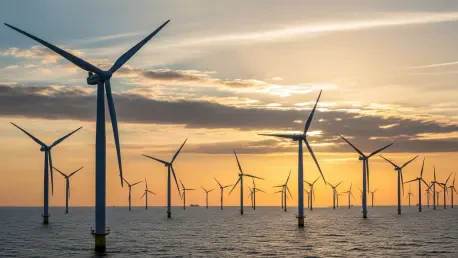
The financial fallout is staggering because that $100 million investment by the state was meant to be a catalyst for a massive new industrial sector, not a sunk cost. When the Department of the Interior pays a company like Invenergy $765 million to walk away from four leases—including critical areas in Morro Bay and the Gulf of Maine—the state loses the anticipated economic multiplier effect that comes with construction, port upgrades, and long-term maintenance jobs. You can feel the frustration in the state’s response; they were counting on these projects to diversify their energy supply and lower costs for consumers over the long haul. Now, instead of building the foundations for turbines in the New York Bight or off the Central Coast, those funds are being used to essentially erase progress. It’s a bitter pill for a state that has tied its future climate goals so closely to the success of these offshore ventures.
The Golden State Wind project alone was expected to provide 2 GW of capacity, with another 1.5 GW from the Invenergy site. From a grid reliability perspective, what does the loss of 3.5 GW of consistent, offshore power mean for California’s energy security?
Losing 3.5 GW of potential installation capacity is a massive blow to the reliability of the Western grid, particularly as we look for “firm” renewable resources that can complement solar power. Offshore wind is prized because the winds off California’s coast are remarkably strong and consistent, often peaking at times when other renewable sources might be flagging. Removing these two major projects in Morro Bay—the 2 GW Golden State Wind and the 1.5 GW Invenergy site—leaves a giant hole in the California Energy Commission’s long-term resource planning. To keep the lights on, the state will now have to find alternative, perhaps less reliable, ways to meet that demand, which could lead to higher costs and a more fragile system during peak events. It’s a setback that isn’t easily fixed by just adding more land-based solar; the unique profile of offshore wind is exactly what a modern, diversified grid needs to stay resilient.
There is a striking stipulation in these agreements: the $2.5 billion being paid to developers across eight lease areas must be reinvested into oil, gas, or geothermal resources. What does this mandate tell us about the current administration’s vision for the American energy mix?
This requirement is a clear, calculated pivot away from the offshore wind trajectory that has been building for years, effectively forcing a “resource swap” that favors traditional fuels. By tying the $2.5 billion in settlement money to the development of oil, gas, and geothermal, the administration is using these buybacks to redirect private capital back into the fossil fuel sector under the guise of energy settlement. It’s an aggressive move that ignores the specific logistical and environmental investments already made for wind, such as specialized vessels and subsea cabling. For developers, this isn’t just a change in business plan; it’s a total reimagining of their role in the energy market, often against the backdrop of state mandates that require clean energy. This policy creates a direct conflict between federal financial incentives for oil and gas and state-level statutory requirements for a zero-carbon grid.
What is your forecast for the future of offshore wind in the United States given these escalating legal and political challenges?
I expect we are entering a period of prolonged litigation that will stall the industry for several years, as the lawsuits from California and the coalition of New England states wind their way through the courts. While the administration may succeed in buying back some leases in the short term, the fundamental need for large-scale, consistent power near coastal load centers hasn’t changed, and the 2 GW to 3.5 GW projects being canceled today will eventually need to be replaced. We will likely see a fragmented landscape where certain states double down on their own procurement authorities to bypass federal roadblocks, but the overall pace of deployment will slow significantly. Ultimately, the market hates uncertainty, and until the legal standing of these buyback agreements is settled, I suspect many global developers will view the U.S. offshore market as a high-risk environment, potentially shifting their focus and capital to more stable regions in Europe or Asia.