
The architectural backbone of the American economy is undergoing a profound transformation as the national power grid confronts an unprecedented surge in demand driven by the rapid integration of high-performance computing and electric mobility. According to a recently released report by the National Electrical Manufacturers Association, the United States is currently on a trajectory that will see electricity consumption accelerate with a velocity that few experts predicted even a single year ago. This shift is not merely a gradual increase in usage but a fundamental restructuring of energy priorities, as the convergence of artificial intelligence and the widespread electrification of the automotive sector places immense stress on an aging infrastructure. As of 2026, the transition toward a fully electrified society has moved into a high-intensity phase, requiring an urgent reassessment of how energy is generated, transmitted, and consumed. The challenge lies in balancing this explosion in demand with the technical limitations of a grid that was designed for a different era.
Tracking the Trajectory of National Energy Demand
Long-term projections indicate that total U.S. electricity consumption will escalate by more than 55 percent over the coming decades, reaching an estimated 6,130 Terawatt-hours by the middle of the century. This represents a significant departure from previous benchmarks, shifting from roughly 3,936 Terawatt-hours observed in 2024. This growth is largely front-loaded, meaning that the most dramatic increases are expected to occur within the next several years as industrial and residential sectors pivot toward electric alternatives. Furthermore, electricity’s share of the total final energy delivered to consumers is poised to climb from 18 percent to nearly 30 percent, signaling a future where the power grid is the primary lifeline for all economic activity. This transition necessitates not only more power generation but also a sophisticated management system capable of handling the intermittent nature of modern energy sources while maintaining the stability and reliability that the nation’s businesses and households require to function efficiently.
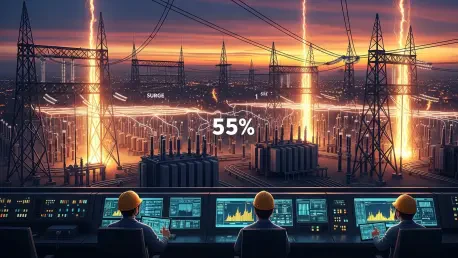
The regional distribution of this energy surge reveals a complex landscape where some areas are experiencing much sharper spikes than others based on local industry shifts and regulatory policies. For instance, areas with high concentrations of industrial manufacturing and technological innovation are seeing a faster adoption of high-voltage infrastructure. The current decade is proving to be a critical window for utility providers who must navigate a landscape of rising costs and logistical hurdles to meet these expanding requirements. This surge in demand is not just a statistical forecast; it is a reality that is already manifesting in the form of increased load requirements for new construction and the expansion of existing municipal services. As the economy becomes more reliant on digital processes, any instability in the power supply becomes a systemic risk, pushing policymakers to prioritize grid modernization. The sheer scale of the 55 percent surge suggests that traditional expansion methods may no longer be sufficient to keep pace with the needs of a modern, data-driven society.
Data Centers and the AI Revolution
The rapid expansion of hyperscale data centers has emerged as the most significant catalyst for revised energy forecasts, with consumption in this sector expected to triple within the next ten years. By 2037, it is estimated that these facilities will account for nearly 40 percent of all net electricity consumption across the United States, a figure that highlights the immense power requirements of modern digital infrastructure. This trend is largely fueled by the exponential growth of artificial intelligence, which utilizes complex algorithms that are far more energy-intensive than standard cloud computing tasks. These AI workloads require specialized hardware and cooling systems that draw massive amounts of power around the clock, creating a constant and high-density load for utilities to manage. Consequently, the tech industry has become one of the primary drivers of infrastructure investment, as companies seek to secure reliable energy sources to power their next generation of server farms. This intense demand is fundamentally altering the energy profile of many American cities.
Geographically, the impact of the data center boom is most pronounced in the Mid-Atlantic and Texas, where favorable conditions have led to the creation of massive technological hubs. These regions have become the preferred locations for hyperscalers due to the presence of existing fiber optic networks and regulatory environments that facilitate rapid construction. However, this concentration of power demand creates localized challenges, as the regional grids must be capable of delivering gigawatts of power to relatively small geographic footprints. In these areas, utilities are working to fast-track transmission projects and explore alternative energy sources to prevent overloading the system during peak periods. The density of these installations means that a single data center campus can consume as much electricity as a medium-sized city, necessitating a complete rethink of how local power distribution is handled. As the digital economy continues to expand through 2035, the pressure on these regional power hubs will only intensify, making grid resilience a top priority for developers and government officials.
The Electrification of the Transportation Sector
Beyond the digital realm, the transformation of the transportation sector is contributing to a massive, long-term shift in how energy is utilized across the country. Current data indicates that the number of electric vehicles on American roads will grow from approximately 5.7 million to over 51 million by 2035, representing a monumental change in consumer behavior and industrial output. This shift is expected to result in a 2,000 percent increase in energy consumption dedicated specifically to vehicle charging and related infrastructure. While some earlier forecasts were even more aggressive, the current trajectory remains a staggering challenge for the grid, as millions of vehicles will require consistent access to high-speed charging stations. The infrastructure needed to support this transition includes not only the chargers themselves but also the substations and high-capacity lines required to move power from generation sites to residential garages and commercial parking lots. This evolution is reshaping the relationship between the automotive industry and the energy sector.
The adoption of electric transportation is particularly concentrated in the Northeast and the West, where state-level mandates and environmental policies are accelerating the phase-out of internal combustion engines. In these regions, the grid must prepare for a future where peak demand is influenced by the charging habits of millions of commuters, potentially creating new stress points during evening hours when residential usage is already high. To mitigate this, many utilities are exploring smart charging technologies and time-of-use pricing models to encourage owners to charge their vehicles during off-peak times. However, the sheer volume of energy required to support over 50 million vehicles means that the total capacity of the grid must still expand significantly to avoid shortages. This transition also highlights the importance of reliable battery storage, as the energy generated during the day through renewable sources must be stored and made available for use when vehicles are plugged in at night. The success of the electric vehicle transition is therefore intrinsically linked to the overall stability of the national power network.
Modernizing the Generation Mix and Grid Infrastructure
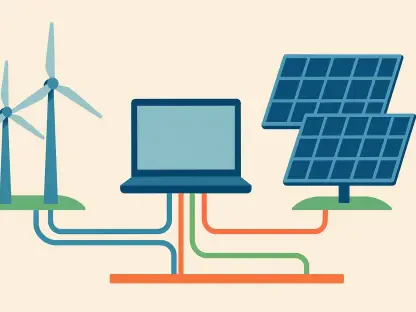
Meeting the demands of the mid-21st century requires a decisive pivot in how electricity is generated, with a heavy emphasis on renewable resources and advanced storage solutions. By 2043, the total installed generation capacity in the United States is projected to reach 2,395 Gigawatts, with solar and wind power making up the largest share of this expansion. Solar power alone is expected to provide 568 Gigawatts of capacity, while wind and standalone battery storage will contribute another 408 and 303 Gigawatts, respectively. This represents a three-fold increase in the presence of renewable resources within the generation mix, reflecting a nationwide effort to move away from carbon-intensive fuels. However, this shift toward renewables introduces a degree of variability that the grid was not originally designed to handle, necessitating a massive investment in battery storage to ensure that power remains available even when the sun is not shining or the wind is not blowing. This transition is most visible in New York and the Southeast, where large-scale projects are already underway to replace aging coal plants.
In the past, the strategy for addressing rising energy demand focused primarily on building more power plants, but the current environment requires a more sophisticated approach to infrastructure management. Because the physical expansion of transmission lines and substations often takes years or even decades to complete, industry leaders are increasingly turning to Grid-Enhancing Technologies to bridge the gap. These technologies, such as dynamic line ratings and advanced power flow controllers, allow operators to monitor environmental conditions in real-time and reroute electricity around congested areas of the grid. By optimizing the performance of existing assets, these solutions can significantly increase the amount of power that can be delivered without the need for immediate, costly construction projects. Furthermore, the deployment of microgrids and decentralized energy resources provides an additional layer of resilience, allowing local communities to maintain power during wider grid disturbances. These innovations were essential in ensuring that the American power grid remained functional while adapting to the rapid changes observed over the last several years.