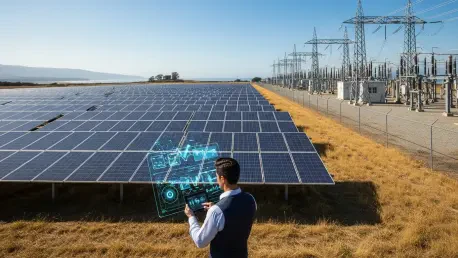

The golden sun that drapes across the California coastline has long been viewed as a limitless reservoir of clean energy, yet the administrative machinery in San Francisco may be closing the tap for millions of residents. While the state prides itself on being a global leader in environmental policy, a recent series of regulatory decisions by the California Public Utilities Commission has cast a long shadow over the future of decentralized power. This tension has reached a breaking point, as the agency faces intense scrutiny over whether its technical rulings are protecting the public interest or merely shielding traditional utility monopolies from necessary competition. At the center of this storm is the Community Renewable Energy Program, a framework designed to bring the benefits of solar to those who cannot afford or install their own rooftop panels.
The current situation represents a fundamental crossroads for the state’s climate ambitions, as the gap between legislative intent and regulatory execution continues to widen. If the commission maintains its current trajectory, it risks transforming a high-potential initiative into a “zombie program”—a legal entity that exists in the state books but lacks the financial pulse to attract real-world investment. This is not merely a debate over technicalities; it is a struggle to determine whether the clean energy transition will be inclusive or restricted to a wealthy few. For renters and low-income families, the stakes are tangible, as the outcome will dictate whether they remain tethered to rising utility rates or gain access to the cost-saving power of local solar farms.
A Crossroads for the Golden State’s Sun-Powered Ambitions
California has built its modern identity on the vanguard of the clean energy revolution, but a single administrative vote threatens to stall that momentum indefinitely. State law clearly mandates an expansion of solar access for those without rooftops, yet the commission is weighing decisions that critics say make new community projects financially impossible. This friction is no longer just about meeting carbon targets; it has evolved into a high-stakes battle over who controls the distribution of energy and who profits from the transition to a greener grid.
The conflict highlights a deep-seated philosophical divide within the state’s energy apparatus regarding the role of independent power producers. While the executive branch pushes for rapid decarbonization, the regulators responsible for the grid’s daily operations appear increasingly hesitant to disrupt the established utility model. This hesitation creates a paradox where the state encourages innovation with one hand while stifling the economic viability of those same innovations with the other.
Understanding the High Stakes of Community Solar Regulation
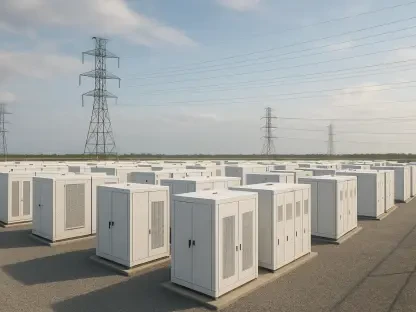
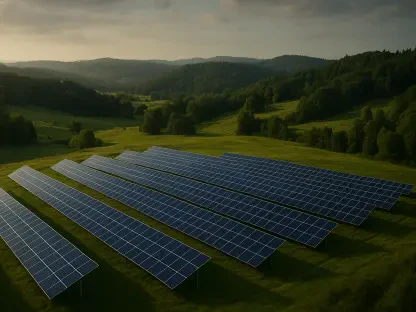
Community solar was originally envisioned as the great equalizer in the state’s energy landscape, designed to offer bill-saving benefits to the millions of Californians who live in apartments or shaded homes. Under Assembly Bill 2316, the promise was a robust framework that would incentivize developers to build local solar arrays paired with battery storage. However, the regulatory reality has shifted into a bureaucratic tug-of-war that threatens to alienate the very investors needed to build this infrastructure.
If the commission moves forward with its proposed restrictions, it risks creating a market where the cost of construction far outweighs the potential returns. Industry experts warn that without a clear path to profitability, capital will simply flow to other states with more hospitable regulatory environments. The result would be a stagnant sector that fails to contribute to California’s renewable energy portfolio, leaving the state reliant on massive, expensive transmission projects that take decades to complete.
The Technical Hurdles Threatening Project Viability
The primary barrier to progress lies in how regulators categorize the value of solar energy when it is fed into the broader electrical grid. By refusing to classify community solar as a “load-modifying resource,” the commission effectively strips developers of essential credits that recognize their contribution to grid stability. These financial mechanisms are not just abstract accounting tools; they are the bedrock upon which the financing for multi-million-dollar solar projects is built. Without them, the math for new solar farms simply does not add up for most private developers.
Furthermore, the commission’s reluctance to utilize its own “Avoided Cost Calculator” suggests a refusal to acknowledge the true economic benefits of decentralized power. When energy is generated and consumed locally, it reduces the need for the state to invest in expensive new high-voltage transmission lines. By ignoring these avoided costs, the commission is essentially forcing ratepayers to subsidize a less efficient, centralized model of energy delivery that benefits traditional utilities at the expense of local innovation.
Internal Dissent and the Looming Legislative Override
The friction is not confined to external advocacy groups; it has caused a visible and rare rift within the commission itself. Some members have publicly challenged the current trajectory, arguing that the agency is clinging to outdated statutes rather than embracing the modern intent of recent legislation. This internal instability has created a sense of unpredictability in the market, making it difficult for stakeholders to plan long-term investments when the rules of the game feel subject to constant reinterpretation.
In response to this administrative stalemate, the California Legislature has signaled its willingness to step in with new mandates to protect the industry. This move toward a legislative override is a significant escalation, indicating that lawmakers are losing patience with the slow pace of regulatory change. Experts from major solar associations warn that ignoring these signals will result in a fractured energy policy that leaves the state vulnerable to surging utility prices and potential shortfalls in energy capacity during peak summer months.
Navigating the Future of Decentralized Energy in California
To prevent a total industry collapse, state leaders must pivot toward a framework that accurately values the stability and resilience community solar provides. Success requires the adoption of metrics that reflect the true savings of local power generation compared to massive, utility-scale infrastructure projects. The path forward must transition from protecting traditional business models to prioritizing a subscriber-based system that rewards efficiency and local participation. Strategies should focus on aligning administrative rules with the original spirit of the law to ensure the sun remains a resource for all citizens.
Ultimately, the resolution of this conflict required a move beyond the binary choice of utility stability versus independent growth. Future considerations pointed toward a hybrid model where decentralized resources are fully integrated into the grid as primary assets rather than secondary supplements. By establishing clear “avoided cost” benchmarks and streamlining the credit process, California took the necessary steps to revitalize its solar market. This transition ensured that the clean energy transition became a shared economic opportunity, fostering a resilient grid that served the needs of a modern, electrified society.