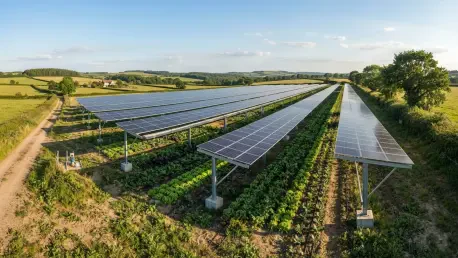

A financing facility of one hundred and six million dollars led by First Citizens Bank underscores the stability and perceived value of Nexamp’s operating solar assets in the Northeast. This significant capital infusion arrives at a time when the intersection of land use and energy production is being redefined across the American landscape. In the state of Maine, where the rugged coast meets expansive agricultural fields, a veteran-led approach is proving that industrial-scale solar power can exist in a symbiotic relationship with traditional farming. By prioritizing agrivoltaics—the dual-use of land for both solar arrays and active agriculture—the developer has successfully navigated the cultural and environmental tensions that often accompany renewable energy expansion. This strategy does not merely place panels on open space; it integrates them into the local biological and economic fabric. As the energy transition accelerates from 2026 to 2028, the Maine model serves as a vital case study for balancing infrastructure needs with ecological stewardship and community values.
Agrivoltaics: The Integration of Sheep Grazing
The implementation of “sheep-tended” solar farms represents a shift away from high-impact industrial maintenance toward a more naturalistic management style. At the Felts Brook Solar installation in Brewer, hundreds of sheep effectively serve as a living grounds crew, grazing on the vegetation that grows beneath and around the photovoltaic modules. This method eliminates the need for heavy diesel-powered mowers, which pose a constant threat to the sensitive equipment by kicking up rocks or debris that can shatter the glass surfaces of the panels.
By utilizing livestock, the operation maintains an efficient height for the grass while naturally fertilizing the soil and reducing the carbon footprint of site maintenance. This arrangement provides a professional service opportunity for local shepherds who gain access to vast, secure pastureland that would otherwise be underutilized. For the agricultural community in Maine, this partnership offers a stable revenue stream and helps preserve the state’s farming heritage within the modern economy by keeping land productive even as it generates clean electricity for the regional power grid.
Biodiversity: The Role of Pollinator Habitats
Beyond the immediate logistical benefits of grazing, the integration of solar and agriculture extends to the preservation of critical biodiversity through pollinator-friendly habitats. By selecting specific seed mixes and maintaining a pesticide-free environment, these solar sites have become essential sanctuaries for bees, butterflies, and other insects that support the regional food chain. This focus on “hummings and buzzings” addresses a global decline in pollinator populations, which directly impacts the productivity of nearby commercial farms and the health of the local ecosystem.
The presence of these habitats transforms a solar farm from a static energy generator into an active contributor to the local environment. This ecological depth is reinforced by a mission-driven perspective that emphasizes national energy security alongside local resilience. By fostering these micro-ecosystems, the project ensures that the land remains biologically diverse, proving that the transition to clean energy can enhance rather than deplete natural resources. These sanctuaries provide a blueprint for how large-scale utility projects can harmonize with the delicate balance of Maine’s native flora.
Community Solar: Democratizing Energy Access in Maine
The economic architecture of these projects relies on a community solar framework that removes traditional barriers to renewable energy adoption. Unlike private rooftop installations that require significant upfront capital and suitable property ownership, this model allows any resident to subscribe to a share of a local solar farm’s output. Participants receive credits directly on their utility bills from providers like Central Maine Power or Versant Power, effectively reducing their monthly expenses without the need for physical equipment on their own homes, which is a major win for energy equity.
This approach is particularly transformative for renters, apartment dwellers, and households with shaded roofs who were historically excluded from the green energy movement. By offering savings that typically range from fifteen to twenty percent for income-eligible residents, the program ensures that the financial benefits of the energy transition are distributed across a broad demographic. This inclusive strategy helps foster community-wide support for infrastructure projects, as the tangible economic rewards are felt by the very people who live and work in the vicinity of the solar installations.
Financial Stability: Hedging against Energy Volatility
As global energy markets continue to experience volatility, the community solar model provides a vital financial hedge for Maine consumers against fluctuating natural gas prices. By locking in discounts through local solar production, subscribers are better protected from the sudden spikes in electricity rates that have characterized the utility landscape from 2026 to the present. This stability is crucial for low-income families and non-profit organizations that operate on tight, fixed budgets. The zero-barrier entry democratizes the energy sector by shifting power back to the consumer.
The absence of installation fees and flexible cancellation terms further lowers the risk for participants, encouraging a wider adoption of green technologies. This strategy not only stabilizes household finances but also strengthens the regional economy by keeping more capital within the state. By aligning individual financial incentives with broader climate goals, the organization has created a resilient business model that thrives on public participation and mutual benefit, effectively turning a global environmental challenge into a sustainable and predictable local economic opportunity for everyone.
Regional Revitalization: Support for Local Infrastructure
The impact of these solar initiatives is visible in the revitalization of local landmarks and the optimization of municipal infrastructure across the state. A primary example is the partnership at Saddleback Mountain in Rangeley, where a strategic solar installation helped resolve the exorbitant energy costs associated with modern snowmaking operations. By utilizing less than one percent of the resort’s land, the project provided the clean power necessary to support the economic resurgence of this iconic Maine destination, ensuring its survival for future seasons of outdoor recreation.
Furthermore, municipalities like Bowdoinham and organizations such as the York County Shelter Programs have leveraged solar shares to meet their sustainability targets without direct capital expenditure. This allows local governments to redirect tax revenue toward essential services while reducing their environmental footprint. These partnerships demonstrate that renewable energy is not just a utility upgrade but a catalyst for broader community development, providing the foundational support needed to keep rural institutions viable and modernizing the energy profile of public and non-profit sectors alike.
Technical Innovation: Grid Management and Storage
Technical self-reliance and vertical integration have allowed these projects to overcome many of the logistical hurdles that often stall renewable energy development. By adopting a “self-performance” model, the company manages complex grid upgrades and interconnection processes that are typically left to the discretion of large utility providers. This hands-on approach, famously piloted in Hartland, enables projects to come online faster and with more predictable budgets, bypassing the chronic delays that plague the national power grid and ensuring that clean energy reaches customers when they need it.
The integration of advanced battery storage technology further enhances the reliability of these sites, allowing clean energy to be dispatched when demand is highest rather than just when the sun is shining. Although shifts in state policy have recently slowed the pace of new developments in Maine, the existing portfolio remains a cornerstone of the regional power mix. This established infrastructure showcases a high-tech energy strategy that is both agile and robust, providing a professional blueprint for how developers can navigate regulatory landscapes while maintaining a commitment to grid stability.
Looking Ahead: Policy Shifts and Operational Value
While the current legislative environment in Maine has prompted a pause on new community solar developments, the existing assets continue to perform as high-value components of the state’s energy grid. The shift in the net energy billing program in 2025 underscored the importance of operational efficiency and long-term asset management. The focus has transitioned from rapid expansion to maximizing the performance of the three dozen projects already in place. This includes refining grazing schedules and monitoring the health of pollinator habitats to ensure peak ecological output.
Lenders and investors have recognized this shift, as evidenced by the continued financial backing for these operational sites. The stability of the existing portfolio provides a steady stream of clean energy and economic credits to thousands of Maine households. This phase of the energy transition emphasizes the value of maintenance and community stewardship over new construction. By proving the long-term profitability and reliability of integrated solar-agricultural sites, the industry sets a standard that can influence future policy discussions and potentially lead to a more balanced regulatory framework.
Lessons Learned: The Future of Integrated Energy
The transition to a decentralized and sustainable power grid required a fundamental rethinking of how energy assets interacted with the physical and social environment. Looking back on the successful integration of agrivoltaics, it became clear that the long-term viability of renewable energy depended on creating multi-functional landscapes that served more than one purpose. Stakeholders who prioritized local agricultural partnerships and ecological restoration found that community resistance often vanished when the benefits of a project were clearly shared across the entire local population.
Ultimately, the Maine experience demonstrated that the true value of a solar asset was measured by its ability to integrate into the existing community fabric. The decision to employ sheep as natural maintenance crews and to prioritize local subscribers proved that small-scale adjustments led to massive gains in operational efficiency and public trust. Moving forward, the industry adopted advanced data analytics and expanded storage capacity to optimize these existing sites. Developers learned that treating the soil and the local workforce as equal partners created a more resilient and widely accepted infrastructure.