
As the demand for renewable energy surges across the Atlantic coastline, six New England states have forged a historic alliance to overhaul the regional power infrastructure through a unified offshore wind transmission network. This collaborative effort, involving Connecticut, Maine, Massachusetts, New Hampshire, Rhode Island, and Vermont, represents a fundamental shift from isolated state-level projects toward a cohesive, multi-state approach to clean energy. By coordinating their procurement strategies and technical requirements, these jurisdictions aim to mitigate the risks associated with volatile energy markets while accelerating the transition away from fossil fuel-based generation. The initiative arrives as existing onshore grids are struggling to accommodate the massive influx of offshore power. This partnership focuses on building a ready-to-plug-in system that simplifies the connection process for developers, ensuring that the vast wind resources of the North Atlantic can be harnessed.
Scaling Infrastructure via Regional Synergy
Unified Federal Funding
The participation of multiple states in this venture has unlocked significant federal support, particularly through the Department of Energy’s Grid Innovation Program, which provides capital for large-scale upgrades. In 2026, the focus has transitioned from conceptual planning to the actual engineering of the Power Up New England project, an initiative designed to bolster regional transmission capacity. This funding is being utilized to develop points of interconnection that can handle several gigawatts of electricity, effectively reducing the bottleneck effect that often occurs when massive amounts of offshore energy hit older substations. By pooling resources, the states have demonstrated fiscal responsibility that individual entities could not achieve alone, spreading the high costs of subsea infrastructure across a broader base. This collective bargaining power also extends to the supply chain, as the states can now place larger orders for specialized components like subsea cables.
Efficiency via Modular Design
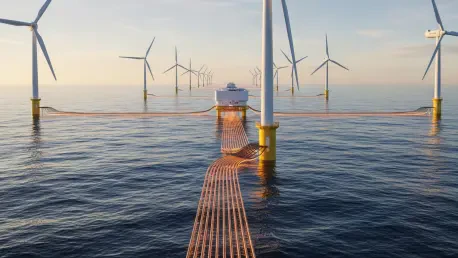
Prior to this collaboration, offshore wind projects were often developed as radial connections, where each wind farm had its own dedicated line to the shore, leading to a cluttered and inefficient seabed. The current multi-state strategy prioritizes a modular, networked grid architecture that allows different wind farms to share transmission pathways, significantly lowering the environmental impact on marine ecosystems. This mesh configuration provides greater reliability; if one cable fails, electricity can be rerouted through other nodes in the network, ensuring a continuous supply of power to the New England area. Moreover, this integrated design reduces the overall number of landing points required on the coast, which often face local opposition and permitting delays. By standardizing the technical specifications for these connections, the participating states have created a more predictable environment for developers, who can now design their turbines to meet a single set of criteria.
Strategic Grid Implementation
Advanced Subsea Technology
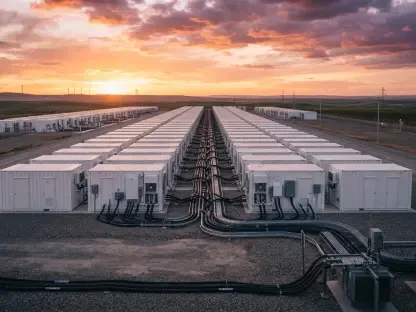
The technical backbone of this regional grid relies heavily on High-Voltage Direct Current technology, which is superior for transporting electricity over long distances with minimal loss. As the project progresses from 2026 to 2028, engineers are focusing on the installation of advanced converter stations that bridge the gap between offshore direct current and the onshore alternating current grid. These facilities are being designed with future-proofing in mind, allowing for expansions as more wind lease areas are auctioned off by the federal government. Additionally, the states are investing in sophisticated grid-monitoring software that uses real-time data to balance the intermittent nature of wind energy with regional demand. This digital layer allows grid operators to anticipate surges in production during high-wind events and store excess energy in emerging large-scale battery systems. Such technological synchronization ensures that the offshore wind grid remains a stable pillar of the economy.
Outcomes and Recommendations
The formation of this regional partnership established a precedent for cross-border energy governance, proving that shared economic goals could overcome jurisdictional complexities. Leaders prioritized the standardization of permitting processes, which significantly shortened the timeline for subsea surveys and environmental assessments. To ensure continued success, it became clear that the states had to focus on expanding the domestic supply chain for specialized vessels and high-voltage equipment to avoid reliance on international markets. Policymakers also recognized the need for a permanent regional grid authority to manage the long-term maintenance and operation of these shared assets. Moving forward, the focus shifted toward integrating long-duration energy storage solutions directly into the offshore platforms to maximize the utility of every megawatt generated. By maintaining this collaborative momentum, the New England states created a resilient energy corridor that lowered costs.