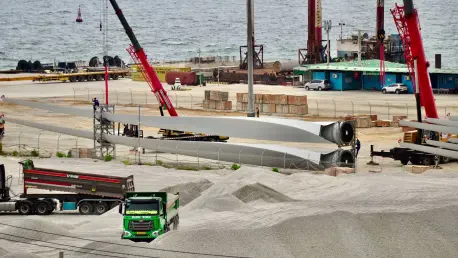

The economic reality of blade recovery is currently unfavorable, as the cost of preparing and transporting materials often far exceeds the actual market value of the recovered components. This stark financial landscape poses a significant threat to the sustainability narrative of the wind industry, which is now facing a massive wave of decommissioning across aging fleets in North America and Europe. While the steel towers and copper wiring of these massive turbines are easily repurposed, the blades are composed of high-strength composites specifically engineered to resist environmental degradation for decades. In 2026, the absence of a viable recycling infrastructure means that many of these eighty-meter structures are destined for landfills, where they will remain as inert monuments to the early era of renewable energy. The industry is currently struggling to bridge the gap between its green aspirations and the gritty reality of composite waste management. As the volume of decommissioned material grows, the pressure to develop a circular lifecycle for every component of the wind turbine has become an urgent priority for engineers and environmentalists alike.
Material Complexity: The Technical Barriers to Circularity
Chemical Resilience: The Durability of Thermoset Resin
The primary technical challenge involves the chemical nature of thermoset resins, which act as the binding agent in almost all modern turbine blades. Unlike more common plastics that can be melted and reshaped, these resins undergo a permanent chemical transformation during the curing process, creating a cross-linked structure that is incredibly strong and resistant to heat. This durability is essential for components that must survive decades of lightning strikes, extreme temperature fluctuations, and the constant mechanical stress of rotation. However, that same resilience makes it nearly impossible to separate the resin from the reinforcing fibers without destroying the fibers themselves or using significant amounts of energy. Mechanical shredding, which is the most common approach currently available, produces a low-grade material that can only be used as a filler in cement or asphalt. This downcycling does not represent a true circular economy, as the high-performance properties of the original fibers are lost in the process, making the resulting product significantly less valuable than the virgin material.
Thermal Solutions: Recovering High-Value Fiber Components
To address these chemical barriers, the industry is exploring advanced thermal and chemical decomposition techniques such as pyrolysis and solvolysis. Pyrolysis involves heating the composite material in an oxygen-free environment to break down the resin into liquid and gaseous fuels, leaving behind the solid fibers for potential reuse. While this method is technically effective for recovering carbon fiber, the energy costs associated with heating large reactors are substantial, often making the process economically unviable for cheaper glass fiber blades. From 2026 to 2028, several pilot plants are testing the scalability of these technologies, aiming to refine the heat recovery systems to reduce total energy consumption. Solvolysis offers a different pathway by using chemical solvents to dissolve the resin matrix at lower temperatures, potentially preserving more of the fiber’s original strength. Nevertheless, the handling of toxic chemical agents and the requirement for specialized facilities mean that these solutions are not yet ready for widespread, cost-competitive adoption across the global wind fleet.
Logistical Hurdles: Infrastructure and Systemic Design
Transportation Dynamics: The Cost of Geographical Distance
Beyond the chemistry, the physical dimensions of the blades present an immense logistical nightmare that further complicates the recovery process. A standard turbine blade can exceed eighty meters in length, necessitating the use of specialized transport vehicles and police escorts to move even a single unit from a wind farm to a processing site. In many cases, the most practical solution is to cut the blades into smaller sections on-site using diamond saws or high-pressure water jets, which adds significant labor and equipment costs to the decommissioning phase. Because many wind farms are located in remote areas far from industrial centers, the cost of moving this low-value waste across hundreds of miles is often prohibitive. This has led to a reliance on local landfilling, where blades are simply cut and buried because no regional recycling infrastructure exists to support them. Industry leaders are now advocating for a decentralized network of mobile processing units that can be deployed directly to the wind farm, reducing the need for expensive long-haul transport and making local recovery more feasible.
Circular Innovation: Transitioning to Recyclable Architecture
The sector ultimately determined that solving the recycling crisis required a fundamental shift in how wind technology was designed and financed. Manufacturers began integrating recyclable resin systems into their newest product lines, ensuring that blades produced from 2026 onward could be easily disassembled at the end of their service life. These new materials allowed the fibers to be reclaimed with minimal degradation, providing a high-quality feedstock for future construction projects and automotive manufacturing. Policymakers also played a critical role by implementing extended producer responsibility standards that required developers to set aside funds for sustainable disposal from the start of a project. By treating the blade not as a liability but as a future resource, the industry successfully transitioned toward a more circular model that matched its green credentials. Future developments focused on expanding regional processing hubs to ensure that no blade was more than a short distance from a recovery facility. This approach ensured that the growth of renewable energy remained truly sustainable.