
The global energy transition has reached a critical juncture where the deployment of Battery Energy Storage Systems is no longer limited by the chemical composition of lithium-ion cells but rather by the sophisticated mechanical environments that surround them. While the industry spent years obsessing over energy density and anode-cathode innovations, the current landscape of 2026 reveals that the longevity and safety of these massive assets depend on the robustness of their structural frameworks. Grid operators have discovered that even the most advanced battery cell is a liability without a high-performance enclosure that can withstand extreme environmental variables and relentless operational cycles. This shift in focus reflects a maturing market that prioritizes system availability and reliability over raw performance metrics. As a result, the engineering conversation has pivoted toward thermal management, fluid dynamics, and industrial-grade housing designs that ensure these multi-million dollar investments can survive for twenty years or more in the field without catastrophic failure.
Navigating Market Volatility: The Role of Physical Adaptability
Economic stability within the energy sector often seems elusive due to the unpredictable nature of wind and solar generation, yet battery storage assets have emerged as uniquely resilient financial instruments. Market participants are observing that BESS profitability remains remarkably steady even when weather patterns fluctuate significantly, such as during periods of low wind output that would traditionally stress a renewable-heavy grid. This resilience is not merely a byproduct of energy storage but a result of the inherent flexibility these systems provide in balancing immediate supply and demand gaps. By acting as a buffer, these installations allow operators to capture value during price spikes and provide stabilization when the physical grid is under pressure. The transition from simple energy storage to complex grid services means that the hardware must be capable of responding to micro-fluctuations in frequency and voltage, requiring a level of responsiveness that traditional thermal power plants struggle to match in a cost-effective manner.
The financial viability of these systems is increasingly tied to the sophistication of trading algorithms and the ability to execute multi-market strategies simultaneously across different regions. Modern operators utilize artificial intelligence to pivot between wholesale energy arbitrage and ancillary services like fast frequency response, ensuring that the batteries are always utilized in their most profitable state. This constant shifting between different operational modes places a significant mechanical and thermal burden on the system, necessitating a shift from basic battery stacks to integrated industrial platforms. Investors now look for systems that can handle high throughput and frequent cycling without degrading the underlying hardware prematurely. Consequently, the focus of the industry has moved toward building systems that are economically adaptable, where the physical infrastructure is designed specifically to support the aggressive duty cycles required by modern energy markets. This ensures that the BESS unit remains a low-risk, high-return asset regardless of how the regulatory or meteorological landscape changes.
Engineering Challenges: Thermal Management in High-Density Storage
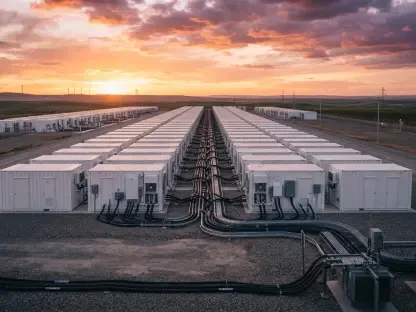
As the industry pushes toward higher energy densities to minimize the physical footprint of storage sites, managing the resulting thermal loads has become one of the most pressing engineering hurdles. Traditional air-cooling systems, once the standard for smaller installations, are proving insufficient for the massive, high-power containers that characterize the current market expansion. Liquid cooling has rapidly become the preferred solution, as it offers a much higher heat transfer coefficient and allows for more uniform temperature distribution across thousands of individual cells. Maintaining a tight temperature window is essential for preventing the chemical imbalances that lead to capacity fade and, in the worst cases, thermal runaway. When cells are packed tightly together to maximize capacity, the margin for error in thermal management vanishes. Therefore, the design of the cooling loops and the efficiency of the heat exchangers are now considered just as vital as the battery chemistry itself in determining the overall success of a grid-scale project.
However, the implementation of liquid cooling introduces a new layer of complexity and risk, particularly regarding the proximity of conductive fluids to high-voltage electrical circuits. A single leak at a connection point could lead to a short circuit or an arc flash, potentially destroying an entire container and causing significant downtime. This risk has forced engineers to prioritize the integrity of fluid handling systems, seeking out high-quality interfaces and leak-detection sensors that were once reserved for the aerospace or automotive industries. The reliability of the entire BESS facility now hinges on the quality of its seals, pumps, and valves, rather than just the watt-hour rating of the batteries. This realization has prompted a surge in demand for specialized plumbing components that can withstand vibrations, temperature fluctuations, and chemical exposure for years. By treating the BESS as a high-precision industrial machine, manufacturers are able to mitigate the risks associated with high-density storage and ensure that the cooling infrastructure does not become a failure point.
Maintenance Innovation: The Shift Toward Modular Lifecycle Economics
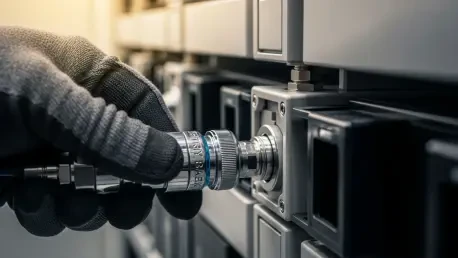
To address the operational risks associated with liquid-cooled systems, specialized technologies like Dry Break couplings became a fundamental component of modern BESS design. These advanced connectors utilized a sophisticated double shut-off valve mechanism that ensured no fluid was lost during the connection or disconnection of battery modules. This innovation allowed maintenance teams to perform hot swaps of faulty battery racks without the need to drain the entire cooling circuit or shut down the entire containerized system. In a market where downtime equated to direct financial loss, the ability to isolate and replace a single component while the rest of the system remained online provided a massive competitive advantage. Furthermore, this modular approach reduced the technical skill required for routine maintenance, as the leak-free interfaces prevented the introduction of air or contaminants into the system. As projects scaled up to gigawatt-hour levels, the ease of serviceability provided by these mechanical innovations became a primary driver of long-term efficiency.
The industry successfully transitioned toward a model that prioritized modularity and lifecycle economics over the initial capital expenditure of individual battery cells. As data centers and heavy industrial facilities increasingly adopted large-scale storage to manage their own energy needs, the demand for standardized, automotive-grade components accelerated rapidly. The strategic focus moved toward building a resilient and maintainable grid infrastructure that offered reliable power for the long haul, rather than just solving short-term storage needs. Future developments were steered by integrated sensors and predictive maintenance tools that monitored the health of the physical infrastructure in real-time. By moving beyond the cell and focusing on the holistic system design, the market ensured that BESS technology became a permanent and dependable pillar of the global power grid. This shift toward industrial-grade durability provided the necessary foundation for the next phase of energy independence, where superior engineering maximized the life of every stored kilowatt-hour.