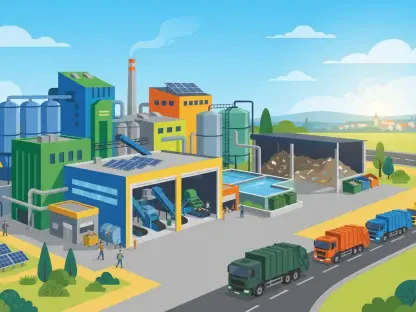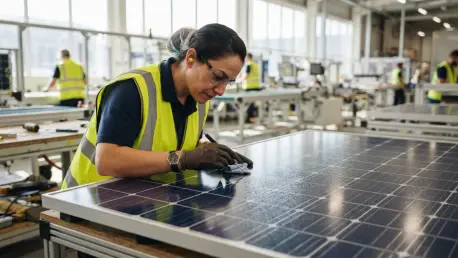

Deep within the sprawling fabrication facilities of Georgia and Ohio, the rhythmic hum of robotic assembly lines represents more than just industrial output; it signifies a desperate bid for survival in a global market flooded with subsidized technology. This mechanical heartbeat is the frontline of a trade war that will determine whether the United States can reclaim its position as a leader in renewable energy production or remain a mere consumer of foreign-made hardware.
The High-Stakes Battle Over the American Sun
The American solar industry is caught in a high-stakes tug-of-war where trade policy meets climate urgency. While the U.S. International Trade Commission (ITC) recently delivered a major victory to domestic producers by identifying material injury from Southeast Asian and Indian imports, the real question is whether these duty orders can truly insulate American factories from global market distortions.
With supply chains shifting across borders in months, the federal government is attempting to draw a line in the sand against unfair competition. This effort aims to stabilize a volatile market where domestic manufacturers have long complained that they cannot compete with the bottomless subsidies provided to overseas rivals, which often drive prices below the actual cost of production.
Why Trade Enforcement Is Reshaping Energy Independence
Understanding the ITC decision requires looking at the broader landscape of American industrial policy and national security. For years, the U.S. has struggled to balance the need for low-cost solar components to meet decarbonization goals with the desire to build a self-reliant manufacturing base.
This ruling matters because it targets the re-routing strategy, where foreign entities—predominantly Chinese-owned—attempt to circumvent existing tariffs by moving assembly lines to third-party nations like India, Indonesia, and Laos. Without these protections, proponents argue, the billions of dollars currently being invested in U.S. factories under the Inflation Reduction Act could be rendered obsolete by an influx of artificially cheap foreign goods.
Navigating the Mechanics of the ITC Ruling and Global Trade Shifts
The recent determination by the ITC is not just a legal formality; it is a structural intervention into the solar market. The Department of Commerce has set dumping margins for Indian producers as high as 123%, with countervailing rates reaching 126%, making these imports uncompetitive in the U.S. market.
As soon as barriers are erected in one country, production often migrates to new frontiers. The solar alliance is already tracking a 3,000% surge in imports from Ethiopia, signaling that the battleground is shifting toward Africa. This ruling builds on previous investigations into Malaysia and Vietnam, aiming to finalize a moat around the U.S. supply chain that prevents Chinese components from entering through the back door.
Expert Perspectives on the Industrial-Climate Divide
The solar industry remains split between those who build the technology and those who deploy it. Leaders from First Solar and Hanwha Qcells USA argue that without rigorous enforcement, the U.S. is merely trading energy dependence on oil-producing nations for a new dependence on foreign hardware.
Clean energy trade associations often warn that trade chills create market volatility. They argue that high tariffs increase the soft costs of solar projects, potentially slowing the deployment of renewable energy needed to meet federal climate targets. The forthcoming ITC report on November 23 will provide data on how material injury was calculated, offering a look at the financial health of domestic firms.
Strategies for a Resilient Domestic Solar Supply Chain
For the U.S. solar industry to thrive beyond the protection of tariffs, a multifaceted approach was required to ensure the long-term viability of the sector. Industry leaders and policymakers recognized that trade enforcement had to be paired with smart domestic policy that provided long-term tax credits and grants for expanding factory capacity on American soil.
Rigorous monitoring of emerging conduits became a priority to prevent the repackaging of foreign goods through non-traditional hubs. Diversifying the upstream supply chain by reducing reliance on foreign polysilicon and wafers ensured that American manufacturing remained insulated from global shocks. Finally, a balance was struck where domestic production reached a price point that supported both local jobs and the rapid adoption of solar energy by American homeowners and utilities.