
The Federal Power Act and the High-Stakes Shift Toward Emergency Grid Management
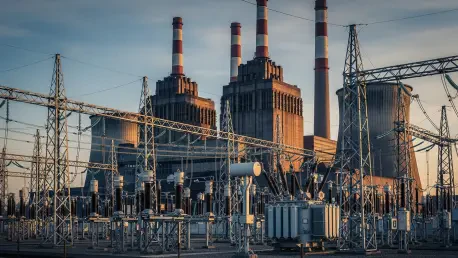
The federal government’s recent strategy of invoking emergency powers to prevent the closure of aging coal-fired power plants has ignited a complex debate regarding the balance between national energy security and the economic reality of obsolete infrastructure. At the heart of this controversy lies the Department of Energy’s unprecedented use of Section 202(c) of the Federal Power Act, a provision originally intended for extreme crises but now increasingly used to override the retirement schedules of facilities that have reached the end of their operational lives. This shift represents a significant move by federal authorities to exert control over local energy markets, fundamentally altering the planned transition toward cleaner or more modern energy portfolios.
The primary justification for this federal intervention is a perceived “reliability crisis” that threatens the stability of the national electrical grid. As coal plants are phased out and replaced by intermittent renewable sources, some federal officials argue that the sudden loss of traditional baseload power could lead to catastrophic failures during extreme weather events or periods of peak demand. Consequently, these emergency mandates serve as a legal barrier against the decommissioning of fossil fuel assets, effectively forcing utility companies to maintain “zombie” plants that they had already planned to dismantle in favor of newer, more efficient technologies.
However, recent investigations into the efficacy of these orders reveal a troubling trend: the very plants mandated to stay online are often failing to produce significant amounts of electricity. Despite being legally required to remain available for service, these aging units are experiencing a precipitous drop in output, raising questions about whether federal intervention is actually achieving its intended goal of grid stability. The discrepancy between the “capacity” listed on a federal order and the actual power delivered to the grid suggests that mandated operation cannot easily overcome the physical limitations of decaying machinery.
Unpacking the Friction Between Federal Regulatory Mandates and Operational Reality
The Statistics of Decline: Why Mandated Capacity Is Not Translating Into Power
Recent data from multiple power grids illustrates a stark contrast between federal expectations and the operational reality of coal plants under emergency orders. Across ten units that were forced to remain open, total generation fell by approximately 65% compared to the previous year, signaling that these plants are struggling to function as reliable energy sources. This gap highlights a fundamental flaw in using legal mandates to solve mechanical problems, as a plant that exists only on paper as “available” provides no protection when the demand for electricity surges.
Case studies of specific facilities like the J.H. Campbell plant in Michigan and the F.B. Culley unit in Indiana demonstrate how capacity factors—the measure of a plant’s actual output relative to its potential—have plummeted. At Campbell, the output dropped from a historical average of 66% to just 46% following the federal order, while the Culley unit saw its utilization fall to a meager 14%. These figures suggest that while the plants are legally prevented from retiring, they are essentially languishing in a state of semi-operation, unable to contribute effectively to the baseload needs of their respective regions.
The Department of Energy’s stated objective is to maintain “dispatchable” power that can be turned on at a moment’s notice, yet the reality is far different. Many of these units are either remaining in a standby state or are frequently offline due to equipment failures that make consistent operation impossible. This disconnect creates a false sense of security for grid operators who may count on these units during emergencies, only to find that the aging infrastructure is incapable of meeting the sudden load requirements.
The Hidden Toll of Resurrection: Mechanical Decay and the Financial Burden on Ratepayers
The physical degradation of these plants is often a direct consequence of “deferred maintenance” strategies common among utilities preparing for a facility’s closure. When a plant is scheduled for retirement, companies naturally stop investing in major upgrades or long-term repairs, focusing instead on keeping the units functional for just a few more months. When a federal order suddenly extends that lifespan by years, the operator is left with a crumbling asset that requires millions of dollars in emergency repairs just to remain minimally compliant with safety and environmental standards.
Reviving these “zombie” plants is not merely an operational challenge; it is a significant financial risk for both utility companies and their customers. For example, some operators have noted that complying with federal orders would require upwards of $20 million in immediate investment for units that are still inefficient and prone to failure. These costs are often passed down to ratepayers, who find themselves paying higher monthly bills to support outdated technology that contributes very little to their actual energy supply, creating a cycle of escalating costs for diminishing returns.
Moreover, the financial strain extends to the broader utility portfolio, as funds intended for the development of renewable energy or grid modernization are diverted to keep obsolete coal units on life support. This redirection of capital hinders the long-term evolution of the energy sector, forcing utilities to balance the conflicting demands of federal mandates and the economic necessity of transitioning to more cost-effective power sources. The result is a stalled energy market where innovation is sacrificed for the sake of maintaining a fragile and expensive status quo.
A Growing Institutional Rift: Legal Pushback and the Lack of a Federal Exit Strategy
This federal intervention has sparked a rising tide of litigation and institutional friction between the Department of Energy and state-level utility providers. Organizations like the Tri-State Generation and Transmission Association have challenged the necessity of these orders in court, arguing that they infringe upon the operational autonomy of utilities and impose unfair burdens on local communities. These legal battles highlight a growing rift in the energy sector, where the federal government’s top-down approach to reliability clashes with the localized expertise of those who manage the grid daily.
A major point of contention is the lack of a clear “exit strategy” from the Department of Energy, which has utilized a series of 90-day renewal cycles to keep plants online indefinitely. Utilities often complain that there is no transparency regarding the specific grid conditions required for a plant to finally be allowed to retire. This perpetual state of limbo makes long-term planning nearly impossible for energy providers, as they cannot move forward with decommissioning or site redevelopment while their assets are tied up in a cycle of emergency extensions.
Furthermore, the friction between federal reliability mandates and state environmental goals is becoming increasingly pronounced. Many states have enacted legislation aimed at reducing carbon emissions and transitioning to cleaner energy, goals that are directly undermined by federal orders that keep coal plants operational. This jurisdictional conflict creates a chaotic regulatory environment where utilities are caught between state laws demanding closures and federal orders demanding continued operation, leading to a stalemate that benefits neither the environment nor the consumer.
The Reliability Paradox: Assessing the Viability of an Aging Energy Safety Net
The assumption that keeping failing plants online actually strengthens the grid during extreme weather events is increasingly being viewed as a “reliability paradox.” While these plants are meant to serve as a safety net, their age and lack of maintenance mean they are the most likely to suffer mechanical failures exactly when the national grid needs them most. Relying on a fleet of unreliable, aging assets can lead to a false sense of preparedness, potentially leaving grid operators flat-footed when a coal unit trips offline during a winter storm or summer heat wave.
As the energy sector struggles to integrate a higher percentage of renewables, the pressure to maintain legacy baseload infrastructure remains high. However, the rigid nature of coal generation is often poorly suited for a modern grid that requires flexibility and rapid response times. By clutching to these legacy systems, regulators may be delaying the necessary investments in energy storage, demand-response technology, and other modern solutions that could provide more genuine and sustainable reliability than a fleet of decaying coal boilers.
The risk of catastrophic mechanical failure is not merely theoretical; several units under emergency orders have already experienced prolonged outages shortly after being mandated to stay online. If the national energy safety net is comprised of infrastructure that the market has already deemed obsolete, the potential for a cascading failure increases. This suggests that the current federal strategy may be inadvertently creating new vulnerabilities within the grid by prioritizing the quantity of available capacity over the quality and reliability of the units in question.
Key Strategic Lessons and Policy Recommendations for a Stable Energy Transition
The overarching lesson from the current implementation of emergency orders is that operational inefficiency and excessive costs are inevitable when trying to override the natural lifecycle of power plants. The data suggests that simply ordering a plant to remain open does not guarantee it will be able to generate power when needed, especially after maintenance has been neglected in anticipation of closure. To move forward, federal policy must recognize that reliability cannot be legislated into existence if the underlying physical assets are no longer capable of performing their primary functions.
Stakeholders recommend that the Department of Energy develop more transparent and predictable “exit strategies” for any future emergency mandates. Instead of relying on indefinite 90-day renewals, the department should establish clear, data-driven benchmarks that allow for a smoother transition to modern generating capacity. This would provide utilities with the certainty needed to plan for a future without these aging assets, while also ensuring that any temporary extensions are strictly tied to specific, verifiable grid needs rather than broad concerns about national capacity.
Balancing immediate grid reliability with long-term energy goals requires a shift in focus toward industry best practices that emphasize modernization over preservation. This includes investing in regional transmission improvements and distributed energy resources that can pick up the slack when large, centralized plants retire. By fostering a more resilient and flexible grid, policymakers can reduce the need for emergency interventions and allow the market to naturally retire the fossil fuel infrastructure that has become a financial and operational liability.
Navigating the Future of a Gridside in Perpetual Transition
The energy industry ultimately discovered that emergency orders functioned as a temporary and costly patch rather than a sustainable long-term solution for grid stability. Stakeholders recognized that propping up infrastructure that the market had already deemed obsolete created a cycle of diminishing returns, where the price of maintenance outweighed the actual energy benefits. This realization led to a broader call for a more nuanced approach to federal intervention, one that prioritized the health of the entire system over the forced longevity of individual, failing units.
Analysts emphasized the long-term implications of using federal power to manipulate energy markets, noting that it often delayed the deployment of more resilient and cost-effective technologies. Regulators began to understand that a grid in perpetual transition required a different set of tools, moving away from reactive mandates and toward proactive investments in storage and transmission. These shifts in strategy allowed for a more orderly retirement of coal assets, ensuring that when the “safety net” was finally removed, a modern and more reliable foundation was already in place.
Industry leaders concluded that the Department of Energy had to redefine its approach to avoid escalating costs for consumers and utilities alike. By analyzing the failures of recent emergency orders, policymakers developed more robust frameworks for assessing grid health that did not rely on the presence of “zombie” plants. This evolution in thought provided a clearer path toward a stable energy future, where reliability was defined by innovation and adaptability rather than a desperate grasp at the fossil fuel technologies of the past.