
The persistent challenge of managing municipal wastewater has evolved from a matter of simple sanitation into a critical opportunity for sustainable energy production and resource recovery. While engineers and environmental scientists have long sought to transform human waste into a reliable energy source, the practical path to efficiency has been consistently hindered by high operational costs and disappointingly low yields. A breakthrough study from Washington State University, recently published in the Chemical Engineering Journal, introduces a sophisticated system designed to maximize fuel extraction from sewage sludge through a multi-stage process. By combining a novel pretreatment method with a specialized, patented bacterial strain, researchers have developed a technique that triples biogas production while simultaneously cutting waste disposal costs in half. This innovation represents a major step forward in turning wastewater treatment facilities from energy consumers into self-sustaining power plants that contribute to a circular economy.
The Environmental Burden of Current Infrastructure
Evaluating Energy Demand and Waste Inefficiency
The scale of wastewater management in the United States highlights a significant opportunity for national energy reform as the sector seeks to modernize its aging infrastructure. Currently, the nation’s 15,000 treatment facilities consume approximately 4% of the total domestic electricity supply, a figure that surprisingly dwarfs the power required for modern electric vehicle charging networks across the country. This high demand is largely due to the mechanical and chemical processes required to move, aerate, and treat millions of gallons of water daily. Despite this massive energy investment, the actual recovery of energy from the waste stream remains underdeveloped in the majority of these facilities. Most plants are designed primarily for liquid purification rather than fuel production, leading to a system that prioritizes throughput over resource efficiency, which ultimately increases the utility rates for consumers and municipalities alike.
The standard method for processing sewage solids, known as anaerobic digestion, remains remarkably inefficient despite its widespread use in about half of the nation’s treatment plants. Most existing facilities only successfully convert about 40% of the carbon found in sewage sludge into usable biogas, leaving the majority of the energy potential locked away in a dense byproduct. This inefficiency occurs because conventional microbes cannot penetrate the resilient cellular walls and complex organic structures present in the waste. As a result, a massive volume of residue called biosolids is left behind, requiring specialized handling. Because current systems fail to exhaust the fuel potential of these solids, the remaining material is still carbon-rich and biologically active when it exits the primary treatment phase. This limitation has historically forced plant operators to accept low returns on their anaerobic digestion investments.
Environmental Impact: The Hidden Costs of Treatment
Beyond the high electricity consumption, wastewater plants are responsible for releasing over 21 million metric tons of greenhouse gases into the atmosphere annually. This massive carbon footprint makes the sector a notable contributor to climate change that requires immediate technological intervention to align with modern emissions standards. The gases are produced both during the active treatment process and through the subsequent management of leftover sludge. When treatment plants fail to capture the carbon within the waste and convert it into stable fuel, they essentially leave a ticking environmental time bomb in the form of organic residue. These emissions are not just a byproduct of operation but a direct result of the incomplete conversion of organic matter into methane, which represents a lost opportunity to displace fossil fuels with a carbon-neutral alternative.
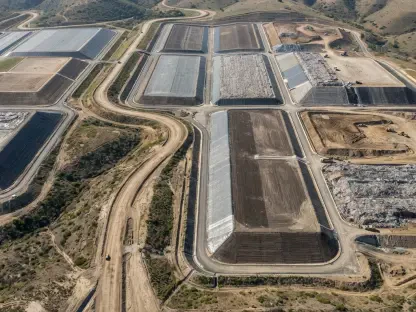
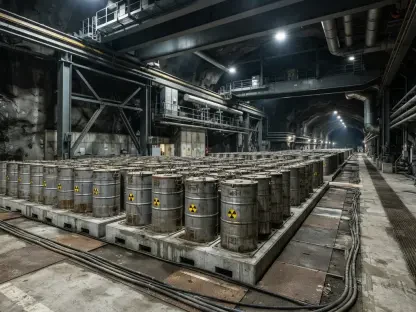
The logistics and costs associated with landfill disposal for the residue, known as biosolids, further exacerbate the environmental and economic strain on local governments. These leftovers are typically transported over long distances to dedicated landfill sites at a high cost, where they continue to slowly decompose and emit harmful methane and carbon dioxide into the air. The financial burden of this disposal is significant, often representing one of the largest line items in a treatment facility’s budget. By failing to fully utilize the sewage for energy, the industry creates a double-sided problem: it pays for electricity to run the plants and then pays again to haul away a potential fuel source that has been classified as waste. Breaking this cycle requires a fundamental shift in how the physical structure of sludge is handled before and during the microbial digestion process.
A New Frontier in Waste-to-Energy Engineering
Advanced Pretreatment: Breaking Down Resilient Organic Matter
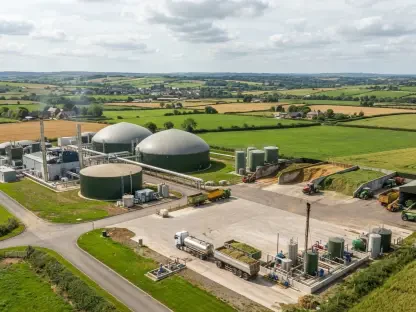
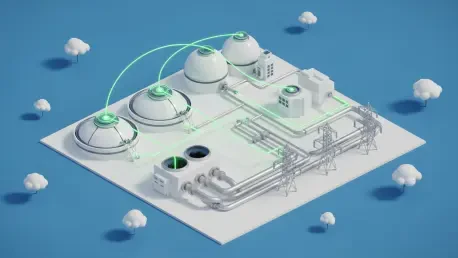
The research team at Washington State University addressed these foundational efficiency gaps through the development of the Advanced Pretreatment and Anaerobic Digestion (APAD) system. The core of this technology is a sophisticated stage called Advanced Wet Oxidation and Steam Explosion (AWOEx), which functions by subjecting waste to extreme pressure and temperature. This environment acts as a chemical “hammer,” physically shattering the resilient organic structures and lignin-like compounds that traditional microbes are simply unable to penetrate. By dismantling these tough biological structures, the AWOEx process releases the trapped nutrients and carbon, making them readily available for microbial consumption. This pretreatment effectively transforms a resistant solid into a more accessible liquid-like slurry, ensuring that the energy potential of the sludge is no longer protected by its own cellular biology.
Once the organic matter has been “unlocked” by the pretreatment stage, it is reintroduced into a secondary anaerobic digestion phase where the conversion process can reach its full potential. Because the resilient components have already been broken down into smaller, simpler molecules, the microbes in the second stage can work much faster and more thoroughly than they would in a standard setup. This two-stage approach ensures that almost no energy potential is left behind, allowing the system to achieve a carbon conversion rate of 83%. This is a massive improvement over the status quo and demonstrates that the secret to higher yields lies not just in better microbes, but in preparing the material so that the microbes can do their jobs effectively. This mechanical intervention provides the necessary foundation for the biological innovations that follow in the process.
Microbial Innovation: The BSEL Strain and Grid Quality Gas
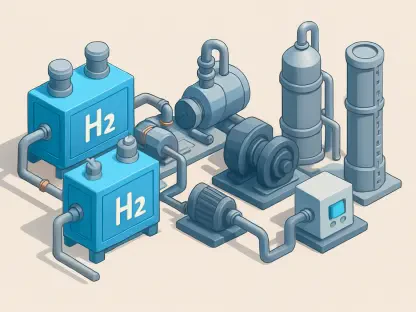
To ensure the resulting gas is of high quality and commercially viable, the researchers employed a patented “workhorse” microbe known as Methanothermobacter wolfeii BSEL. This resilient bacterial strain was specifically selected for its ability to thrive in industrial environments with minimal maintenance and few nutritional requirements. Unlike many other high-performance microbes used in biotechnology, the BSEL strain does not require expensive additives or constant monitoring to remain productive. Its primary function within the system is to act as a biological filter and converter during the “upgrading” phase of gas production. This microorganism possesses the unique ability to take the carbon dioxide that naturally occurs in raw biogas and, when combined with hydrogen, convert it into pure methane, thereby increasing the energy density of the final product.
The integration of this biological upgrading phase allows the system to produce high-purity renewable natural gas (RNG) that is clean enough to be injected directly into the existing national gas grid. Raw biogas produced by traditional methods typically contains about 40% carbon dioxide, which makes it unsuitable for most industrial uses without expensive chemical cleaning. However, the BSEL strain handles this purification biologically, resulting in a fuel that meets the stringent standards of utility companies. This turns a waste byproduct into a premium fuel source that can be sold to offset the costs of plant operations. By achieving a 200% increase in gas output, the technology proves that municipal waste can be a significant contributor to the renewable energy portfolio, providing a steady and predictable supply of gas that is independent of weather patterns.
Economic Viability: Reducing Disposal Costs and Maximizing Revenue
The practical results of this integrated system are transformative for the wastewater industry, offering a clear path toward financial sustainability for municipal utilities. By maximizing the conversion of solids into gas, the volume of leftover material that must be transported to landfills is reduced to a small fraction of its original size. This drastic reduction in volume leads to immediate savings, with modeling showing that disposal costs can drop from $494 to $253 per dry ton. When these savings are combined with the revenue generated from the sale of high-purity renewable natural gas, the economic profile of a wastewater treatment plant changes entirely. Instead of being a public service that requires constant tax subsidies to operate, these facilities have the potential to become profitable entities that generate their own revenue streams.
National scaling of the APAD technology could lead to billions of dollars in savings for the wastewater industry while providing a massive boost to the production of renewable fuels. As municipalities face increasing pressure to reduce their carbon footprints and manage rising operational costs, the ability to recover 83% of the carbon from sewage offers a compelling solution. The researchers have focused on making the system robust enough for real-world application, ensuring that the technology can be integrated into existing infrastructure without requiring a total rebuild of the plant. This focus on compatibility and economic return is essential for the widespread adoption of waste-to-energy solutions. The shift toward this high-efficiency model suggested that the future of waste management would be defined by the ability to extract every possible watt of energy from what was once considered useless.
Strategic Integration: Moving Toward Commercial Scalability
The WSU research team successfully protected its technological advancements through patents and established a clear framework for industrial partnerships to bring the APAD system to the commercial market. This transition was supported by the U.S. Department of Energy’s Bioenergy Technologies Office, which recognized the potential for this method to revolutionize domestic energy security. By demonstrating that 80% of sewage sludge could be converted into valuable fuel, the project provided a blueprint for other organic waste sectors, including agricultural and food processing industries. The researchers concluded that the integration of high-pressure pretreatment with specialized methanogens solved the historical bottleneck of waste-to-energy conversion. This progress allowed municipal leaders to reconsider their waste streams as strategic assets rather than environmental liabilities. Building on this success, the team looked toward large-scale pilot programs to validate the system’s performance in diverse climate conditions and waste compositions.