
The coastal city of Florianópolis has successfully shed its reputation as merely a scenic holiday destination to emerge as a formidable pioneer in the global movement toward urban environmental sustainability. Recently designated by the United Nations as one of only twenty “Zero Waste” cities worldwide, the capital of Santa Catarina now stands in the same prestigious league as major metropolises like San Francisco, setting a high bar for environmental preservation. This prestigious recognition marks the culmination of a multi-decade transition that has required a fundamental rethinking of logistics, social behavior, and the very conceptualization of waste within the fragile ecosystem of a subtropical island. By moving beyond traditional landfill-dependent models, “Floripa” has proved that economic growth and tourism can coexist with rigorous ecological standards. This transition represents more than a policy shift; it is a profound cultural realignment that prioritizes the health of the island’s lagoons, hills, and beaches above the convenience of disposable living.
The Foundations of Island Sustainability
Geographic Constraints: The Driver of Change
The initial momentum for this green revolution was born out of necessity, as the city’s unique island geography presented non-negotiable limitations on its capacity to handle traditional refuse. During the 1980s, local authorities recognized that the available space for open-air landfills was rapidly disappearing, threatening the groundwater and the very natural beauty that drives the local economy. This physical constraint forced a shift away from “out of sight, out of mind” waste disposal and toward sophisticated, controlled systems that were intentionally located far from the sensitive urban core.
As the limitations of land became more apparent, a collective consciousness began to form among the residents, who realized that effective waste management was not just a municipal duty but a vital necessity for the survival of their unique environment. This geographic reality served as a catalyst for innovation, proving that island ecosystems are often the first to find solutions because they cannot afford the luxury of procrastination. The city’s successful navigation of these spatial challenges serves as a global example of how environmental limits can spark transformative urban policy.
Educational Initiatives: Building a Circular Culture
Building on this foundation of environmental awareness, the city implemented a robust bottom-up educational strategy that primarily targets the municipal school system to ensure long-term change. By integrating waste separation and composting into the daily curriculum of 123 schools, the administration has successfully cultivated a generation of citizens who view sustainability as a standard practice rather than an optional lifestyle choice. These students act as environmental ambassadors, bringing the lessons of the classroom back to their households and influencing the habits of their parents.
This “trickle-up” effect has proven to be an incredibly efficient way to distribute information and enforce new social norms without relying solely on top-down government mandates. By investing in human capital and focusing on the youngest members of society, Florianópolis has secured a future where ecological responsibility is woven into the cultural fabric of the city. This ensures that today’s innovations become tomorrow’s traditional values, creating a self-sustaining cycle of stewardship that protects the island for generations while reinforcing the civic identity of its people.
Operational Success and Economic Integration
Managing Waste Streams: From Scraps to Resources
While many major urban centers continue to struggle with the logistical nightmare of organic waste, Florianópolis has turned this challenge into an opportunity by treating food scraps as a valuable resource. Through the systematic distribution of thousands of worm-composting kits and the establishment of community-led gardens, the municipality has rebranded organic matter as a vital nutrient source for the soil rather than a smelly nuisance. This focused initiative successfully diverts over a thousand tons of waste from landfills every year, showcasing the results of direct partnership.
This decentralized approach reduces the carbon footprint associated with transporting heavy, wet waste while simultaneously beautifying the city with green spaces that thrive on locally produced compost. It is a clear demonstration of how localized circular economy principles can be scaled across an entire city to provide consistent, measurable benefits that residents can see in their own backyards and community parks. By empowering citizens to process their own waste, the city has reduced its dependence on industrial-scale infrastructure and fostered a deeper connection between the urban population and the land.
Supporting Livelihoods: The Social Side of Recycling
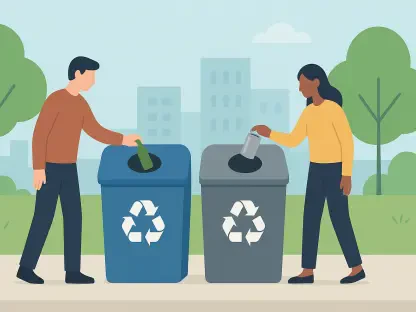
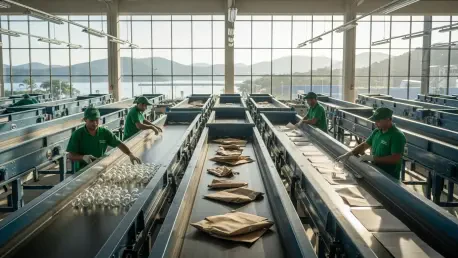
The city has further strengthened its sustainability model by merging social welfare with environmental policy, effectively reclassifying recyclable waste as a commodity that supports local livelihoods. Hundreds of families now derive a steady income from the management and sorting of recyclable materials, transforming what was once seen as trash into a vehicle for social mobility and economic stability. Strategic collection points for glass and other high-value materials have been installed in busy commercial districts to ensure that recovery rates remain high even in high-traffic tourist areas.
This economic integration is supported by creative cultural projects like the Museum of Waste, which utilizes thousands of repurposed objects to visually demonstrate the inherent value in discarded materials. By showcasing the beauty and utility of salvaged items, the city encourages a shift toward more mindful consumption and highlights the economic potential of reuse. This demonstrates that a zero-waste strategy can be as much about social equity as it is about environmental protection, creating a resilient system where the most vulnerable citizens are integral to the city’s ecological success.
Global Leadership and Strategic Benchmarks
Comparative Performance: Outpacing National Standards
When evaluating the performance of Florianópolis against broader national benchmarks, the city’s achievements appear even more extraordinary, particularly given the challenges faced by other regions. While the national average for recycling in Brazil has historically struggled to climb above the two percent mark, this island capital has reached substantial milestones for both dry and organic waste recovery. The local government has set ambitious targets for 2030, and since the start of 2026, it has accelerated the deployment of advanced sorting infrastructure to meet these aggressive and necessary goals.
This success is not merely the result of superior funding but is driven by a combination of unwavering political will, a clear strategic vision, and the active participation of the private sector. By consistently outperforming national trends, Florianópolis serves as a powerful case study for how medium-sized cities can leverage local engagement to achieve global standards of excellence. This high level of efficiency demonstrates that with the right framework, it is possible to bypass the typical hurdles of developing infrastructure and move directly into a modern, resource-efficient future.
Future Objectives: Scaling the Floripa Model
The journey toward becoming a global leader in waste management established a clear blueprint for other regions seeking to harmonize urban development with ecological limits. The success of the “Floripa model” demonstrated that lasting environmental change required a departure from purely technical solutions toward a strategy rooted in social inclusion and civic pride. Leaders in other coastal or island municipalities were encouraged to prioritize the separation of organic waste as a primary step, as this significantly reduced landfill pressure and created immediate local benefits through composting.
Furthermore, the integration of informal waste pickers into the formal economy provided a scalable solution for increasing recovery rates while addressing urban poverty effectively. As cities looked toward the end of the decade, the primary takeaway remained that treating waste as a resource rather than a burden unlocked new economic pathways and fostered a more resilient community. This proactive approach transformed the city’s identity, proving that a commitment to zero waste was the most effective way to protect both the environment and the economy for the long term.