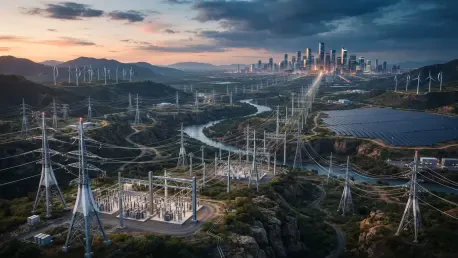

Grid operators generally agree that while automation provides valuable data insights, a human must always retain final decision-making authority over critical infrastructure. This principle sits at the heart of a massive global transformation, as power systems move away from a century of fossil fuel reliance toward a decentralized, renewable-heavy future. The challenge is no longer just an engineering puzzle of swapping coal for wind; it is a fundamental collision between legacy centralized designs and a new reality defined by thousands of scattered, weather-dependent generators. By early 2026, the global share of wind and solar in the electricity mix has reached a significant 15 percent, while total renewable generation now accounts for 32 percent of the world’s power. Although the technical potential for renewables already exceeds current demand, the primary difficulty lies in upscaling these technologies within infrastructure that was never built to handle such volatility. Because the electricity sector is uniquely positioned for rapid decarbonization compared to heavy industry or transport, successfully integrating these sources has become the highest priority for global climate stability.
Navigating the Socio-Technical Landscape and Its Barriers
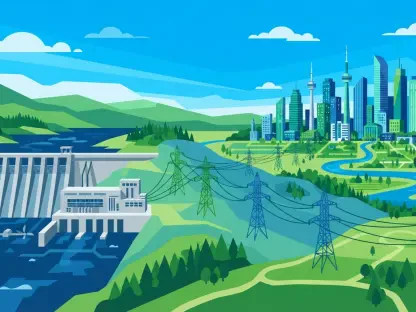
Modern electricity grids are not merely neutral collections of wires and transformers; they are complex socio-technical systems shaped by history, law, and evolving societal values. The liberalization of energy markets across various regions has already shifted the focus of these networks from simple public service utilities to intricate fields for financial arbitrage and energy trading. This evolution highlights the “twin pillars” of the current energy transition: decentralization and digitalization. Decentralization involves the “respatialization” of power, moving generation capacity away from massive, distant plants and closer to the actual points of consumption. Meanwhile, digitalization provides the necessary information and communication tools to manage this increasingly fragmented network. However, this shift is met with significant friction, as the established legal and economic rules often lag behind the rapid pace of technological innovation, creating a landscape where technical possibility frequently outstrips regulatory permission.
Breaking down the barriers to a decentralized grid requires addressing social, technical, economic, and political challenges simultaneously. Socially, a divide often exists between urban centers demanding green power and rural communities resisting the physical footprint of wind and solar farms. Technically, the inherent variability of weather-dependent energy poses a constant threat to grid stability, necessitating a precise, real-time balance of frequency and load. From an economic perspective, fluctuating subsidy models and pricing mechanisms make long-term investment risky, often favoring large-scale corporate installations over smaller “citizen energy” projects. Furthermore, political and legal conflicts over land use and international policy alignment create a fragmented regulatory environment that slows progress. Addressing these hurdles requires more than just better hardware; it demands a holistic approach where social scientists and engineers work in tandem to create policies that reflect both the physical realities of the grid and the values of the people it serves.
The Digital Paradox: Balancing Equity and Cybersecurity
Digitalization is frequently championed as the ultimate solution for managing a complex, decentralized grid, yet it introduces a set of systemic tensions regarding social equity. Empirical data suggests that the benefits of smart-grid technologies, such as dynamic pricing and automated load shedding, are often tied to socioeconomic factors like income and digital literacy. This creates a risk where only a privileged segment of the population can effectively optimize their energy costs, potentially leaving vulnerable groups to bear a disproportionate share of infrastructure expenses. If the transition to a smarter grid is not managed with social equity in mind, it could inadvertently deepen existing economic divides. Ensuring that decentralized energy systems remain inclusive means designing interfaces and pricing structures that are accessible to everyone, regardless of their technical expertise or financial standing, thereby preventing a “digital divide” in the essential service of electricity.
The integration of advanced information technology into critical infrastructure also significantly expands the “attack surface” for cyber threats. As grid components become more connected, they become more vulnerable to malicious actors seeking to compromise data integrity or cause physical instability. High-profile malware attacks in recent years have demonstrated that even sophisticated systems can be disrupted if security is treated as an afterthought. To mitigate these risks, industry leaders are shifting toward a “security by design” philosophy, which incorporates network segmentation, robust encryption, and participatory data governance from the very beginning of a project’s lifecycle. As the grid becomes more automated and reliant on real-time data exchange, maintaining a balance between high-tech efficiency and a hardened defense posture is no longer optional; it is a fundamental requirement for national security and public safety in a digital age.
Engineering the Decentralized Future: Technology and Virtual Infrastructure
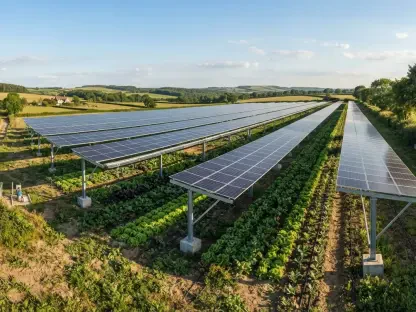
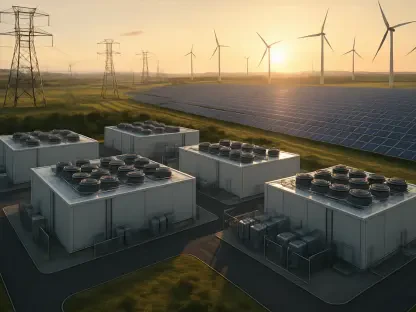
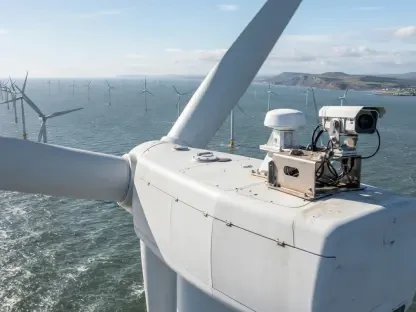
The physical hardware of the energy transition has reached impressive milestones by 2026, with wind and solar technologies maturing into highly efficient assets. Modern wind turbines have transitioned toward horizontal-axis designs capable of generating between 12 and 15 MW, utilizing advanced blade-pitch regulation to maximize output even in varying wind conditions. In the solar sector, while crystalline silicon remains the commercial leader due to its cost-effectiveness, laboratory efficiencies for next-generation cells have climbed toward 46 percent. Perhaps the most dramatic growth has occurred in storage capacity, which has seen a tenfold increase over the past six years. This surge in battery deployment is essential because it takes a vast number of renewable units to match the output of a single traditional power plant. While a coal-fired station can produce 3,000 MW, a single large wind turbine produces a fraction of that, necessitating a massive scale-up in the number of individual generation points.
To manage this explosion of small-scale energy sources, Virtual Power Plants (VPPs) have emerged as an indispensable digital tool. VPPs act as sophisticated digital twins that aggregate thousands of heterogeneous resources—such as residential solar panels, commercial batteries, and electric vehicle chargers—into a single, manageable portfolio. These systems utilize complex algorithms, including mixed-integer linear programming, to optimize production and storage across the network. By coordinating these diverse assets, VPPs allow decentralized generators to participate in the global energy market as a single, reliable entity. In many jurisdictions, VPPs are now operating under specific directives that focus on cost-effectiveness and market coupling, ensuring that localized energy can be dispatched where it is needed most. This digital orchestration is what allows a fragmented, weather-dependent system to provide the same level of reliability as the centralized plants of the previous century.
Bridging the Gap: Interdisciplinary Insights and Data Realities
The future power grid is currently being refined through interdisciplinary research that merges computer science, process engineering, and social science. Computer scientists are developing self-adaptive frameworks, such as the MAPE-K loop, which allows the grid to automatically integrate and process data from a wide variety of sensors and sources. At the same time, engineers are utilizing Long Short-Term Memory (LSTM) networks—a specialized type of machine learning—to forecast energy production and consumer demand with unprecedented accuracy. These models are particularly effective at handling the irregular time steps and long-term dependencies found in weather data. However, this technical progress has revealed a “centralization paradox”: while the physical generation of energy is becoming more decentralized and local, the data and control mechanisms required to manage that energy are increasingly concentrated within a few high-tech platforms, raising questions about who truly controls the power supply.
Interdisciplinary studies have also highlighted that technology alone cannot solve the trust and accountability issues inherent in an automated grid. Social science research involving interviews with grid operators has confirmed that while AI-driven tools are valued for their ability to process massive datasets, they are viewed as “counselors” rather than autonomous commanders. This perspective ensures that human operators remain responsible for the ultimate safety of the system, particularly during unforeseen events or complex emergencies where algorithmic logic might reach its limits. By integrating social insights into the design of technical systems, researchers are creating a more resilient framework that accounts for human behavior and institutional trust. This collaborative approach ensures that the digital tools of the future are not just efficient, but also aligned with the practical needs of the workers who keep the lights on and the citizens who rely on a stable power supply.
Synthesizing Actionable Strategies for a Resilient Network
The transition toward a renewable-dominated grid required a fundamental shift in how policymakers and engineers approached infrastructure design. Researchers successfully demonstrated that the electricity network must be treated as a socio-technical system, where technical upgrades are only as effective as the legal and social frameworks supporting them. The progress made by 2026 showed that integrating social equity into the planning phases of smart-grid rollouts was essential for gaining public support and ensuring long-term project viability. By prioritizing inclusive designs that catered to a wide range of socioeconomic groups, industry leaders were able to move past the early stages of digital inequality. This shift toward a more holistic planning model allowed for the creation of energy systems that were not only technically sound but also socially resilient, proving that technical efficiency and social fairness are not mutually exclusive goals in modern energy policy.
Moving forward, the emphasis must remain on strengthening international cooperation and standardizing cybersecurity protocols across the global energy landscape. The move toward “security by design” has already proven effective in protecting decentralized assets from digital interference, but constant vigilance is required as threats evolve. Future grid developments should continue to leverage the power of Virtual Power Plants while ensuring that the data they generate is managed through transparent, participatory governance models. By maintaining human oversight as a non-negotiable safeguard, the industry can confidently deploy increasingly complex AI and automation tools. The actionable takeaway from recent advancements is clear: a successful power grid of the future relies on the seamless integration of high-speed digital coordination, robust physical hardware, and a steadfast commitment to the human and social values that the infrastructure was built to serve.