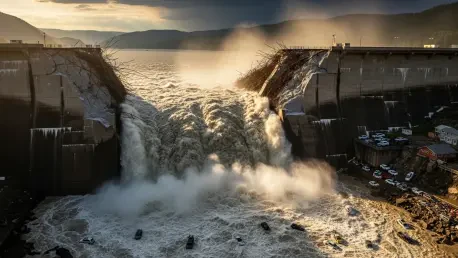

The peaceful silence of a Michigan spring afternoon was replaced by the deafening roar of escaping water when the Edenville Dam structure failed under the immense pressure of record-breaking rainfall. This catastrophic failure in May 2020 did more than just drain the sprawling Wixom Lake; it upended the lives of thousands of Midland-area residents who watched their homes and livelihoods vanish under a sudden, violent surge of water. While the physical scars of the flood remain visible years later, a recent 100-page ruling from the Michigan Court of Claims has delivered a significant psychological blow to those seeking restitution from the state government.
The legal determination centers on whether a government can be held responsible when its regulatory oversight fails to prevent a foreseeable disaster. For the victims, the court’s decision represents a difficult hurdle in their quest for justice, as it essentially shields the state from financial liability. This ruling highlights the complexities of infrastructure management and the high legal bar required to prove that state inaction constitutes a compensable taking of property.
A Quiet Afternoon Shattered by an Infrastructure Nightmare
The breach of the Edenville Dam transformed a routine weather event into a historic tragedy, displacing over 10,000 people and causing millions of dollars in property damage. Families who had lived along the lakefront for generations found themselves standing in mud flats where a vibrant ecosystem once thrived, grappling with the sudden loss of their primary assets. The emotional weight of the disaster was compounded by the realization that the infrastructure intended to protect them had become the source of their ruin.
This recent judicial opinion serves as a sobering reminder of the limitations of the legal system in addressing large-scale environmental catastrophes. While the plaintiffs argued that the state should have done more to ensure the dam’s stability, the court’s decision underscores the difficulty of pinning liability on a regulatory body for the failure of a privately owned facility. This outcome leaves many residents questioning where the line of governmental accountability truly lies when public safety is at stake.
Contextualizing the Breach: From Federal Oversight to State Default
The Edenville Dam was not originally the state’s burden, a fact that proved pivotal in the legal determination of liability during the trial. Operated for years by Boyce Hydro, the facility saw its federal hydropower license revoked in 2018 due to longstanding safety concerns and inadequate spillway capacity, effectively dropping the aging structure into the lap of state regulators. This transition occurred just years before a historic flood tested the limits of Michigan’s infrastructure, raising urgent questions about how states should manage high-risk, privately owned dams.
When the federal government stepped away, the Michigan Department of Environment, Great Lakes, and Energy was tasked with oversight despite having limited resources to address decades of neglect. This regulatory handoff created a vacuum where safety improvements were discussed but not fully implemented before nature intervened. The transition from federal to state control became a central pillar of the state’s defense, arguing that they inherited a problem they did not create.
Deconstructing the Court’s Ruling: The “Act of God” Defense
Judge James Redford’s comprehensive opinion centered on the idea that nature, rather than administrative negligence, was the primary architect of the disaster. The court dismissed the plaintiffs’ attempt to draw parallels to the Flint water crisis, noting that the state did not affirmatively create the danger but rather received by default a dam that was already compromised. Expert testimony revealed that even if the state had mandated lower water levels in anticipation of the storm, the sheer volume of rainfall would have likely overwhelmed the embankment regardless.
Ultimately, the ruling characterized the collapse as a natural catastrophe that exceeded the design capacity of the structure, shielding the state from claims of mismanagement. The judge emphasized that the state’s actions did not cause the dam to fail; instead, the failure was an inevitable consequence of an extreme weather event hitting a vulnerable structure. This “Act of God” perspective shifted the legal focus away from regulatory oversight and toward the uncontrollable power of the environment.
Expert Analysis and the Weight of Legal Testimony
The legal battle featured a sharp divide between state officials and those representing the victims, creating a narrative of conflicting responsibilities. Attorney General Dana Nessel praised the court’s decision, asserting that the evidence consistently pointed toward the state’s innocence in the face of an unprecedented weather event. She maintained that the state acted within its authority and that the blame rested solely with the private owner who failed to maintain the facility for years.
On the other side, attorneys for the property owners expressed profound disappointment, arguing that the state’s failure to act aggressively after the 2018 license revocation made the disaster inevitable. This tension highlights a difficult expert consensus: while the flood was a rare meteorological event, the dam’s history of neglect by its private owners created a “perfect storm” that the judicial system has now deemed beyond the state’s financial responsibility. The divide between legal victory and moral obligation continues to haunt the public discourse surrounding the case.
Moving Forward: Appellate Options and the Search for Financial Recovery
For the residents of the Midland area, the path to financial restoration remained fraught with obstacles as the legal process transitioned to its next phase. With the state cleared of liability and the former owner of Boyce Hydro, Lee Mueller, protected by bankruptcy filings despite a massive $120 million judgment against him, victims looked toward the appellate courts. The plaintiffs signaled their intent to challenge the ruling, keeping the litigation alive while offering no immediate relief to those who lost their homes and savings.
The community shifted its focus toward long-term infrastructure resilience and the potential for federal aid as the primary avenues for recovery. Residents and local leaders recognized that relying on litigation against the state provided an uncertain future, prompting a broader discussion on how to fund the reconstruction of the four-dam system. This search for solutions evolved into a community-led effort to secure the region’s future against similar disasters, emphasizing that the end of this specific trial was merely one chapter in a much longer recovery story.