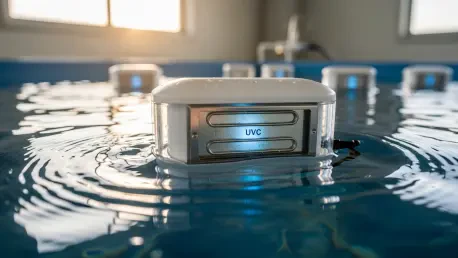

Access to clean drinking water remains a critical challenge for millions of people living in remote or disaster-stricken areas where traditional power grids are non-existent and batteries often fail due to extreme environmental conditions. The reliance on chemical purification or complex mechanical filtration often leaves communities vulnerable when supplies run low or parts break down without hope of immediate repair. In response to these logistical hurdles, a novel water disinfection technology emerged that required no external power source, no internal batteries, and no chemical additives. This innovation took the form of a small, floating capsule designed to bob on the surface of water containers, leveraging the natural motion of the liquid to generate germicidal light. By integrating high-efficiency LEDs with advanced energy-harvesting materials, the device provided a continuous sterilization process that was both passive and remarkably effective at eliminating dangerous pathogens like E. coli and Salmonella.
1. Harnessing Kinetic Energy Through Triboelectric Nanogenerators
At the heart of this floating device lay a sophisticated system known as a triboelectric nanogenerator, which specialized in converting low-frequency mechanical energy into high-voltage electricity. Unlike traditional electromagnetic generators that required heavy magnets and complex coils, this technology utilized the contact and separation of specialized thin-film layers inside the sphere. As the water moved, either through natural currents or manual stirring, the internal components shifted and rubbed against one another to create a buildup of static charge. This phenomenon, while simple in principle, was optimized through the use of fluorinated polymers and metal electrodes that maximized the charge density during every movement. The resulting electrical output was sufficient to pulse the onboard lighting system without the need for any storage medium, such as a capacitor or battery, which often limited the lifespan of previous portable devices. This direct energy conversion ensured that the disinfection process began the moment the capsule entered a moving water source.
The electricity generated by the internal motion was channeled directly into deep-ultraviolet light-emitting diodes, which operated in the UVC spectrum specifically tuned to disrupt the DNA of microorganisms. When exposed to these wavelengths, the genetic material of bacteria, viruses, and protozoa underwent a process called thymine dimerization, which effectively prevented the pathogens from replicating or causing infection in a human host. Because the capsule was designed to float, it positioned these LEDs at a strategic depth where the light could penetrate the surrounding water volume with minimal interference. Laboratory tests showed that even minimal agitation of a ten-liter container for several minutes was enough to achieve a significant reduction in microbial load, reaching standards comparable to municipal treatment plants. This physical method of disinfection offered a distinct advantage over chlorine or iodine treatments, as it left no chemical aftertaste and did not produce harmful byproducts that could lead to long-term health issues.
2. Global Deployment and Environmental Resilience
Building a device capable of surviving years in potentially corrosive or contaminated water required a sophisticated approach to material science and mechanical engineering. The outer shell of the capsule consisted of high-density, UV-stabilized polymers that prevented degradation while remaining light enough to float at the optimal depth for microbial exposure. Internally, the components were hermetically sealed to protect the delicate triboelectric layers and LED circuitry from moisture and pressure changes. Engineers utilized a modular architecture that allowed for the replacement of the germicidal modules if higher intensity was required for specific bacterial strains found in tropical climates. This design philosophy eliminated the common points of failure found in traditional water filters, such as clogged membranes or depleted chemical resin beds. Furthermore, the absence of an integrated lithium-ion battery removed the risk of chemical leaks and the logistical nightmare of recycling hazardous waste in remote areas where disposal facilities are non-existent.
The implementation of these floating capsules across flood-prone regions established a new protocol for emergency water management that bypassed the need for expensive infrastructure. Local governments adopted a decentralized distribution model, which ensured that even the most isolated villages maintained access to safe drinking water during the monsoons. Technical workshops focused on educating community leaders about the simple maintenance required, although the device’s robust design largely eliminated the need for specialized tools or spare parts. Research finalized during the pilot phase identified the optimal ratio of capsules to water volume, providing a clear guideline for non-governmental organizations to follow during rapid-response deployments. This collective effort effectively bridged the gap between advanced material science and practical humanitarian needs, proving that sustainable technology could be both high-tech in function and low-tech in operation. These outcomes invited further investment into self-powered sensors.