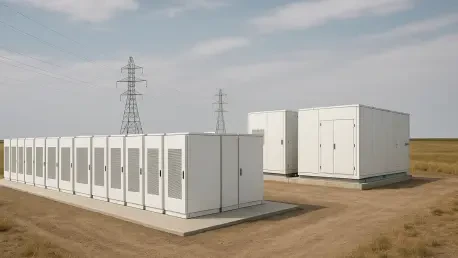

The successful deployment of 320 megawatt-hours of storage in six weeks highlights a fundamental shift toward software-enabled automation in the global energy infrastructure market. This rapid execution at the Houston IV facility in Texas represents a departure from the traditional 25-week industry standard, effectively compressing months of logistical and technical labor into a single month and a half. Managed by SMT Energy, the site utilizes high-density storage units alongside advanced power converters to stabilize the grid. The realization of such a complex asset in record time is not merely a result of faster physical construction but stems from a sophisticated “lab-first” methodology. This strategy prioritizes software readiness and rigorous pre-commissioning simulations to ensure that hardware arrival is the final piece of the puzzle rather than the beginning of a troubleshooting nightmare. By resolving technical discrepancies in a controlled environment, developers can mitigate the unpredictable delays.
Speed and Scalability: Redefining Field Operations Through Virtual Integration
Digital Twins: Utilization of Virtual Architecture
The core of this accelerated deployment lies in the creation of digital twins via the HybridOS platform, which allows engineers to mirror physical components in a virtual space long before the hardware reaches the site. While the physical batteries and power conversion systems are still in transit, the software team maps communication protocols and tests logical pathways against a high-fidelity emulator. This proactive approach ensures that every command and response sequence is validated in a laboratory setting, effectively decoupling the software integration phase from the physical construction timeline. By the time the units arrive in Texas, the control logic is already refined, allowing the on-site crew to focus on physical connectivity rather than debugging software code in the field. This method significantly reduces the risk of discovering fundamental communication errors during the critical path of commissioning, providing a level of predictability that was previously unattainable in the energy sector.
Automation: Efficiency in Automated Site Commissioning
Once the hardware is physically installed, the transition to operational status is managed through highly sophisticated automated scripts that replace manual point-to-point checks. These scripts execute thousands of telemetry verifications in a fraction of the time a human operator would require, ensuring that every sensor and circuit is reporting accurately to the central management system. This automation not only speeds up the verification process but also enhances the overall safety of the facility by removing the potential for human error during high-stakes electrical testing. At the Houston IV project, these automated protocols were instrumental in achieving the rapid six-week timeline, as they allowed for parallel testing of multiple battery strings simultaneously. The ability to verify complex system interactions through code rather than manual intervention ensures that the facility meets all performance benchmarks before it ever interacts with the high-voltage grid.
Compliance and Competition: Regulatory Agility and Market Dynamics
Standards: Streamlining the Interconnection Process
Navigating the regulatory requirements of the Electric Reliability Council of Texas, or ERCOT, is often one of the most time-consuming phases of any storage project, sometimes stretching into months. However, the Houston IV facility managed to complete its grid qualification and technical modeling in just a matter of days. This unprecedented speed was largely due to the use of standardized test kits and pre-approved paperwork that aligned perfectly with the grid operator’s expectations. Because the software platform had already been vetted on numerous previous projects, the regulatory body was familiar with the telemetry data and safety protocols being presented. This level of institutional trust, built through consistent performance and transparent data reporting, allows for a “fast-track” approval process that is vital for meeting urgent energy demands. As the grid faces increasing pressure from rising consumption, the ability to rapidly bring storage assets online is becoming a critical component of state-level energy security.
Evolution: Strategic Integration of Field Intelligence
The evolution of energy storage deployment moved toward a future where the physical arrival of a battery was merely the final step in a largely virtualized journey. Stakeholders prioritized investment in software-enabled automation and standardized hardware configurations to bypass traditional delays that once hindered grid modernization. Those who adopted lab-first testing strategies successfully navigated the complexities of 2026 and prepared themselves for the expanded infrastructure needs of the following decade. Future considerations must focus on the integration of artificial intelligence to further automate the modeling and regulatory submission processes, potentially reducing commissioning times even further. As the global energy landscape becomes more decentralized, the ability to deploy large-scale storage in weeks rather than months will be the defining factor in grid resilience. Companies should evaluate their existing workflows and adopt digital twin technologies to remain viable in this high-demand environment.