
The global transition toward electrified heavy-duty logistics has reached a critical tipping point where the simple availability of high-voltage chargers no longer guarantees operational success for modern commercial fleets. While the previous decade focused on the range anxiety of individual passenger car drivers, the current landscape from 2026 to 2030 demands a more sophisticated understanding of energy distribution and systemic resilience. Today, the conversation has moved beyond how many minutes a vehicle spends at a plug and has instead centered on the strategic synchronization of power. It is becoming increasingly evident that hardware speed alone cannot solve the logistical bottlenecks inherent in mass electrification. For a logistics hub managing hundreds of semi-trucks, a single high-speed charger is a minor component of a much larger, highly sensitive energy ecosystem. The true measure of modern infrastructure now lies in its ability to adapt to fluctuating demands without compromising the stability of the surrounding utility network.
From Rapid Deployment to Commercial Orchestration
The first generation of public charging networks primarily served early adopters of passenger vehicles, prioritizing visible coverage and peak throughput to build consumer confidence. These early efforts succeeded in proving that electricity could replace fossil fuels for daily commutes, but the benchmarks established during that era are proving inadequate for the rigorous requirements of the industrial sector. Commercial transport operates on tight margins where every minute of downtime translates into significant financial loss, requiring a level of reliability that goes beyond simple hardware availability. Logistics managers are discovering that a fleet cannot simply scale by adding more high-powered dispensers without a corresponding leap in the software-driven logic that governs them. As the industry advances through 2026, the focus has shifted toward integrated systems that treat charging as a predictable operational variable rather than an intermittent convenience. This transition necessitates a departure from the faster is better mantra toward a strategy of maximized uptime through systemic harmony.
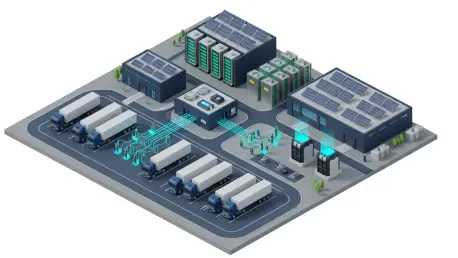
Building on this foundation, recent technological shifts have introduced versatile high-power interfaces that accommodate both standard passenger vehicles and megawatt-level heavy machinery within the same footprint. This flexibility allows operators to manage mixed fleets more effectively, yet the true value of such hardware is only realized through intelligent power orchestration. Effective orchestration involves the precise delivery of energy to specific assets based on their departure schedules, state of charge, and current battery health. Instead of providing maximum power to every vehicle simultaneously—which would likely trigger massive utility surcharges or circuit failures—smart systems distribute load dynamically across the entire facility. This ensures that a delivery van needing a short top-off receives exactly what it requires, while a long-haul truck preparing for a cross-country route is prioritized for high-intensity charging. By focusing on the flow of energy rather than capacity, operators can maintain high asset utilization rates while reducing the total cost of ownership.
Redefining Success Through Systemic Intelligence
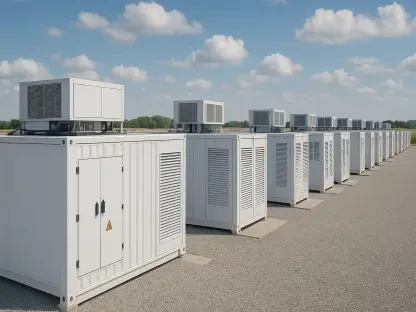
A significant challenge facing the modern energy transition is the pervasive assumption of electricity as an infinite resource that can be tapped at will. In reality, many industrial zones and urban corridors are grappling with severe grid capacity restrictions and multi-year wait times for substation upgrades. This bottleneck has forced a reevaluation of what constitutes effective infrastructure, moving away from a hardware-centric focus toward the optimization of existing resources. A high-speed megawatt charger is essentially useless if the local utility can only provide half of its rated output during peak afternoon hours. To navigate these constraints, developers are increasingly turning to site-level intelligence to manage the last mile of energy delivery. This approach involves integrating onsite storage, renewable generation, and demand-response protocols to buffer the grid from sudden spikes. By decoupling peak charging demand from immediate grid supply, operators can ensure consistent performance even in areas where the traditional utility infrastructure is lagging.
The evolution of the charging industry demonstrated that the initial obsession with raw speed served its purpose during the early adoption phase but ultimately fell short of meeting industrial demands. Forward-thinking organizations shifted their focus toward developing integrated energy ecosystems that prioritized power orchestration and grid sensitivity over mere hardware specifications. This strategic pivot allowed fleet operators to mitigate the risks associated with grid constraints while maximizing the efficiency of their existing electrical assets. It became clear that the most successful implementations were those that leveraged modular architecture and sophisticated software to manage finite resources wisely. By moving beyond the hardware-centric approach, the sector established a blueprint for resilient electrification that balanced high-intensity performance with logistical reality. These advancements provided a clear pathway for the total decarbonization of heavy transport, proving that the true catalyst for change was intelligence rather than speed.