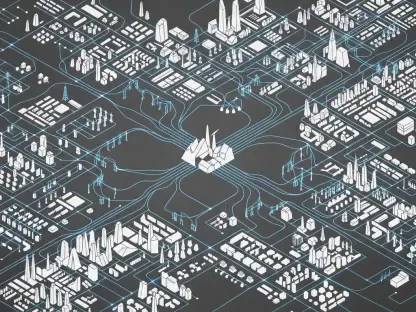

The convergence of AI growth and the reshoring of manufacturing has created a historic inflection point for global energy infrastructure. The rapid expansion of artificial intelligence is placing an unprecedented strain on a global electrical grid that was never designed for such intensity. As AI factories mushroom across the landscape, their hunger for electricity has shifted from a technical hurdle to a major socio-political issue. Public utilities, operating on century-old architectures, are struggling to keep pace with the concentrated power blocks required by modern data centers. This friction has sparked a critical debate over whether the world’s largest tech companies should remain tied to the public supply or take full responsibility for their own energy production. The sheer scale of these operations means that a single facility can now consume as much power as a mid-sized city, pushing the limits of regional transmission lines and forcing a radical rethink of energy distribution.
The Mandate: Protecting Public Utilities and Ratepayers
To mitigate the impact on everyday citizens, major tech titans have recently entered into a “ratepayer protection pledge.” This agreement signals a major shift in strategy, suggesting that hyperscalers must decouple their massive operations from the residential and commercial grid to prevent price spikes for the general public. While the political pressure to “bring your own power” is mounting, it remains to be seen if these companies can build independent energy ecosystems fast enough to sustain their growth. This transition marks the beginning of a move toward decentralized power, where tech giants act as their own utility providers. This shift is not merely a corporate preference but a regulatory necessity in an era where public tolerance for industrial energy consumption at the expense of local affordability has reached a breaking point. By assuming the burden of infrastructure development, these companies are attempting to secure their operational future while insulating themselves from political backlash.
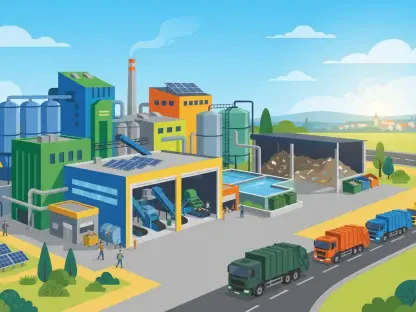
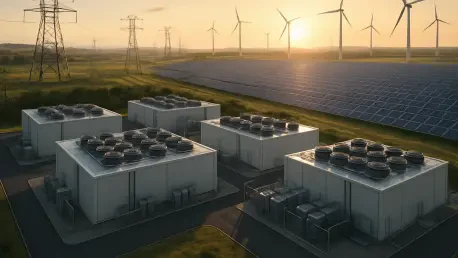
The implementation of such independent energy ecosystems represents a fundamental departure from the traditional model of industrial growth. For decades, large-scale manufacturers and service providers relied on the assumption that the public grid would expand in lockstep with their needs. However, the sheer velocity of AI development has rendered this assumption obsolete, forcing hyperscalers to evaluate the technical feasibility of self-sufficiency. This decoupling process involves the construction of dedicated power plants, sophisticated energy storage facilities, and private microgrids that operate entirely outside the jurisdiction of traditional utility companies. As these tech giants move toward full energy independence, they are effectively transforming into a new breed of utility—one that is focused on high-intensity, high-reliability delivery tailored to the specific needs of silicon-based workloads. This transition is essential to ensure that the broader economy is not collateral damage in the race for AI supremacy.
The Price of Inaction: Economic Consequences of Grid Delays
The financial stakes of the energy transition are massive, as speed to market has become the most critical metric for AI developers. For a large-scale data center, even a few months of delay in securing a grid connection can result in billions of dollars in lost revenue. In this high-stakes environment, the actual price per kilowatt-hour becomes secondary to the reliability and availability of power. Tech companies are increasingly viewing energy not just as a utility cost, but as a primary component of their total cost of ownership that determines their competitive edge in the global market. When the potential for quarterly revenue losses reaches the billion-dollar mark, the capital expenditure required for on-site generation becomes a logical insurance policy. This economic reality is driving a sense of urgency that transcends the typical planning cycles of the utility industry, creating a demand for immediate solutions that the aging public infrastructure simply cannot accommodate.
The traditional cost-plus utility model is fundamentally at odds with the fast-paced requirements of the digital age. Because public utilities have faced flat demand for decades, investment in infrastructure has stagnated, leaving the grid ill-equipped for the current skyrocket in demand. This obsolescence is forcing a paradigm shift where AI infrastructure is being built to be fault-tolerant and independent. By bypassing the aging grid, hyperscalers hope to avoid the transmission bottlenecks and administrative red tape that currently threaten their multi-billion dollar investments. The friction between the deliberate, slow-moving nature of public utility commissions and the exponential growth curves of artificial intelligence has created an unsustainable gap. Consequently, the reliance on a centralized provider is increasingly seen as a strategic liability rather than a convenience. As more firms realize that the grid cannot evolve quickly enough, the trend toward private energy solutions will only accelerate.
Technical Sovereignty: The Shift Toward Distributed Generation
Distributed generation, particularly through fuel cell technology, is emerging as the primary solution for the AI energy crisis. By generating power exactly where it is consumed, companies can eliminate the energy losses associated with long-distance transmission lines. This leapfrogging of traditional infrastructure mirrors how developing nations skipped landlines for mobile phones, allowing regions to establish high-tech hubs without waiting for massive grid upgrades. On-site power also offers a cleaner path to sustainability by optimizing fuel use for the specific output of data units. Technologies like solid oxide fuel cells are providing the consistent, high-density power that AI chips require, a level of stability that is often difficult to maintain on a public grid subject to the fluctuations of regional demand. This shift allows for a more granular control over energy resources, enabling facilities to scale their power generation in direct proportion to their computational capacity.
Beyond efficiency, on-site power is increasingly treated as a matter of national and corporate security. Operating independently of the public grid makes these critical data facilities more resilient to natural disasters, cyber-attacks, and physical threats to national infrastructure. This shift toward self-sufficiency also removes the need for large, carbon-intensive backup diesel generators, aligning tech operations more closely with long-term net-zero goals. Experts predict that within the next decade, a significant portion of all industrial facilities will follow the lead of hyperscalers by moving toward full energy independence. By 2030, the landscape of industrial power will likely be unrecognizable, with localized energy nodes replacing the sprawling, interconnected grids of the past. This movement toward technical sovereignty ensures that even in the face of widespread grid failure, the essential services provided by AI and advanced computing will remain operational and secure for all users.
Strategic Resolution: Implementation and Future Stability
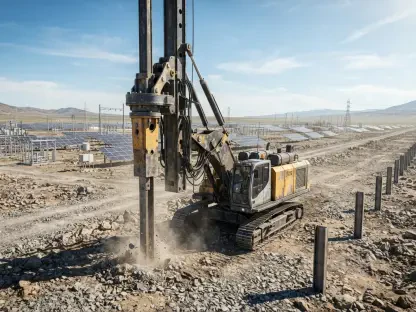
Despite the technical advantages of on-site power, the path forward is complicated by a moratorium mentality in many local communities. Resistance to new infrastructure, such as pipelines and storage facilities, often creates a stalemate that stalls even the most well-funded projects. For the transition to succeed, there must be a bipartisan consensus that recognizes energy growth as a necessity for economic competitiveness. This requires a transparent dialogue between tech giants and the communities they inhabit to ensure that the drive for more energy does not come at the expense of local trust. Regulatory frameworks must also adapt to recognize the unique status of independent power producers who are not selling to the public but serving their own critical needs. Without a streamlined approach to permitting and community engagement, the physical reality of building these new energy systems will continue to lag behind the theoretical potential of the technology itself.
Stakeholders prioritized the development of standardized microgrid blueprints to expedite deployment across diverse regulatory zones. Leaders recognized that the transition required a departure from traditional cost-plus utility models, opting instead for performance-based incentives that rewarded efficiency and reliability. Governments streamlined the permitting processes for essential infrastructure, ensuring that administrative delays did not stifle technological progress. Communities were integrated into the planning phase early, fostering a sense of shared ownership and transparency that mitigated local opposition. Ultimately, the successful integration of on-site power and AI demand was achieved through a unified strategy that balanced economic growth with infrastructure resilience. This proactive stance ensured that the energy systems were capable of supporting the next wave of digital innovation without compromising the stability of the public grid. The digital economy flourished as energy became a managed asset rather than a constraint.