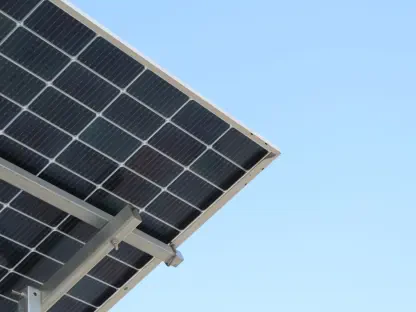

Electricity prices in Alberta have dropped to an average of twenty-six dollars per megawatt-hour, a figure many analysts believe is too low to attract new infrastructure investment. This economic downturn serves as a stark backdrop for the Sollair Energy Project, a 75-megawatt solar array located north of Airdrie that once promised a revolutionary path for renewable development. Managed by General Land and Power Corp, this 480-acre facility features nearly 190,000 individual solar panels, representing one of the most ambitious attempts at agrivoltaics in the province. The project was designed to prove that large-scale energy production and traditional agricultural practices could exist within the same footprint, providing a dual revenue stream for landowners while contributing to the regional power grid. However, as the provincial government introduces increasingly stringent regulations, the functional success of this site is now viewed more as a historical anomaly than a repeatable blueprint. Industry leaders argue that the shifting regulatory environment has effectively closed the door on projects of this magnitude, making the survival of such innovative land-use models highly questionable in the current political climate.
The Dual-Purpose Synergy of Agrivoltaic Systems
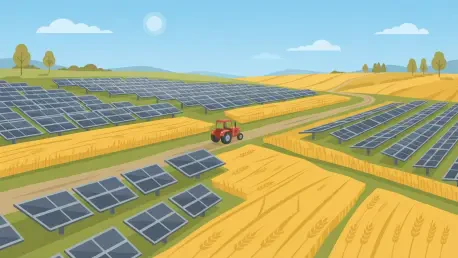
The technical implementation of the Sollair Energy Project offers a compelling look at how infrastructure can adapt to its environment. By spacing rows of solar panels specifically to accommodate agricultural machinery, the developers created a multi-use ecosystem that maximizes land utility without abandoning its farming heritage. A flock of sheep serves as the primary vegetation management team, grazing on weeds and grasses that would otherwise require mechanical mowing or chemical herbicides. This method not only reduces operational costs but also keeps the land in active agricultural use, maintaining soil health and providing a local market for livestock producers. The synergy between the solar array and the grazing animals demonstrates a practical solution to the common criticism that renewable energy projects displace food production. Instead of choosing between power and produce, the site manages to deliver both, proving that energy infrastructure and traditional ranching can coexist in a mutually beneficial relationship.
Beyond the grazing sheep, the project incorporates complex layers of biodiversity that extend to hay production and apiculture. Tractors and baling equipment navigate the wide alleys between panel rows, allowing for the harvest of hay that supports local agricultural supply chains. This is complemented by the presence of over two million bees, managed by local beekeepers who utilize the sheltered corridors of the solar field. These pollinators benefit from the protected environment and the lack of intensive chemical treatments, while their activities provide a significant boost to the crop yields of neighboring farms. The success of this trifecta—sheep, hay, and bees—highlights a robust model for land stewardship that addresses ecological concerns alongside energy needs. However, the complexity of managing such a diverse operation requires significant long-term planning and investment, which becomes increasingly difficult to justify when the surrounding regulatory framework is in a state of constant flux.
Navigating the Regulatory Landscape: Aesthetics and Restrictions
While the operational success of integrated farming is undeniable, the legislative environment in Alberta has shifted toward a more restrictive stance. The provincial government’s decision to move beyond the previous framework was cemented by new rules regarding land conservation and the protection of what are termed “pristine viewscapes.” These regulations restrict renewable energy developments on high-quality agricultural soil and within areas designated for their aesthetic value. The subjective nature of these criteria introduces significant uncertainty for developers, as the definition of a “pristine view” can vary widely depending on local interpretation. For companies planning multi-million dollar investments, this ambiguity creates a substantial risk factor that can stall projects during the approval phase. The focus has shifted from encouraging rapid renewable growth to a much more cautious and selective approach that prioritizes visual and agricultural preservation over the expansion of the green energy grid.
The financial burden on new developments has further intensified with the introduction of a mandatory recycling fee for solar components. Every new panel installed in the province now carries an upfront cost of fourteen dollars, a policy aimed at ensuring long-term environmental responsibility. While the intent is to manage the end-of-life cycle of solar technology, the immediate impact on project economics is profound. For a facility the size of the Sollair project, which utilizes approximately 190,000 panels, this regulation represents an additional capital expenditure of roughly 2.6 million dollars. This added cost, combined with the complexities of navigating new land-use restrictions, fundamentally alters the business case for solar energy in Alberta. Industry advocates suggest that while environmental stewardship is necessary, the current implementation of these fees may be high enough to render many large-scale projects financially untenable before they even break ground.
Economic Viability and the Migration of Capital
The intersection of low power pricing and increased regulatory costs has created a challenging environment for private investment in Alberta’s energy sector. With electricity prices hovering around twenty-six dollars per megawatt-hour, the potential return on investment for new infrastructure has become increasingly slim. While lower prices are often heralded as a win for the average consumer, they do not provide the market signals necessary to attract the massive capital required for grid modernization. Investors are looking for stability and predictable revenue streams, both of which are currently in short supply within the provincial market. Without a clear path to profitability, the momentum that once characterized the region’s renewable sector is beginning to dissipate. The current surplus of electricity may offer a temporary reprieve for the government’s affordability goals, but it does little to secure the long-term infrastructure updates needed to maintain a resilient and diverse power system.
This economic pressure is already resulting in a noticeable migration of capital to other jurisdictions across Canada. In previous years, Alberta was the undisputed leader in renewable energy growth, accounting for the vast majority of new solar and wind installations nationwide. However, recent data indicates that project approvals have dropped significantly, with many developers looking toward British Columbia, Ontario, or Quebec. these provinces are increasingly viewed as more attractive destinations because they offer more predictable regulatory environments and active incentives for green energy projects. As developers move their expertise and funding away from the province, Alberta risks losing its competitive edge in the transition to a modern energy economy. The consensus among market analysts is that capital is mobile, and it will naturally flow toward regions where the rules are clear and the financial modeling for large-scale infrastructure remains viable over a multi-decade timeline.
Strategic Divergence and Market Uncertainty
There remains a significant divide between the official government stance and the sentiment of the energy industry. Provincial officials maintain that the market is simply responding to a natural period of supply and demand, and that the current electricity surplus justifies a more deliberate pace for new approvals. From the government’s perspective, the new regulations are essential tools for protecting the agricultural heritage of the province and ensuring that energy development does not come at the cost of the environment. They argue that Alberta continues to be a leader in the energy space by balancing growth with responsible oversight. This perspective focuses on the immediate stability of the grid and the affordability of power for residents, suggesting that the recent policy changes are a necessary course correction after a period of rapid and perhaps uncoordinated expansion in the renewables sector.
In contrast, developers and industry analysts highlight the “investor uncertainty” created by shifting rules and market overhauls. The provincial electricity market is currently undergoing a massive restructuring that is not expected to be fully finalized until 2027. This multi-year transition period leaves firms in a difficult position, as long-term financial modeling becomes nearly impossible when the fundamental rules of the market are subject to change. Experts warn that when policy shifts occur mid-stream, it undermines the confidence of international and local investors alike. By failing to provide a stable and transparent framework, the province may be inadvertently “leaving money on the table,” as large-scale capital projects require a high degree of certainty to move from the planning phase to construction. The vacuum of clarity is cited as the primary reason why the industry has transitioned from a period of high-speed development to a much more cautious and hesitant state.
The Evolution of Dual-Use Farming Policy
The industry recognized that the future of agrivoltaics depended on a delicate balance between provincial heritage and modern infrastructure needs. Stakeholders argued that the technical success of projects like Sollair proved the concept of dual-use land management was effective at addressing both energy and food security. However, the path forward required more than just technical proof; it demanded a policy environment that rewarded innovation rather than penalizing it through vague aesthetic criteria. Developers who engaged with local agricultural communities early in the process found they could mitigate some of the risks associated with land-use restrictions by demonstrating the tangible benefits of integrated grazing and pollination. These early successes suggested that a more collaborative approach between the energy and agricultural sectors could provide a template for future development, provided that the regulatory framework allowed for enough flexibility to accommodate diverse farming practices.
In the final analysis, the sector found that stabilizing the renewable energy market required a commitment to clear and consistent definitions of soil quality and viewscape protections. Policy experts suggested that moving away from subjective assessments toward objective, data-driven standards would help restore investor confidence. Furthermore, the industry advocated for a more balanced approach to recycling fees, suggesting that these costs should be structured in a way that did not stifle the initial phases of project development. By looking at the long-term benefits of a diversified grid, the province began to see the value in fostering projects that integrated seamlessly with the local environment. Ultimately, the lessons learned from the Sollair Energy Project provided a roadmap for how energy and agriculture could grow together, highlighting that the survival of such innovative models depended on a regulatory landscape that prioritized both stability and stewardship.