
Future commercial deployment of mango-based energy systems depends on comprehensive life cycle assessments to quantify the total reduction in carbon footprints. This fundamental requirement arises from the massive surplus of agricultural byproducts that currently languish in landfills, particularly within the tropical regions of Africa and Southeast Asia. As the global push for decarbonization intensifies, the industrial sector is increasingly looking toward waste valorization as a means to decouple energy production from food security. Mango kernels, often regarded as a nuisance by juice and pulp manufacturers, represent a rich source of bio-renewable energy. By moving beyond traditional single-output systems, researchers are now demonstrating that these kernels can serve as a primary feedstock for a sophisticated biorefinery model. This approach does not merely produce fuel but creates a closed-loop system where every component of the seed contributes to a diverse energy portfolio, effectively turning an environmental liability into a significant economic asset.
Transforming Agricultural Waste: The Multi-Stream Energy Model
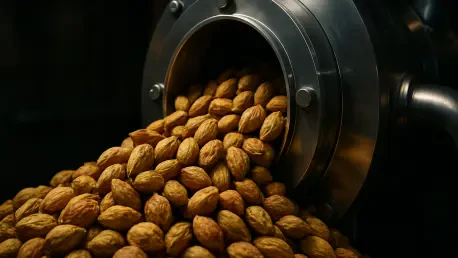
The sheer volume of mango waste generated by the global food industry has reached a critical point where traditional disposal methods are no longer sustainable or environmentally responsible. In major producing nations, thousands of tons of seeds are discarded annually, where they undergo anaerobic decomposition and release significant amounts of methane into the atmosphere. However, by viewing these kernels as a complex chemical reservoir rather than mere garbage, the industry can unlock a dual-stream energy system. This model focuses on simultaneous production: liquid biodiesel derived from the kernel’s internal fats and hydrogen-rich syngas produced from the remaining solid fibers. Such a strategy is particularly revolutionary for developing economies, as it provides a localized energy source that reduces reliance on imported fossil fuels while simultaneously solving the logistical challenges associated with industrial organic waste management at the source.
By utilizing both the lipid and lignocellulosic components of the seed, the “whole-biorefinery” approach ensures that resource efficiency is maximized to its highest physical potential. Historically, bioenergy projects often failed because they focused on a single output, leaving a large portion of the feedstock unused and creating secondary waste streams. In contrast, the integrated conversion of mango kernels creates a cascading utilization plan where the byproduct of the first stage becomes the high-value input for the second. This methodology aligns perfectly with the principles of the circular economy, transforming seasonal fruit waste into a steady, reliable stream of energy carriers. As researchers refine the thermochemical and biochemical pathways, the potential for mango kernels to power everything from local transportation fleets to decentralized electrical grids becomes increasingly tangible, offering a blueprint for future agricultural waste programs.
Technical Analysis: Lipid Extraction and Feedstock Quality
The initial phase of this energy conversion process involves the meticulous extraction of oil from the dried and ground kernels, a step that determines the overall economic viability of the biodiesel stream. Using Soxhlet extraction with n-hexane, technical studies have reported an oil yield of approximately 28.14 percent. This specific yield is a significant benchmark because it places the mango kernel on the same competitive level as established non-edible oilseeds like neem or jatropha. Because these kernels are a byproduct of existing food production, their use as a feedstock does not require additional land, water, or fertilizers, avoiding the “food versus fuel” debate that has hindered the growth of first-generation biofuels. The extraction process is efficient and produces a lipid profile that is remarkably well-suited for industrial processing, making it a prime candidate for large-scale energy production facilities.
A defining characteristic of mango kernel oil is its low free fatty acid content, which typically measures below the 0.5 percent threshold. This chemical property is vital for the efficiency of the subsequent transesterification process, as higher acid levels often lead to saponification, or the formation of soap, which drastically reduces fuel yield and complicates the purification of the final product. Because mango kernel oil naturally possesses this high-quality profile, it allows producers to bypass the expensive and energy-intensive acid-catalyzed pretreatment steps required by many other waste oils. This inherent purity not only lowers the cost of production but also speeds up the processing time, making the refinery more responsive to fluctuations in feedstock supply. The result is a more streamlined path from agricultural waste to a usable liquid energy carrier that can be easily integrated into the existing fuel infrastructure.
Statistical Precision: Optimizing Biodiesel Synthesis
To convert the extracted lipids into high-quality biodiesel, scientists utilize base-catalyzed transesterification, a process that is highly sensitive to environmental and chemical variables. Rather than relying on traditional experimentation, modern researchers employ Response Surface Methodology and Central Composite Design to identify the exact conditions needed for maximum conversion. This statistical rigor has proven that a yield of 92.19 percent is achievable when the reaction is maintained at 65 degrees Celsius with a 9:1 methanol-to-oil molar ratio. These models show that temperature is the most influential factor, as it dictates the kinetic energy of the molecules and ensures the catalyst remains active throughout the reaction. This level of precision allows for the creation of a standardized fuel product that maintains consistency across different batches, which is a requirement for any fuel intended for use in modern diesel engines.
The physical and chemical properties of the resulting biodiesel have been benchmarked against the rigorous ASTM D6751 international standards to ensure safety and performance. The fuel exhibits a cetane number of 51, which guarantees reliable ignition and smooth engine operation, alongside a calorific value that is highly competitive with petroleum-based diesel. While the fuel shows slightly lower density and flash point values compared to traditional diesel, these characteristics do not disqualify its use. Instead, they suggest that the biodiesel is most effective when used as a blending component or when subjected to minor post-production refining to remove residual volatiles. This data confirms that mango-based biodiesel is a technically sound replacement for fossil fuels, capable of powering heavy machinery and transportation networks without requiring extensive modifications to existing internal combustion technology.
Thermochemical Processes: Valorizing Residual Biomass
What distinguishes the mango kernel biorefinery from other bioenergy models is the subsequent valorization of the defatted solid residue. After the oil is extracted, the remaining fiber is far from useless; it is a carbon-dense material rich in volatile matter and containing negligible amounts of sulfur and ash. This residue is processed through steam gasification in bubbling fluidized-bed reactors, where it is subjected to high temperatures in a controlled environment. Unlike simple combustion, gasification breaks down the biomass into its molecular components, creating a versatile gas mixture known as biosyngas. This thermochemical pathway ensures that no part of the kernel is wasted, effectively doubling the energy utility of the feedstock. The process is clean and efficient, providing a gaseous fuel that can be used for heat generation or further refined into pure hydrogen for advanced fuel cell applications.
The efficiency of this gasification process is heavily dependent on the reactor temperature and the steam-to-biomass ratio used during the reaction. Research indicates that as the temperature rises from 700 to 900 degrees Celsius, the concentration of hydrogen within the syngas increases significantly, reaching levels as high as 37 percent. This increase is driven by the intensification of endothermic reactions and the cracking of heavy tars into lighter, combustible gases. By optimizing these parameters, the system produces a syngas with a high heating value that is suitable for fueling gas turbines or internal combustion engines for electricity generation. This capability is particularly valuable for rural processing plants, as it allows them to generate their own power using their own waste, creating a self-sufficient energy loop that significantly lowers operational costs and reduces the carbon footprint of the entire facility.
Strategic Implementation: Building the Circular Bioeconomy
The study established that mango kernel valorization successfully bridged the gap between waste management and renewable energy production. To move toward commercialization, developers prioritized the construction of modular biorefineries capable of processing seasonal agricultural surplus. Stakeholders identified that policy incentives for decentralized energy production were necessary to attract capital for these specialized facilities. Engineers recommended further refining the density and flash point of the biodiesel to ensure full compatibility with the latest high-pressure injection systems. By integrating these findings into national energy strategies, planners turned a significant environmental challenge into a self-sustaining resource loop. The shift toward this integrated model ensured that biomass-rich regions reduced their reliance on imported fossil fuels while simultaneously addressing local pollution. Ultimately, the data validated that the transition from laboratory prototypes to industrial-scale plants required only localized techno-economic adjustments.
Looking ahead from 2026 to 2028, the primary focus shifted toward the standardization of collection and drying logistics to ensure a consistent feedstock supply for year-round operation. Industry leaders recognized that the success of mango-based biofuels depended on the integration of digital tracking systems to monitor the quality of the kernels from the point of processing to the refinery gate. Environmental agencies implemented new frameworks that rewarded companies for adopting these multi-stream energy systems, citing the significant reduction in landfill-associated greenhouse gas emissions. The development of advanced catalysts further enhanced the efficiency of the gasification stage, pushing hydrogen yields to record levels. These efforts proved that agricultural waste was not merely a problem to be solved, but a foundational pillar of the modern energy landscape. As these technologies matured, they provided a scalable template for other tropical fruits, expanding the reach of the circular bioeconomy across the globe.