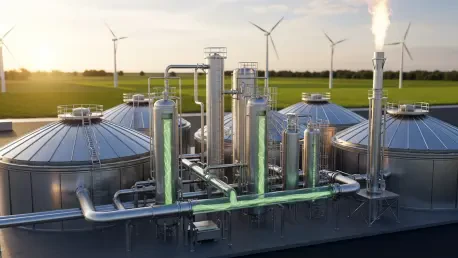

The Italian peninsula is currently undergoing a profound transformation in its energy strategy as the nation seeks to decouple its economic growth from volatile external fossil fuel markets. While solar and wind power have traditionally dominated the conversation surrounding renewable transitions, a more grounded solution is emerging from the country’s vast agricultural and waste management sectors. Biomethane, a purified form of biogas derived from organic matter, represents a versatile energy carrier capable of utilizing existing gas infrastructure while addressing the urgent need for domestic decarbonization. This renewable gas is not merely a byproduct of agricultural activity but a strategic asset that aligns with the European Union’s broader climate objectives and Italy’s specific geographic strengths. By converting livestock effluent and crop residues into a high-quality fuel, Italy is positioning itself to mitigate its historical reliance on gas imports, thereby enhancing its national security and fostering a more resilient energy economy.
Technical Foundations: Refining the Circular Economy
The conversion of raw biogas into biomethane involves sophisticated upgrading technologies that remove carbon dioxide and hydrogen sulfide to meet stringent pipeline quality standards. In many Italian regions, particularly within the Po Valley, advanced membrane separation and water scrubbing systems are now the industry standard, allowing facilities to inject renewable gas directly into the Snam-operated national grid. This process ensures that the resulting fuel is chemically identical to conventional natural gas, making it a seamless replacement for heating, industrial processes, and heavy-duty transportation. Unlike intermittent energy sources, biomethane provides a constant, dispatchable supply of energy that can be stored using existing subterranean facilities. This reliability is crucial for maintaining grid stability as the country integrates higher percentages of variable renewables. Furthermore, the integration of these systems within industrial food processing plants creates a closed-loop system.
Beyond the immediate energy output, the production of biomethane generates a nutrient-rich byproduct known as digestate, which serves as a sustainable alternative to chemical fertilizers. For Italian farmers, this secondary product is vital for soil health and carbon sequestration, effectively returning organic matter back to the land and reducing the carbon footprint of the agricultural supply chain. The synergy between waste management and energy production is particularly evident in the treatment of municipal solid waste, where urban refuse is transformed into fuel for city buses. This localized approach minimizes the environmental impact of logistics while providing a tangible demonstration of circular economy principles across major metropolitan areas. As the technology matures, the focus is shifting toward maximizing the efficiency of small-scale digesters, ensuring that even mid-sized agricultural enterprises can contribute to the national mix, which keeps investment and revenue within local communities.
Strategic Investment: Scaling for National Sovereignty
The expansion of the biomethane sector is supported by the National Recovery and Resilience Plan, which has allocated significant funding to modernize existing biogas plants. These investments are designed to push Italy’s production capacity toward several billion cubic meters per year, a target that covers a substantial portion of the nation’s domestic gas consumption. By incentivizing the transition from power generation to gas injection, the Italian government is optimizing the use of its natural resources and enhancing the efficiency of the national energy grid. This shift is also driving innovation in the transport sector, specifically for heavy-duty road haulage, where liquid biomethane offers a viable path toward low-emission logistics. Leading Italian automotive firms are increasingly looking toward bio-LNG as a critical component of their sustainability roadmaps. The strategic deployment of this infrastructure reduces the trade deficit and shields the domestic market from price volatility.
The strategic pivot toward biomethane served as a catalyst for a broader rethink of the national energy portfolio, emphasizing the importance of localized and renewable resources. Policymakers recognized that while solar and wind provided essential electricity, the molecular nature of gas remained indispensable for heavy industry and heating. By prioritizing the upgrade of agricultural waste streams, the government successfully reduced the reliance on high-risk energy corridors and stabilized the domestic price of fuel. Local communities witnessed the direct benefits of this transition, as new jobs in the green technology sector appeared in rural regions. The integration of biomethane into the national gas grid proved to be a practical method for decarbonization that did not require the abandonment of existing hardware. This balanced approach allowed for a smoother transition that maintained economic stability while pursuing ambitious climate goals. Ultimately, the commitment to refining this domestic resource provided a clear pathway toward energy sovereignty.